
Best Forex Trading Software for South African Traders
Looking for reliable forex trading software🇿🇦? Discover user-friendly platforms with local market support, automation tools, and fair fees for South African traders📉💻.
Edited By
Oliver Mason
Forex trading involves the buying and selling of currencies on the foreign exchange market, where currencies are traded in pairs like ZAR/USD or EUR/USD. For South African traders, this market offers chances to profit from fluctuations in exchange rates, especially given the rand's volatility compared to major global currencies.
Understanding how forex works starts with recognising that it operates 24 hours a day across global financial centres — from Johannesburg to London and New York — which means you can trade at flexible times. However, as a South African trader, you should pay attention to your broker's operating hours and how that aligns with local time (SAST).
South Africa has specific regulatory rules. The Financial Sector Conduct Authority (FSCA) oversees forex brokers, requiring them to hold a licence and comply with certain standards. Sticking to FSCA-regulated brokers not only protects your funds but also ensures fair trading conditions.
Forex trades involve buying one currency while selling another simultaneously. For example, if you believe the rand will weaken against the dollar, you might sell ZAR/USD with the expectation of profiting when the rand drops. This is different from investing in shares because forex is more about short-term price movements.
Remember, forex trading carries risk, and it's vital to use tools like stop-loss orders to manage potential losses before you start.
Key terms to grasp include "pip" (the smallest price change in a currency pair), "leverage" (borrowing to increase your trading position), and "spread" (the difference between buying and selling prices charged by a broker). Brokers typically offer leverage, sometimes up to 1:100 or more, but it amplifies both profits and losses.
South African traders should factor in the rand’s movements influenced by local events such as political changes, commodity prices (gold, platinum), and Eskom’s loadshedding effect on the economy. These factors can cause sudden swings in currency values.
To start trading, you’ll need to open a forex trading account, usually requiring identification documents, proof of residence, and funding via local banks or eft. Many brokers offer demo accounts to practise without risking real money.
In summary, forex trading in South Africa is accessible but requires understanding how the market works, local regulations, and the unique behaviour of the rand. With careful study and risk management, you can trade confidently and make the most of this dynamic market.
Grasping the basics of the foreign exchange (forex) market is foundational for anyone keen to trade currencies confidently. The forex market isn’t just another financial market; it’s the largest and most liquid market globally, moving around $6 trillion daily. For South African traders, understanding how this market operates offers practical benefits like better timing decisions and managing risks related to rand volatility.
Forex trading involves buying one currency while selling another simultaneously. These currency pairs reflect economic health, political stability, and market sentiment. For example, a South African trader might buy USD/ZAR when expecting the rand to weaken against the US dollar, aiming to profit from that movement.
Globally, currencies are traded electronically over-the-counter (OTC), meaning no central exchange controls the market. Trades occur 24/5 across a network of banks, brokers, and traders. This decentralised nature ensures continuous price updates, which is essential for active traders tracking market moves.
Central banks and governments play a big role by influencing their currency’s value through interest rates and monetary policy. The South African Reserve Bank (SARB), for instance, adjusts rates partly to stabilise the rand, which impacts forex trading conditions directly.
Commercial banks and financial institutions facilitate most currency trades, providing liquidity and acting as market makers. They execute large-scale transactions that help set currency prices, giving retail traders valuable price signals.
Retail traders, including individual South Africans, access the forex market via brokers. While retail accounts for a smaller slice of total volume, retail participation has surged thanks to online platforms offering affordable leverage and ease of access.
The forex market is split into major trading sessions: London, New York, Tokyo, and Sydney. These sessions overlap at certain times, increasing trading volumes and volatility. For example, London and New York overlap during the afternoon South African time, often presenting more opportunities.
South African traders operate mostly during the day when local access to the market is good. However, understanding global session times helps them avoid trading during quiet periods with low liquidity or exploit busy hours when price movements are more pronounced.
Timing your trades to coincide with active sessions and knowing who moves the market can make a real difference to your trading edge.
In sum, a solid grasp of the forex market’s structure, key players, and timing is vital for making informed trading choices and tailoring strategies that suit local trading realities.
Understanding the core concepts of forex trading is essential if you want to navigate the market confidently and avoid unnecessary mistakes. These fundamentals form the backbone of daily trading decisions, influencing everything from when you enter a trade to how you manage risk. For South African traders, grasping these basics helps tackle the unique challenges posed by rand volatility and local market hours.
In forex, currencies are always traded in pairs. The base currency is the first currency in the pair, while the quote currency is the second. For example, in the pairing USD/ZAR (US dollar against South African rand), the USD is the base and the ZAR is the quote. The quote tells you how much of the quoted currency is needed to buy one unit of the base currency. So, if USD/ZAR is trading at 17.50, it means you need R17.50 to buy one US dollar.
Recognising which is the base or quote currency can prevent confusion when placing orders or interpreting price movements. In practical terms, a rising USD/ZAR price means the rand is weakening against the dollar, which can impact traders focusing on import/export businesses or rand-denominated assets.
Currency pairs come in three main types: major, minor, and exotic pairs. Majors include the most traded pairs globally, like EUR/USD, GBP/USD, and USD/JPY. These tend to have higher liquidity and tighter spreads, making them attractive for beginners.
Minors are pairs that don’t include the US dollar but involve other popular currencies, such as EUR/GBP or AUD/NZD. Exotic pairs feature currencies from emerging or smaller economies paired with major currencies—like USD/ZAR or EUR/TRY. Exotic pairs often exhibit swift price swings and wider spreads, reflecting less liquidity, so they suit traders aware of higher risks and potential rewards.
A pip is the smallest price move a currency pair can make based on market convention. Typically, one pip equals 0.0001 of the currency price—for example, a move from 1.2345 to 1.2346 in EUR/USD is one pip. Pips help traders measure profits and losses clearly; if the USD/ZAR moves from 17.5000 to 17.5100, that’s 100 pips.
Forex trades aren't executed in random amounts but in fixed units called lots. A standard lot is 100,000 units of the base currency, a mini lot is 10,000 units, and a micro lot 1,000 units. Smaller lot sizes reduce exposure and risk, which is especially useful when starting out. For instance, a micro lot of 1,000 USD/ZAR means your trade value is around R17,500 at current rates—a more manageable sum than a standard lot.
Leverage lets you control a larger position with a smaller deposit, magnifying gains but also losses. South African brokers often offer leverage up to 1:100 or more. While it’s tempting to max out, the risks can be severe. For example, using 1:100 leverage means a 1% adverse move wipes out your capital. Smart traders use leverage cautiously, setting clear stop losses.
The bid price is the highest price buyers are willing to pay for a currency pair, while the ask price is the lowest sellers will accept. The difference between these two is called the spread. The bid-ask spread is a cost traders pay to enter or exit a trade immediately.
Spreads vary by broker, currency pair, and market conditions. Major pairs like USD/ZAR generally have tighter spreads—say, 2-3 pips—while exotic pairs often see much wider spreads. Wider spreads mean higher trading costs, so they eat into your profits or increase losses. For example, a 5-pip spread on an exotic pair might require a bigger price move just to break even.
Mastering these core concepts—currency pairs, pips, lots, leverage, bid, ask, and spreads—builds a solid foundation to trade forex effectively. They not only clarify how the market ticks but equip traders to make smarter, faster decisions tailored to South African conditions.
Picking the right trading approach is a key step for anyone looking to succeed in forex. It shapes how you analyse the market, make decisions, and manage risk. Each method suits different trading styles, timeframes, and goals. A South African trader might favour short-term scalping during London and New York sessions or longer-term strategies aligned with economic cycles affecting the rand.
Fundamental analysis tracks economic indicators that move currency values over time. Things like South Africa’s GDP growth, inflation rates, and interest rate changes can give clues about the rand’s direction. For example, if SARB (South African Reserve Bank) signals a rate hike, it often strengthens the rand because higher yields attract investment. Keeping an eye on the US Federal Reserve can also matter since USD/ZAR is a popular pair.
News and geopolitical events add another layer. Sudden political developments, trade tensions, or even unexpected announcements can cause sharp swings. Remember the rand’s reaction to local elections or Eskom’s troubles? These events disrupt sentiment and liquidity, so following reliable news sources or economic calendars helps you stay ahead and adjust your trades quickly.
Technical analysis zooms in on price charts to spot patterns that hint at future moves. Common chart formations like head and shoulders, double tops, or triangles reveal potential reversals or continuations in trend. For instance, a 'double bottom' on the USD/ZAR chart might suggest the rand is poised for a rebound after a dip.
Indicators such as moving averages, RSI (Relative Strength Index), or MACD (Moving Average Convergence Divergence) aid in spotting trends, momentum, and overbought or oversold conditions. Using these tools, you can time entry and exit points better, especially when candle patterns confirm your signals.
Balancing fundamentals and technicals often gives a clearer picture than relying on just one. Fundamentals help you understand the 'why' behind market moves, while technical setups show the 'when' to trade. For example, if strong economic data supports a rand rally, technical charts might help you find the best moment to buy on a pullback.
Integrated strategies might look like using technical indicators for timing trades only when fundamentals signal a trend. Some traders use economic news releases as a filter, choosing to trade only when events align with chart trends. This approach can reduce false signals, which is useful given the rand’s volatility around local and global events.
Successful traders in the forex market often adapt their method to fit changing conditions rather than sticking rigidly to one approach.
Finding the right approach takes experimentation and learning, but being clear about your strategy keeps your trading more disciplined and less emotional.
The forex market offers tempting opportunities, but it also carries risks that can quickly eat into your capital if not handled properly. Understanding these risks and managing your money wisely are the foundations for any trader who wants to stay afloat long-term. This section breaks down the common risks involved, highlights effective money management techniques, and explains why a solid trading plan is indispensable.
Market volatility should be on every trader’s radar. Forex prices swing because of many factors — economic data releases, political headlines, or sudden geopolitical tensions. For example, unexpected changes in South Africa's interest rates or Eskom load shedding announcements can cause sharp moves in the rand pairs. These ups and downs might present chances to profit, but they also add a layer of unpredictability that can wipe out positions quickly if you’re not cautious.
Leverage amplifies both profits and losses. Many brokers in SA offer leverage levels of up to 1:200, meaning you can control a much larger position than your actual deposit. While this boosts potential gains, the downside is that even small adverse price movements can eat into your trading account fast. For instance, a 1% swing against you in a fully leveraged position could translate to a total loss of your initial capital. Hence, keeping leverage in check and understanding its risks is critical.
Position sizing is the art of deciding how much to risk on each trade without jeopardising your account. A common guideline is not to risk more than 1-2% of your capital on a single trade. If your account size is R10,000, then the maximum you should risk per trade is around R100 to R200. This approach prevents chain reactions of losses that can come from a few bad calls.
Setting stop losses and take profits is a simple yet powerful tool for controlling risk. A stop loss automatically closes your trade if the price moves against you by a certain amount, capping your losses. Meanwhile, take profit orders lock in gains at a predefined level. Let’s say you enter a position on USD/ZAR expecting a 100-pip move; placing your stop loss about 30 pips away and take profit at 100 pips ensures you maintain a good risk-reward balance, which is vital to long-term trading success.
Having a trading plan keeps emotions in check and guides disciplined decision-making. Without a plan, it’s easy to chase losses or jump into trades based on gut feeling—behaviours that often lead to blowing your account. A chart-savvy trader once told me, "If you don’t know what you want to achieve on each trade, you’re just gambling."
A solid plan includes your trading goals, entry and exit criteria, risk limits, and even daily routines. For example, you might decide to trade only during the London session, risk 1.5% per trade, and always use stop losses. This clarity makes it easier to stick to rules and review your performance objectively over time.
Risk management isn’t just a technique; it’s the guardrail that’ll prevent your trading journey from crashing and burning. Without it, winning trades won’t last long.
Balancing risk with smart money management and sticking to a plan sets the stage for a consistent trading career rather than just flying blind hoping for luck to strike.
Starting forex trading in South Africa means more than just opening an account and clicking "buy" or "sell." It’s about choosing the right tools, understanding local conditions, and following sound practices that suit the SA market. This section guides you through what to look out for when getting started, helping you avoid pitfalls common among new traders here.
Local brokers often provide services tailored to South African traders, including support in local languages, rand accounts, and familiarity with regional regulations and challenges. For example, brokers based in Johannesburg or Cape Town might offer direct rand deposits or quicker withdrawals, which can save you from currency conversion delays and extra fees.
However, international brokers usually offer broader currency pairs, advanced platforms, and sometimes lower spreads due to their larger client base. But they might require currency conversions and are subject to foreign regulations, which could complicate matters if disputes arise.
Choosing between local and international brokers comes down to your priorities: ease and familiarity versus variety and possibly cost.
The Financial Sector Conduct Authority (FSCA) regulates financial services providers in South Africa, including forex brokers offering services to SA residents. Selecting an FSCA-registered broker ensures they meet local standards for fairness, transparency, and fund safety.
Trading with an unregulated broker can be risky—fraud, fund mismanagement, and lack of recourse are real dangers. An FSCA licence doesn’t guarantee profits, but it provides legal protection and regular audits, giving you peace of mind.
Beyond location and regulation, your broker should offer a user-friendly platform compatible with your devices and experience level. Important features include tight spreads, low commissions, fast executions, and access to both major and emerging currency pairs.
Look for features like easy funding options, clear customer service with local support hours, and educational materials. Demo accounts and practice tools also help if you’re just starting.
To comply with South African regulations including the Financial Intelligence Centre Act (FICA), brokers require verification documents. This usually means providing a certified copy of your ID and proof of residence such as a municipal account, plus proof of source of funds sometimes.
Though it can feel tedious, this process helps prevent identity theft and money laundering, ensuring a safer trading environment. Processing times vary, but brokers usually guide you through each step.
Most brokers accept rand deposits via electronic fund transfers (EFT), credit/debit cards, or popular local payment systems. Some international brokers might only accept foreign currencies, so you’ll face exchange rate and transfer fees.
Funding in rand avoids extra conversion charges and lets you manage your exposure better. Also, check minimum deposit requirements and withdrawal policies to avoid surprises.
Demo accounts simulate real-market trading without risking your cash. Many brokers offer them with virtual rand balances that let you test strategies, learn the interface, and understand market movements.
Use this to build confidence and refine trading techniques before committing real funds—a step that often saves budding traders from costly beginner mistakes.
South African traders benefit from local forums and educational sites like MyBroadband’s forex section or SA-based YouTube channels that explain topics in a context you understand.
Besides global sites, becoming active in local communities helps you stay informed about rand volatility, broker reviews, and regulatory changes. It’s also a place to swap practical tips and follow real-time market updates.
Starting with the right broker and using education to ease into forex trading can set you on the path to smarter, safer trading tailored for South Africa’s unique market.
Local conditions heavily shape how South African traders interact with the forex market. From understanding the movements of the South African rand to navigating regulatory requirements and practical challenges like loadshedding, these factors influence trading decisions and strategies.
The rand’s strength depends on several local and international factors. Key influencers are South Africa’s economic data, political stability, and global commodity prices since the country is a major exporter of minerals and metals. For example, a slump in global platinum prices often weighs on the rand. Similarly, political unrest or uncertainty around government policies can cause sharp currency swings. Keeping an eye on Reserve Bank interest rate decisions and African regional developments also provides critical clues about rand direction.
Rand volatility has direct implications for forex traders. Big swings in the rand can mean increased trading opportunities but bring higher risk too. This volatility can affect how you set stop losses and position sizes. Traders must adjust their risk appetite and possibly avoid heavy leverage during turbulent periods. For instance, during times of Eskom-led loadshedding, the rand may weaken as investor confidence dips, impacting forex pairs involving ZAR.
The Financial Sector Conduct Authority (FSCA) oversees forex broker activities in South Africa. Their role ensures brokers comply with fair trading practices, client fund security, and proper disclosure. Selecting FSCA-regulated brokers offers traders protection against fraud and malpractice. It also means brokers must stick to local rules, including reporting requirements.
Regarding taxes, South African traders are liable to declare forex profits to SARS. Profits from trading are usually treated as income and taxed accordingly, unless trading forms part of a registered business. You should maintain accurate records of trades, deposits, and withdrawals to ease tax submissions. Getting advice from a tax consultant familiar with forex is wise, especially if trading professionally or using leverage.
Loadshedding can disrupt internet connectivity and power access, affecting trade execution and analysis. Traders should consider backup power solutions like inverters or UPS systems and reliable mobile data as contingency. Offline set-ups with prepared strategies may help ride out short outages without major losses.
Data costs across South Africa vary, and high data prices can limit constant market monitoring. Affordable data bundles from providers like Vodacom or MTN and using lightweight trading apps can reduce expenses. Also, pre-planning your trading hours to coincide with strong market movements ensures you get value for your data usage.
South African forex traders stand to benefit greatly by understanding local influences — from rand behaviour and regulatory oversight to practical hurdles like loadshedding and data costs. Being aware not only protects capital but also uncovers trading advantages unique to the local market.
By factoring these local elements into your forex plan, you better manage risks and seize opportunities specific to the Mzansi trading environment.
Looking for reliable forex trading software🇿🇦? Discover user-friendly platforms with local market support, automation tools, and fair fees for South African traders📉💻.

📚 Discover tailored forex trading books for South African traders covering key strategies, broker advice, and practical tips to trade wisely in local markets.
📚 Discover top forex trading books tailored for South African traders! Learn market basics, advanced strategies & risk management for smarter buys & sells.
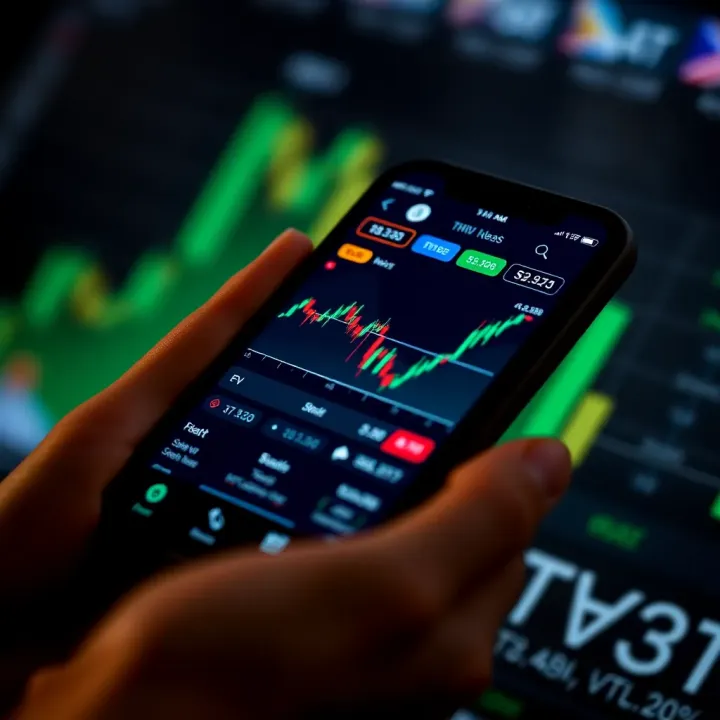
📱 Discover how forex trading apps work, what to look for, and tips for South African traders. Stay safe, understand risks, and navigate local regulations confidently.
Based on 5 reviews