
Forex Trading Hours Guide for South African Traders
📈 Learn forex trading times and best hours for South African traders. Understand key market sessions, overlaps, and tips to trade smarter and seize opportunities.
Edited By
James Thornton
Forex trading apps have simplified access to the foreign exchange market for many South Africans. With just a smartphone, anyone can buy and sell currency pairs from the comfort of their home, taxi rank, or even while waiting at the robot.
These apps provide a compact trading platform where users can monitor live prices, place orders, and manage their portfolios. Unlike traditional desktop platforms, forex apps offer the convenience of trading on the move, especially important in areas facing frequent loadshedding or limited data bundles.

South African traders benefit from apps that support popular currency pairs involving the rand (ZAR), such as USD/ZAR or EUR/ZAR. However, choosing the right app requires attention to several factors:
Regulation: Always verify whether the app is compliant with the Financial Sector Conduct Authority (FSCA). Trading on an unregulated platform puts your capital at risk.
Trading Costs: Look out for spreads, commissions, and any hidden fees that can eat into profits.
User Interface: Apps should be intuitive and responsive, allowing quick decisions especially when volatility spikes.
Features: Essential tools include real-time charts, technical indicators, and risk management options like stop losses.
Local Payment Methods: Ease of depositing and withdrawing funds via South African banks or payment methods like EFT matters a lot.
Staying informed about market news and economic events impacting the rand and global currencies is key to successful trading. Apps that integrate news feeds give you an edge.
Getting started typically involves downloading the app, registering an account with valid ID (in line with FICA), funding the account, then practising on a demo before trading live. This step helps manage risk and gain confidence.
In short, forex trading apps put global currency markets within reach, but choosing a reliable platform and understanding its features ensures a safer, more successful trading experience.
Understanding forex trading apps is crucial for anyone serious about trading currencies in South Africa’s fast-moving forex market. These apps bring the complex world of forex trading to your mobile device, making it possible to trade wherever you are – whether at a café in Cape Town or waiting in traffic in Johannesburg. Knowing how these apps work and what they offer helps you make smarter, quicker decisions in a market that rarely pauses.
Forex trading apps are specialised software applications designed to let traders access the foreign exchange market right from their smartphones or tablets. Instead of being tied to a desktop or laptop, these apps put currency pair prices, charts, and trading tools at your fingertips. They serve the practical purpose of enabling real-time trading and monitoring without needing to be at a fixed workstation.
Unlike traditional desktop platforms, forex trading apps are optimised for mobile use, meaning they have streamlined interfaces to fit smaller screens and touch navigation. For example, while a desktop platform might have vast menus and cumbersome charts, an app will simplify these elements so they’re easy to follow on a mobile screen – especially useful for traders on the go.
Forex trading apps connect to the broader forex market through servers that pull live pricing data from various liquidity providers and banks around the world. This ensures you see up-to-the-second prices for currency pairs like USD/ZAR or EUR/USD. The app updates these prices constantly, allowing you to react to market moves quickly.
When it comes to placing trades, the app provides straightforward order forms where you can specify your trade details—such as the currency pair, lot size, and whether you want to place a market or limit order. Once submitted, the trade executes through your broker’s platform. What’s handy is that these apps also let you track your open positions live, showing profit and loss updates as the market moves. This real-time monitoring is key to managing risk effectively and can’t be underestimated in volatile periods like economic announcements or Eskom load shedding disruptions.
Most importantly, forex trading apps give South African traders agility and control—we’re no longer tied to desks but can respond to opportunities the moment they arise, right from our mobiles.
Understanding this foundation puts you in a better position to choose an app that suits your trading style and local needs, helping you trade smartly and safely.
When choosing a forex trading app in South Africa, certain key features stand out as essential for a smooth, effective trading experience. These features help traders respond to fast-moving markets, manage risks, and make informed decisions without fuss. Paying attention to usability, data access, order flexibility, and security can save headaches down the road. Let’s explore these elements in detail.
Ease of use on mobiles and tablets is vital since many traders rely on their smartphones or tablets to manage positions anytime and anywhere. A cluttered or complicated app can lead to mistakes, missed trades, or slower reactions in volatile markets. Apps that offer intuitive navigation, responsive touch controls, and clear displays make it easier to check live prices or place orders — especially during peak market hours.
South African traders often deal with fluctuating data costs and intermittent connectivity during load-shedding, so an app that runs efficiently without draining data or freezing is a big plus. For example, apps like MT4 or MT5 offer lightweight versions that perform well on budget smartphones common here.
Customisable dashboards give you control over what information appears first when you open the app. Being able to pin preferred currency pairs, set quick access to charts, or toggle between different timeframes helps you tailor your workspace to your strategy. This saves time hunting through menus and ensures you stay on top of the assets that matter most.
It’s no use having a one-size-fits-all layout when you trade on the move. Insights, news, and trading tools organised to your workflow improve focus and reduce errors caused by distraction or overwhelm.
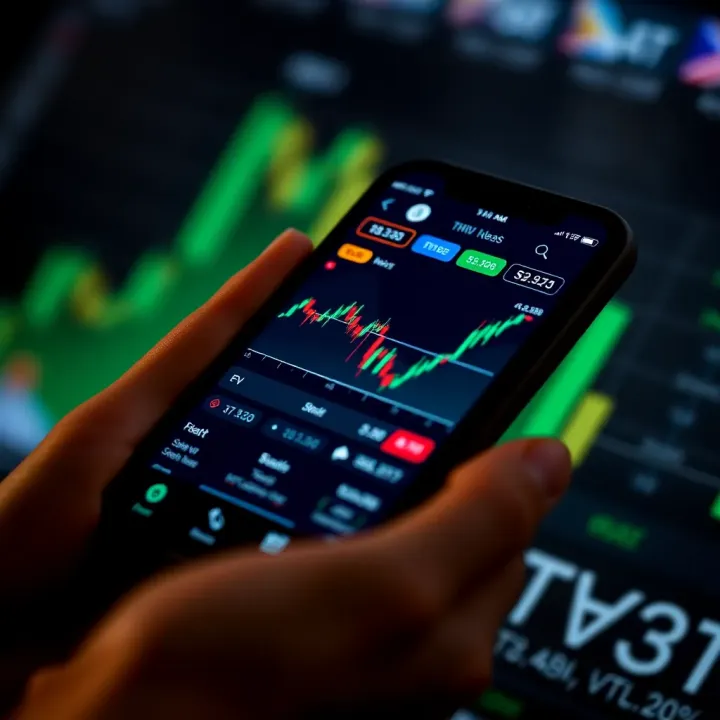
Having live pricing and charts at your fingertips is fundamental in forex trading. The foreign exchange market moves fast — fractions of a second can mean the difference between profit and loss. Accurate, real-time price updates and interactive charts help traders spot entry and exit points precisely.
Many apps offer candlestick, line, and bar charts with zoom and scroll functionality, letting you examine historical trends as well as immediate price action. This is especially helpful on technical setups like swing or day trading.
Technical indicators and news updates provide the analytical backbone for trading decisions. Tools like moving averages, Bollinger Bands, RSI (Relative Strength Index), and MACD (Moving Average Convergence Divergence) help identify momentum, possible reversals, or breakout points.
Timely news updates are equally important. South African traders keep an eye on global economic events as well as local developments, such as SARB (South African Reserve Bank) rate announcements, which can move forex markets.
Understanding market, limit, and stop orders lets you execute trades exactly how you want. A market order buys or sells immediately at the best available price — handy if you need to act fast. Limit orders let you specify a price to enter or exit, so you don’t pay more or sell for less than intended. Stop orders trigger trades once a price is reached, which helps protect profits or cut losses when you’re away.
Having all these order types within an app offers flexibility to manage trades strategically rather than reacting helplessly.
Leverage settings and risk controls are crucial for managing potential losses. Forex trading often involves borrowing money to increase position size (leverage). While leverage can boost gains, it also magnifies losses. The ability to adjust leverage within the app, set alerts, or receive margin call warnings helps prevent heavy losses.
Good apps will also let you set maximum exposure per trade or daily loss limits — simple tools that protect capital and encourage disciplined trading.
Encryption standards protect your data and funds by scrambling communication between your device and trading servers. Look for apps that use AES 256-bit encryption or similar strong protocols to prevent hackers from intercepting your login details or financial information.
In South Africa, where cybercrime is a rising concern, this level of security is not optional. Without it, your account could be exposed to theft or unauthorised access.
Two-factor authentication (2FA) adds an extra layer of defence. Beyond just a password, 2FA requires a second verification step, usually a one-time code sent via SMS or generated on an authentication app. This makes it far harder for someone to break in, even if they get hold of your password.
Many reliable forex apps now make 2FA mandatory or highly recommended for added protection, especially during fund withdrawals or sensitive account changes.
Prioritising these key features will not only improve your trading experience but also safeguard your investments in South Africa’s dynamic forex market.
By focusing on user-friendly interfaces, accurate data tools, flexible order types, and strong security measures, you choose apps that fit your trading style and shield you from avoidable risks. Always try a demo version before committing significant funds, so you know the app meets your needs in real life, not just on paper.
Selecting the right forex trading app can make a world of difference, especially in South Africa where regulatory, cost, and support factors play key roles. With many forex apps available, understanding which tools match your trading style and comply with local requirements is crucial to protect your funds and maximise opportunities.
The Financial Sector Conduct Authority (FSCA) oversees financial markets in South Africa, including forex trading platforms. Their role is to ensure fairness, transparency, and protection for traders by monitoring market behaviour and licensing providers. If a forex app operates without FSCA approval, it may not follow the necessary rules to safeguard clients.
Choosing a trading app registered with the FSCA offers practical security. It means the provider meets South Africa’s regulatory standards and must submit to audits and reporting. For instance, should disputes arise or funds go missing, an FSCA-regulated platform offers recourse options that unregulated apps do not. It also reduces risks of scams, which sadly remain a concern in the forex space.
One of the first things to check is how the app charges for trades. Most forex apps earn through spreads—the difference between buying and selling prices—which can vary widely. Some also add commissions per trade, which might be flat fees or percentage-based. Overnight fees, or swap rates, apply when positions roll over to the next day and can add up if holding trades long-term.
Hidden charges can trip up many South African traders. These might include inactivity fees if you don’t trade for a while, withdrawal charges especially for smaller amounts, or costs for currency conversion when funding your account from Rand to US dollars or euros. Always read through the terms and ask directly about any vague fees before committing.
Good support can save you countless headaches. Local customer service, ideally reachable during South African business hours, ensures you get help without long wait times or language barriers. When they understand the local context—such as loadshedding affecting internet connections—they can offer faster, more relevant assistance.
Payment ease is another factor. Look for apps that allow funding and withdrawals in South African Rand via common methods like EFT (electronic funds transfer), credit or debit cards, and even local wallets if available. This avoids unnecessary currency conversion fees and speeds up transactions, allowing you to manage your money more efficiently.
When picking a forex app, remember: regulation protects your money, clear fees prevent surprises, and local support keeps you on track. Taking the time to research these elements is well worth the afternath for your trading journey.
When trading forex through apps, managing risk is not just an option — it's a necessity. The fast pace and 24-hour nature of the forex market mean that conditions can change wildly in moments, making steady risk control essential to protect your capital. From understanding market swings to knowing how your leverage works, this section provides you with practical strategies to keep your trades sustainable.
Market volatility refers to how much and how quickly currency prices can change. It’s like a rollercoaster ride, sometimes smooth but often wild. For example, when the South African Reserve Bank changes interest rates or unexpected global events affect the US dollar, the rand can jump or dip suddenly. This unpredictability means you could make quick profits, but you can also face rapid losses if caught off guard.
Leverage and margin calls are another critical risk. Leverage lets you control a larger position with a smaller amount of your own money — sometimes up to 30 times your deposit locally, depending on the broker’s rules. While this can multiply profits, it also magnifies losses. If your trade moves against you enough, your broker will issue a margin call, requiring you to add funds to your account or close your positions. Without careful attention, this can wipe out your investment swiftly.
Setting stop losses is one of the most straightforward ways to limit risk. A stop loss order automatically closes your trade at a set price to prevent further losses. Think of it as a safety net — for instance, if you buy USD/ZAR at R18.50, you might set a stop loss at R18.20. If the price falls, you exit before losses pile up, giving you control over how much risk you take.
Limiting exposure per trade means avoiding putting too much of your account into a single trade. A common rule is not to risk more than 1-2% of your trading capital on any one position. This way, even if the trade goes south, you still have room to recover. For example, if your account holds R10,000, you’d limit your loss to around R100–R200 per trade, which helps pace your learning and protects your overall funds.
Practising without financial risk through demo accounts is essential, especially for beginner traders. These simulated trading environments let you test strategies using fake money, so you learn how forex moves without risking real cash. It’s like training before a braai — you want to get it right before you take it all outside.
Familiarising with the app interface is another key reason to use demo accounts. Each forex app has its own layout and tools. Using the demo helps you get comfortable with placing orders, setting stop losses, and monitoring your trades. This reduces mistakes when you switch to live trading because you’ve already built confidence with the controls and processes.
Remember, in forex trading, protection comes before profits. Managing risks well helps you stay in the game longer and improves your chances of consistent success.
Beginning your forex trading adventure through apps offers a practical and accessible path, especially for South African traders balancing busy schedules. These apps allow you to trade anywhere with just your mobile device, keeping you connected to global currency markets without the need for complex desktop setups. Getting the basics right—downloading, registration, funding, and initial trading decisions—can smooth your start and help avoid costly mistakes.
South African users can find forex trading apps in the Google Play Store and Apple App Store, which are the most common platforms for Android and iOS devices respectively. It's crucial to download apps directly from these official sources to avoid counterfeit or malicious software. Some popular forex brokers also offer downloads directly from their websites, but this requires caution and verifying the app's authenticity.
Account registration usually involves providing your ID number and proof of address, aligning with requirements under the Financial Intelligence Centre Act (FICA). This process confirms your identity and keeps your trading legal and secure. You'll typically upload documents like a South African ID book or card and a recent utility bill. The verification step might take a couple of days but ensures your account is legitimate and protected.
Most South African forex apps enable deposits in Rand through methods like EFT (Electronic Funds Transfer), credit or debit cards, and sometimes via popular payment services like SnapScan or Zapper. Choosing an app that supports local payment options avoids painful delays and complicated currency conversions.
Currency conversions can add subtle costs to your trades. If your deposit goes through in Rand but the trading account operates in USD or EUR, expect conversion fees. These fees vary between brokers and payment methods and can eat into your trading capital. Always check for hidden charges related to funding and withdrawing money, as these impact your overall profitability.
Starting with currency pairs familiar to the South African market is wise. Major pairs like USD/ZAR and EUR/ZAR are liquid and widely traded, reflecting South Africa’s economic ties and offering better spreads. Avoid diving straight into exotic or minor pairs which can be volatile and have wider spreads.
Focus on simple strategies when you begin. For example, consider a basic trend-following approach: spot whether a currency pair is generally moving up or down and trade along that direction instead of against it. Using stop losses to manage risk is essential. Remember, the goal is to understand the market rhythm and the app’s functionality before aiming for bigger profits.
Starting small and keeping first trades straightforward builds confidence and promotes disciplined trading habits, crucial in a volatile market like forex.
By following these steps, you’ll lay a solid foundation to grow your forex trading skills steadily and safely using apps tailored for South African traders.
📈 Learn forex trading times and best hours for South African traders. Understand key market sessions, overlaps, and tips to trade smarter and seize opportunities.

Learn how to trade gold in forex with practical tips for South African traders 📈 Understand price factors, manage risks, and navigate regulations effectively.
Discover the best forex trading software in South Africa! Learn about features, usability, security, costs, automation, and strategies to trade smarter. 📈💻
📈 Discover practical forex trading tips in easy-to-use PDF guides designed for South African traders. Boost your skills with strategy and risk management advice!
Based on 15 reviews