

Gold Forex Trading Guide for South African Traders
Learn how to trade gold in forex with practical tips for South African traders 📈 Understand price factors, manage risks, and navigate regulations effectively.
Edited By
Henry Davies
Forex trading, or foreign exchange trading, involves buying and selling currencies on a global market. Unlike the JSE, which deals with South African shares and equities, the forex market operates 24 hours a day, five days a week, offering many opportunities for traders to profit from currency fluctuations.
For South African traders, understanding forex basics is crucial before risking any capital. The forex market is influenced by geopolitical events, economic data, central bank rates, and even commodity prices—factors that can directly affect the rand (ZAR) against currencies like the US dollar (USD), euro (EUR), or British pound (GBP).
Forex is not a quick-win scheme but a skill-building endeavour. Knowing the basics helps manage risk and avoid common pitfalls.
South African traders must be aware of local regulations from the Financial Sector Conduct Authority (FSCA) and tax requirements outlined by SARS. For instance, forex profits are subject to capital gains tax or income tax, depending on how active you are as a trader. In addition, using regulated brokers who comply with FSCA rules offers added protection.
This practical guide breaks down the essential concepts—from currency pairs and pips to leverage and margin—in clear terms. You’ll also find straightforward strategies suited for beginners and tips specific to South Africa, such as managing the impact of Rands volatility or navigating local trading platforms like IG South Africa or Plus500.
Key points covered include:
The structure of the forex market
Common currency pairs and how to interpret price movements
How leverage works, including the risks
Basic trading strategies you can test in demo accounts
Risk management techniques to protect your investments
Overview of relevant South African laws and tax implications
Understanding these elements builds a solid foundation, so you can trade with confidence rather than guesswork. Whether you’re a small business owner looking to hedge currency risks or an individual hoping to supplement your income, mastering these basics is the first step.
With this foundation, you can approach forex trading responsibly and avoid common scams or reckless decisions. Next up, we'll explore the nuts and bolts of how forex markets really work, starting with currency pairs and their pricing.
Grasping the basics of the forex market is essential for anyone keen on trading currencies. Forex, short for foreign exchange, involves buying one currency while simultaneously selling another. These paired transactions mean currencies are always quoted in pairs, like the US Dollar against the South African Rand (USD/ZAR). It's practical because you're essentially betting on one currency's strength against another — for instance, if you expect the rand to weaken against the dollar, you might sell ZAR and buy USD.
Forex markets operate around the clock, influenced by global events, economic data, and geopolitical developments. This decentralised nature means no single exchange controls the market. Instead, banks, brokers, hedge funds, corporations, and individual traders connect electronically worldwide. Understanding this helps local traders in South Africa see why forex prices shift even when their market is closed — because trading happens in New York, London, Tokyo, and other hubs.
Forex trading is the exchange of currencies on the global market. Traders buy one currency and sell another simultaneously, aiming to profit from changes in exchange rates. Currency pairs consist of a base currency and a quote currency. For example, in EUR/USD, the euro is the base, and the US dollar is the quote. If the price moves from 1.1000 to 1.1050, the euro has strengthened against the dollar.
Understanding these basics allows you to interpret real-world price movements and make informed decisions. For example, keeping an eye on USD/ZAR helps local traders predict how the rand might react to US Federal Reserve announcements or South African Reserve Bank decisions.
The forex market functions 24 hours a day across time zones. Unlike stock markets with fixed hours, forex rotates through major global financial centres: Sydney, Tokyo, London, and New York. This continuous cycle means market liquidity and volatility fluctuate depending on the session.
For a South African trader, this means you can trade outside local business hours, but you need to know when market activity peaks. The London session, overlapping with New York's opening, often sees the highest trading volumes — handy for spotting bigger price moves.
Forex trading is broken down into four main sessions: Sydney, Tokyo, London, and New York. Each has unique characteristics. The London session is the busiest, accounting for nearly 35-40% of daily trades, while the New York session closely follows. Australian and Asian sessions can be less volatile but still offer opportunities, especially when economic news breaks out.
This knowledge helps South African traders plan their trading times optimally. For example, trading during London/New York overlap usually offers better spreads and more price action, making it ideal for active strategies.
Participants in forex include major international banks, central banks, hedge funds, corporations conducting cross-border trade, brokers, and individual retail traders. Banks and financial institutions provide liquidity and influence price movements through large trades. Retail traders, although smaller, make up a growing share thanks to online platforms.
Understanding the roles helps you navigate the market better. For instance, knowing that banks often set the tone can guide you in interpreting market moves. Also, dealing through reputable brokers regulated by the Financial Sector Conduct Authority (FSCA) safeguards your trading activities locally.
The forex market's global nature ensures there's virtually always action—you just need to know when and how to tap into it effectively.
In summary, understanding what forex trading entails, how the market runs globally, its active trading hours, and the key players involved equips South African traders with a solid base. This foundation makes it easier to develop strategies, manage risk, and trade confidently.
Understanding key concepts in forex trading is essential for South African traders who want to navigate the currency markets confidently. These concepts form the backbone of trading decisions and risk management, providing a clear framework for how trades are executed and evaluated.
A currency pair always consists of two currencies: the base currency and the quote currency. The base currency is the first in the pair, and the quote currency is the second. For example, in the pair USD/ZAR (US Dollar/South African Rand), the USD is the base currency, and the ZAR is the quote currency. If this pair is quoted at 15.50, it means 1 USD is equal to 15.50 ZAR. This is crucial because it determines how much local currency you need to trade or what your profit or loss will be when the pair moves.

For South African traders, knowing the base and quote currency helps to quickly assess exposure. If you're trading USD/ZAR, you’re effectively betting on the rand against the dollar, which can behave differently from, say, EUR/USD.
Currency pairs are generally grouped into major, minor, and exotic pairs. Major pairs include the most traded currencies globally, like EUR/USD, USD/JPY, and GBP/USD. They offer high liquidity and tighter spreads, making them popular among beginners and experienced traders alike.
Minor pairs involve currencies that are less traded but still liquid, such as EUR/GBP or AUD/NZD. Exotic pairs combine a major currency with one from an emerging or smaller economy, such as USD/ZAR or USD/TRY. Exotic pairs usually have wider spreads and can be more volatile, so South African traders should handle them carefully, balancing potentially higher rewards against bigger risks.
Leverage allows you to control a large position using a relatively small amount of capital. For example, with 1:100 leverage, you can trade R1,000 but control R100,000 in the market. This magnifies both potential profits and losses. In South Africa, brokers offer varying leverage limits, and regulations from the Financial Sector Conduct Authority (FSCA) influence what is allowed.
While leverage can improve returns, it drastically increases risk. Trading on margin means borrowing money from your broker to open positions. If the market moves against you, losses can exceed your initial investment quickly. This is why proper risk management, like setting stop-loss orders, is vital to protect your capital.
Price movements in forex are measured in pips, usually the fourth decimal place in a currency quote, though it may differ for pairs involving the Japanese yen or South African rand. For example, if USD/ZAR moves from 15.5000 to 15.5010, that’s a 1 pip change. Understanding pips helps traders calculate profits and losses accurately.
Trading volume is measured in lots. A standard lot is 100,000 units of the base currency, but there are also mini (10,000 units), micro (1,000 units), and nano lots (100 units). The size of your lot directly impacts the value of each pip. For South African traders, starting with mini or micro lots can limit exposure and make learning less costly before jumping into larger lots.
Knowing these key building blocks—currency pairs, leverage, pips, and lots—is not just academic. They shape every trading decision you'll make and determine your level of risk exposure in the forex market.
In practical terms, always take time to understand the currency pair you're trading, use leverage cautiously, and choose lot sizes that suit your risk appetite. These three concepts keep you grounded while navigating the often fast-moving world of forex.
Trading strategies form the backbone of consistent forex trading. They help navigate the often volatile currency market by providing clear rules on when to enter or exit trades. Without a sound strategy, traders run the risk of acting on impulse, which can quickly erode trading capital. For South African traders, mastering common strategies can also assist in adapting to local market conditions and limitations such as variable internet speed or variable spreads on certain platforms.
Reading price charts is fundamental in forex trading. Price charts display the currency’s movement over time, offering a visual tool to analyse trends and patterns. Traders often look for repeating shapes like head and shoulders, or formations such as triangles, that hint at possible future moves. For example, if the EUR/USD pair shows consistent higher lows, it suggests upward momentum which could present a buying opportunity.
Charts come in various types—line, bar, and candlestick—with candlestick charts particularly popular for their detailed information on price action within a specific timeframe. Understanding these basics allows traders to anticipate potential reversals or continuations in a market.
Common indicators used include tools like the Moving Average (MA), Relative Strength Index (RSI), and Bollinger Bands. Moving Averages smooth out price fluctuations, helping identify trend direction and possible support or resistance levels. RSI measures momentum, indicating if a currency is overbought or oversold. For instance, an RSI above 70 usually signals overbought conditions, suggesting a potential drop.
Bollinger Bands provide a sense of volatility by plotting price bands around a moving average, alerting traders to breakouts or reversals. Though no indicator guarantees success, combining a few can improve decision-making and timing.
Impact of economic data on currency values can't be overstated. Key reports—like South Africa’s GDP figures, inflation rates, or interest rate announcements by the South African Reserve Bank (SARB)—influence the rand’s strength. For example, higher inflation may lead SARB to increase rates, potentially boosting the rand's value and making it attractive to forex traders.
Currencies tend to react swiftly to these figures as they affect investor expectations about economic health and monetary policy. Traders keep an eye on economic calendars to prepare for such releases,
How news affects currency values is another crucial aspect. Political developments, unexpected events like power cuts or strikes impacting economic output, or shifts in commodity prices (South Africa being a major exporter) also move the forex market.
Take news of changed trade tariffs or policy shifts; such reports can cause sudden volatility. For instance, rumours of changes in mining taxes can affect the rand against the dollar, prompting rapid price swings. Forex traders tuned into reliable news sources can position themselves advantageously.
Staying aware of both technical cues and economic news offers South African traders a balanced edge, combining timely chart insights with real-world event context.
Managing risk is essential if you want to stick around long enough to make a profit in the forex market. Without a solid risk management plan, even the best trading strategies can lead to significant losses. Especially for South African traders, who might deal with volatile currency pairs like ZAR/USD, keeping losses in check protects your trading capital and gives you space to learn and adapt.
Setting stop-loss orders helps limit potential losses by automatically closing a trade when the market moves against you by a set amount. This tool is vital because forex markets can be unpredictable and quick downturns may wipe out your investment if you’re not careful. For instance, if you buy USD/ZAR expecting the rand to weaken but it suddenly strengthens due to unexpected South African Reserve Bank announcements, a stop-loss can stop you from losing more than you can afford.
Position sizing to protect capital means deciding how much of your total trading money to put into each trade. Many newcomers risk too much on a single position and end up blowing their accounts. A practical rule is to risk no more than one to two per cent of your account balance on any trade. For example, if your trading account holds R10,000, you’d only risk R100 to R200 per trade, so a string of losses won’t drain your fund entirely.
Emotional trading traps are a common downfall in forex, where fear or greed take the wheel instead of logic. After a losing streak, a trader might jump into risky trades just to recoup losses, often making things worse. Conversely, winning trades can make traders overconfident, pushing them beyond reasonable limits. Staying calm and sticking to your trading plan, including your stop-loss and position sizes, helps you avoid these costly mistakes.
Overtrading and excessive leverage often sneak in when traders try to chase quick profits. South African brokers typically offer leverage up to 1:200 or more, meaning you can control a big position with a small amount of money. But this magnifies both gains and losses. Opening too many trades or using too much leverage exponentially raises the risk of wiping out your account. Keeping leverage low and trading only when high-probability setups arise enables steady growth rather than short-term gambles.
Sound risk management isn’t just about avoiding losses; it’s about building a sustainable forex journey that keeps you in the game to learn, adapt, and profit over time.
By focusing on stop-loss orders, sensible position sizing, and steering clear of emotional mistakes and overtrading, South African traders can navigate this challenging market with greater confidence and resilience.
Having the right resources and tools can make a significant difference when starting forex trading, especially for South African traders new to the market. These elements not only provide foundational knowledge but also offer practical ways to hone your skills before risking real money. Without reliable materials and the correct trading platforms, beginners might find themselves overwhelmed or exposed to unnecessary risks.
Numerous forex PDF guides are available online, but it's important to pick those that come from recognised financial education providers or well-established brokers. Many South African traders start with materials offered by brokers like IG or Saxo Bank, which include beginner-friendly guides. Official educational portals from institutions such as the Financial Sector Conduct Authority (FSCA) occasionally provide helpful resources too.
A practical tip: Always prefer PDFs that offer clear explanations of basic concepts, common trading strategies, and risk management. Avoid overly promotional content that promises guaranteed profits – real trading is never that straightforward.
Good educational material should be easy to understand, free of jargon, and balanced in its presentation of risks and opportunities. Look for guides that include examples relevant to local traders, such as the impact of the South African rand (ZAR) or navigating local tax implications. Also, check for up-to-date information; forex markets evolve constantly, so outdated materials can mislead you.
User reviews and recommendations from trusted trading forums or financial communities are useful when deciding which PDFs to trust. The goal is to build a solid knowledge base that suits your learning style and trading goals.
In South Africa, platforms like IG, Plus500, and EasyEquities are popular among forex traders, each offering unique features and pricing structures. Local brokers regulated by the FSCA ensure a layer of protection and smoother deposit/withdrawal processes in Rands. Picking the right platform involves checking for competitive spreads, user-friendly interfaces, and efficient customer support.
Also, some international platforms like MetaTrader 4 and 5 are widely supported by South African brokers and remain favourite due to their advanced charting and automation options.
Most reputable brokers offer demo accounts, which allow beginners to trade using virtual money in real market conditions. This is essential for getting familiar with the platform, testing strategies, and managing emotions without risking actual funds. Practising on a demo account helps you make mistakes and learn from them safely.
Keep in mind that demo accounts sometimes differ from live trading in terms of slippage or execution speed, but they're still your best starting point. Successful traders often spend weeks or months on demo accounts before moving to live trading to gain confidence and reduce costly errors.
Reliable resources and hands-on tools can shape your forex trading experience, ensuring you don't jump into the deep end without a life jacket. Start smart with quality PDFs and the right trading platform.
When dipping your toes into forex trading in South Africa, understanding the local regulatory and legal landscape is non-negotiable. It offers practical protections and ensures you're trading within the bounds of the law — saving you from costly pitfalls. South Africa’s financial laws are designed to foster a fair market for traders while cracking down on fraudulent operators.
The Financial Sector Conduct Authority (FSCA) is South Africa's watchdog over all financial service providers, including forex brokers. Simply put, they keep an eye on brokers offering forex services locally to make sure they operate honestly and transparently. If you choose a broker registered with the FSCA, you're less likely to run into scams or shady dealings.
The FSCA also monitors compliance with trading rules, client fund protections, and ethical conduct. For example, if a broker promises unrealistically high returns or fails to separate your funds from their operational capital, the FSCA has the authority to step in. This watchful role reassures traders and helps maintain trust in the forex market.
Your investments gain an extra layer of safety when trading with FSCA-licensed brokers. These brokers are required to keep client money in separate accounts and follow strict reporting procedures. This makes it easier to trace your funds and get help if something goes wrong.
Moreover, the FSCA encourages brokers to have clear dispute resolution mechanisms and ensures traders receive fair treatment. That said, it’s still wise to do your own homework before choosing a platform. Even registered brokers vary in terms of fees, platform features, and user experiences.
The South African Revenue Service (SARS) treats profitability from forex trading as taxable income. Whether you’re trading regularly or making isolated profits, SARS expects this income to be declared — either as business income if trading actively or as capital gains if trading occasionally.
For example, if a day trader turns over forex positions constantly, SARS may classify their earnings as business profits subject to income tax and provisional tax payments. On the other hand, if forex is a side hobby and you sell off a few positions here and there, it might be more like capital gains, taxed differently. Knowing how SARS sees your trading reduces the risk of surprises when filing your return.
Maintaining detailed records is essential for managing taxes correctly. SARS requires clear documentation of every trade, including dates, amounts, currency pairs, platform fees, and balances. Without thorough records, you might end up overstating or understating your taxable profits.
Practical tips include:
Keeping a dedicated spreadsheet or using trading journal software
Saving monthly statements from your broker
Tracking conversion rates when dealing with foreign currency
Proper record-keeping also helps you during SARS audits or queries. So, it’s really worth the effort to stay organised from day one.
A solid grasp of South Africa's forex regulations and tax rules keeps your trading clean and your mind at ease. It might not be the most exciting part of forex, but it’s definitely one of the smartest moves you can make.
Learn how to trade gold in forex with practical tips for South African traders 📈 Understand price factors, manage risks, and navigate regulations effectively.
Discover the best forex trading software in South Africa! Learn about features, usability, security, costs, automation, and strategies to trade smarter. 📈💻
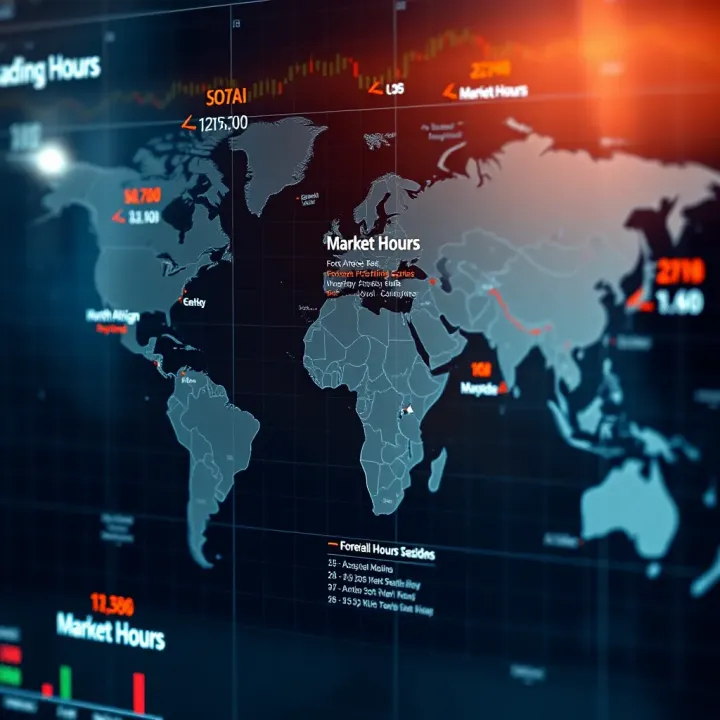
📈 Learn forex trading times and best hours for South African traders. Understand key market sessions, overlaps, and tips to trade smarter and seize opportunities.
📈 Discover practical forex trading tips in easy-to-use PDF guides designed for South African traders. Boost your skills with strategy and risk management advice!
Based on 9 reviews