
Forex Trading Apps for South African Traders
📱 Discover how forex trading apps work, what to look for, and tips for South African traders. Stay safe, understand risks, and navigate local regulations confidently.
Edited By
Emily Hart
Forex trading can seem like a tricky beast, especially when you're starting out and trying to make sense of the dizzying currency swings and global market moves. For South African traders, the challenge is even greater because local factors such as exchange rate volatility, tax considerations, and the impact of Eskom’s loadshedding on online trading platforms can’t be ignored.
Thankfully, the right books can ease this learning curve, offering practical insights and tested strategies to help you navigate forex markets with a clearer head. These books don’t just dwell on theory; they break down complex concepts like currency pairs, leverage, and technical analysis into simple, understandable chunks.
Understanding the basics is key. For example, you need to get familiar with terms like the rand-to-dollar (ZAR/USD) pair — a popular focus for many South African traders. Knowing when the South African Reserve Bank (SARB) is likely to adjust interest rates, and how this impacts currency strength, can be a real advantage.
What's more, a solid comprehension of risk management helps prevent those costly blunders that can wipe out your account. Topics such as setting stop-loss orders or understanding position sizing are covered thoroughly in quality forex books and are especially critical when trading in volatile environments like the rand.
Books that focus on practical application rather than just theory will serve you better. Look for titles that connect global forex concepts to the South African context, including dealing with the JSE, managing taxes via SARS, or trading during local economic shifts.
To get the most out of these resources, consider your current skill level. Beginners should look for books that lay strong foundations, while more experienced traders might prefer advanced strategies or behavioural finance insights to refine their approach.
In the following sections, we’ll examine specific books that meet these needs — from guides written by trading veterans to those tailored for local conditions. This way, you’ll find something that fits your style and helps you trade smarter in our unique market.
Whether you’re trading on your laptop during a coffee break or analysing charts after a long day in the office, the right book can give you a clearer vision and better tools to succeed in forex trading here in South Africa.
Grasping the basics of forex trading is the foundation for any trader looking to succeed, especially in South Africa where the rand's volatility adds complexity. Understanding how the forex market operates globally equips you to navigate price movements and trading hours effectively.
The forex market is the world's largest financial market, handling trillions of dollars daily across banks, institutions, corporations, and retail traders. Unlike equity markets, forex never closes entirely—it runs 24 hours a day from Sunday evening to Friday evening SAST because trading shifts between global financial centres as they open and close. This continuous cycle allows traders in Johannesburg to act on events from Asia overnight or the US market's opening during their day.
Key currency pairs represent the most traded combinations, such as EUR/USD, GBP/USD, and USD/JPY. These pairs tend to be more liquid and have tighter spreads, making them attractive for new traders. The rand, though less liquid, is crucial for South African traders, with pairs like USD/ZAR and EUR/ZAR reflecting local economic sentiment and international capital flows.
Major financial centres like London, New York, Tokyo, and Sydney anchor the forex market. London stands out as the busiest hub, handling around 40% of all forex transactions, partly due to its overlapping timezone between Asia and the Americas. Transactions often ramp up during the London/New York overlap, presenting opportunities for volatility and volume. Understanding when these centres operate helps traders time their strategies better.
Leverage and margin underpin forex trading but come with risks. In South Africa, brokers might offer leverage as high as 1:200, meaning you can control R200,000 with just R1,000 as margin. While this magnifies profits, losses scale too, so maintaining risk limits is crucial. Without knowing how margin calls work or the difference between used and free margin, a trader could blow an account swiftly.
Pips, lot size, and spread define price movements and costs. A pip is the smallest incremental change in a currency pair’s price—usually 0.0001 for most pairs, but for USD/ZAR, it’s 0.0001 rand increments. Lots describe trade volume; a standard lot equals 100,000 units of currency, but mini and micro lots allow smaller stakes fitting most wallet sizes. Spread is the broker’s cut, the difference between buying and selling prices. Low spreads, like 1-2 pips on EUR/USD, tend to suit high-frequency traders, while wider spreads on exotic pairs like USD/ZAR require patience.
Economic events strongly sway forex markets. For instance, South Africa’s interest rate announcements by the SARB (South African Reserve Bank) can cause sudden rand swings. Global events like US job reports, Brexit developments, or OPEC decisions ripple across currency pairs. Traders who keep tabs on economic calendars and understand which metrics matter for their chosen pairs can anticipate volatility and plan entries or exits more effectively.
Getting the basics right isn’t just an academic exercise; it directly affects the return on your trades and how you manage risk. Without these fundamentals solidly in place, a trader will struggle beyond the early stages.
From global operations to foundational trading terms, mastering these elements allows you to tackle the forex market with better confidence and realistic expectations.
Starting with the right books can simplify the steep learning curve that forex trading often presents. Beginners benefit greatly from materials that break down complex concepts into clear, practical advice. These recommended books for beginners form a solid foundation by explaining fundamentals, offering step-by-step guidance, and presenting real-world examples that resonate with new traders.
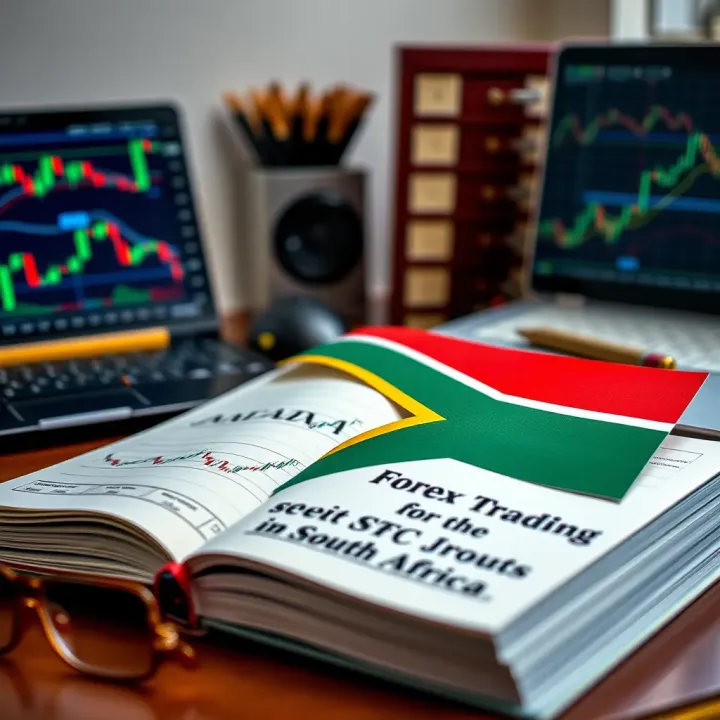
Books that explain forex without jargon help remove the mystery behind foreign exchange trading. For someone fresh to the market, confronting dense, technical language only adds confusion and discouragement. Guides that use plain language and straightforward explanations enable new traders to grasp concepts like currency pairs, leverage, and pips without getting bogged down. This approach builds confidence and makes learning less daunting.
Step-by-step approaches to starting out are crucial. They provide a roadmap from setting up an account to executing the first trade. A good beginner's book might walk you through opening a demo account, analysing a currency chart, placing orders, and managing risk. This sequence makes the learning process practical and manageable. Instead of fussing over abstract theories, it grounds knowledge in actionable tasks that learners can immediately apply.
Examples and case studies relevant to new traders further enhance understanding. For instance, a book might feature a case where a trader spots a trend in the rand against the US dollar, executes a trade, and reflects on the outcomes. Such stories show beginners what to expect and teach problem-solving in a real context. Seeing how theoretical knowledge works in practice prevents beginners from falling into traps early on.
Books or chapters addressing challenges faced by South African traders offer a much-needed local angle. Forex trading conditions in Mzansi differ because of factors like exchange control regulations enforced by the South African Reserve Bank and rand volatility. Materials that acknowledge these realities guide local traders on navigating specific hurdles, such as how capital flow restrictions affect forex liquidity.
Currency risks related to the rand warrant focused attention. The rand tends to be more volatile than major currencies like the euro or US dollar due to political developments, commodity prices, or changes in local fiscal policy. Beginner guides that unpack these risks help South African traders understand when to hedge or adjust their strategies accordingly, making their trading plans more resilient.
Helpful resources and online communities are a bonus for new traders in South Africa. Books referencing popular forums, websites like MyBroadband forex threads, or demo platforms available locally can ease the transition from reading to active trading. Joining active communities provides support, trading tips, and insight into how local traders handle challenges — a vital part of learning beyond the pages.
Selecting beginner-friendly books that combine clear explanations with local insight positions South African traders for smoother starts and better long-term success in forex trading.
Mastering advanced trading strategies is key for forex traders who have moved past the basics and want to tighten their grip on the market. This stage involves understanding complex tools and analyses that can help anticipate market movements more effectively. South African traders often face rand volatility and external shocks, making these advanced methods especially relevant.
Books that focus on chart patterns and indicators help traders decode price movements by recognising familiar shapes like head and shoulders, flags, and double tops. These patterns often hint at market reversals or continuations, providing practical entry and exit points for trades. For instance, spotting a bullish flag on the USD/ZAR pair during a period of rand weakness can signal a profitable long position.
Beyond patterns, tools like moving averages, the Relative Strength Index (RSI), and the Moving Average Convergence Divergence (MACD) offer traders measurable signals. Moving averages smooth out price fluctuations, helping identify trends, while RSI assesses if an asset is overbought or oversold, signalling possible reversals. MACD combines momentum and trend information, useful for confirming trade setups. Many traders use the 50- and 200-day moving averages crossovers as buy or sell indicators on currency pairs involving the rand.
Applying these technical tools to actual market scenarios means blending chart insights with current market context. South African traders might, for example, combine technical signals with the country’s economic news to confirm trades. If MACD signals an upward momentum on the EUR/ZAR while inflation reports show rising consumer prices, it could reinforce a bullish outlook. This hands-on use of charts moves analysis beyond theory into actionable decision-making.
Understanding key economic indicators like interest rates, inflation, and Gross Domestic Product (GDP) is vital for grasping currency value changes. South Africa's repo rate changes by the South African Reserve Bank (SARB) can cause swift rand moves, affecting forex trades. For example, a repo rate hike often strengthens the rand by attracting yield-seeking investors, influencing pairs like USD/ZAR.
Geopolitical events also sway forex markets significantly. Elections, trade disputes, or Moçambique’s unrest can impact investor confidence in the region and, by extension, the rand. A diplomatic agreement between South Africa and a major trading partner might lift the rand, presenting trading opportunities to those tuned into such developments.
Integrating fundamental data into trading plans means not relying solely on charts but also keeping an eye on economic calendars and news. A balanced trader combines technical signs with fundamental clues to time entries and exits better. For example, if GDP growth underperforms expectations while technical data indicates bearish momentum, a cautious trader might avoid long positions on the ZAR or even go short.
Advanced strategies blend chart reading and fundamental insights, allowing traders to make smarter decisions that account for both price action and economic realities. This approach suits South African traders dealing with local market quirks such as currency controls and geopolitical influences.
By reading books focused on these areas, you’ll gain a solid grasp of how to interpret the many layers affecting forex markets, translating knowledge into more confident trades. Practical guides often include case studies and examples that speak directly to the African trading experience, making your learning relevant and applicable.
Understanding how to manage risk and maintain the right trading psychology is just as vital as mastering technical skills in forex trading. Many traders, especially here in South Africa, get caught up chasing profits without a clear plan for controlling losses or their emotional responses. This section highlights practical approaches to protect your capital and keep your head straight when things don't go as expected.
Setting stop-loss and take-profit levels helps you define clear exit points for each trade before you even enter the market. A stop-loss limits your losses if the market moves against you, while a take-profit locks in gains once a currency reaches your target price. For example, if you're trading USD/ZAR and enter at 18.00, you might set a stop-loss at 17.80 to cap loss exposure and a take-profit at 18.20 to secure a profit. This disciplined approach prevents emotional decision-making during volatile moments.
Determining position size responsibly means adjusting how much of your trading capital you risk per trade based on your overall portfolio and risk tolerance. A common rule is to risk no more than 1-2% of your account on any single trade. So if you have R10,000 in your trading account, your maximum loss should be R100-R200. Proper position sizing prevents one loss from wiping out your profits and keeps your trading consistent over the long haul.
Diversification and avoiding overexposure involves spreading your risk across different currency pairs or trading strategies. For instance, focusing solely on the rand (ZAR) pairs might seem attractive, but overexposure to rand volatility can quickly drain your account. Including pairs like EUR/USD or GBP/USD offers smoother results by reducing the impact of local economic shocks. Diversifying helps you balance risk and seize opportunities across markets.
Common psychological pitfalls for traders include overtrading, revenge trading, and fear of missing out (FOMO). These behaviours often stem from poor risk control or impatience. Take the example of a trader who suffers a loss and immediately tries to gamble back the money on bigger, riskier trades. This leads to compounding losses instead of calming down and reassessing the plan.
Techniques to maintain focus and patience centre on clear routines and mindfulness. Setting trading hours, taking regular breaks, and keeping a journal of your trades help keep emotions in check. Patience is especially key when waiting for proper signals rather than forcing entries. Breathing exercises or simply stepping away from the screen for a few minutes can restore clarity during tense moments.
How self-awareness improves trading decisions is often overlooked but truly transformative. Knowing your own biases, risk tolerance, and emotional triggers lets you build rules to manage them. For instance, if you notice a tendency to hold losing positions too long, you can commit to stricter stop-loss discipline. Self-awareness fosters better decision-making and prevents costly mistakes driven by emotions.
Managing risk and developing a solid trading mindset are not optional extras — they’re the pillars that support every successful forex trader’s journey, including here in Mzansi. Without them, even the best strategies will falter under pressure.
Understanding how forex trading fits within South Africa’s unique economic and regulatory landscape is vital for local traders. Factors like rand volatility, exchange controls, and local market conditions can make a big difference in how you approach your trades. This section breaks down key considerations and practical tips tailored to South African traders.
The South African rand (ZAR) is famously volatile, reacting sharply to both local political events and global market shifts. For instance, periods of Eskom loadshedding or political uncertainty often cause sudden swings in the rand’s value. Plus, South Africa’s exchange control regulations, managed by the South African Reserve Bank (SARB), restrict how residents move currency across borders. These rules affect how much foreign currency you can access for trading, which influences your strategy and risk management.
Adapting your trading methods to local economic conditions is also important. South Africa’s economy depends heavily on commodities and global demand fluctuations. For example, a slump in oil prices might affect the rand differently than rising gold prices. Traders should watch indicators like the SARB repo rate, inflation reports, and mining output numbers. Tailoring strategies around these data points can provide an edge by anticipating moves specific to the South African market.
Reliable data sources and trading platforms matter, too. Many local traders rely on platforms like Webtrader or MetaTrader, which are supported by South African brokers. For news and market discussion, MyBroadband’s forums and financial news sites give up-to-date insights relevant to the ZAR and global trends. Staying connected to these resources helps traders react quickly and confidently.
Working with a broker regulated by the Financial Sector Conduct Authority (FSCA) is a must. The FSCA oversees brokers to ensure transparent trading practices and protects traders against fraud. South African compliance means brokers must follow strict rules on capital adequacy, client fund segregation, and fair treatment.
When evaluating brokers, spreads and leverage offered are key. Tight spreads reduce trading costs, while reasonable leverage (usually capped at 1:100 locally) controls risk exposure. But customer service is equally important. Brokers with prompt, knowledgeable support can save you headaches when glitches or questions arise — especially those offering localised services and payment options.
Some popular brokers serving South African clients include IG, Plus500, and HotForex. These have a solid regulatory footing and cater specifically to local needs, offering platforms that sync well with South African banks for fast deposits and withdrawals.
While books give foundational understanding, supplementing this with online platforms sharpens your edge. MyBroadband and forex-specific forums provide real-time discussion and peer insights, which can clarify tricky concepts found in reading.
Demo accounts offered by brokers allow you to practise without risk. Use these to test strategies discussed in books and to understand how local market quirks affect real trades. Practising in simulated environments builds confidence before committing real capital.
Tracking your trades with journal apps or spreadsheets helps identify patterns and emotional triggers. Analysing your performance regularly refines strategies and spots mistakes early. Whether you notice you tend to exit too soon or hold losing positions too long, keeping tabs on your trades is essential for steady improvement.
Successful forex trading in South Africa requires more than book smarts — understanding local market realities and leveraging practical tools makes all the difference.
That said, blending knowledge from well-chosen books with experience on local platforms and careful broker selection will take you far in navigating the forex market here.
📱 Discover how forex trading apps work, what to look for, and tips for South African traders. Stay safe, understand risks, and navigate local regulations confidently.

📈 Learn forex trading times and best hours for South African traders. Understand key market sessions, overlaps, and tips to trade smarter and seize opportunities.
📘 Learn forex trading basics with this practical guide for South African traders. Understand markets, strategies, local rules, and smart risk management.

Learn how to trade gold in forex with practical tips for South African traders 📈 Understand price factors, manage risks, and navigate regulations effectively.
Based on 9 reviews