
Choosing the Right Forex Trading Software
📊 Discover the best forex trading software for South African traders! Learn about types, key features, security, costs & automation to boost your strategy.
Edited By
Henry Davies
Forex trading attracts many South Africans looking to grow their money or diversify investments. But before jumping in, choosing the right broker can make or break your experience. Brokers act as your gateway to the forex market, taking your trades and connecting you to various currency pairs.
Not all brokers are equal, though. South Africa's regulatory environment aims to weed out sketchy operators and protect traders, but the onus remains with you to pick wisely. You'll want to balance costs, service quality, and trustworthiness.
Brokers differ in spreads, commissions, platforms offered, and customer support. For example, some charge low spreads but add commissions, while others bundle costs differently. The ideal broker suits your trading style, whether you're a scalper chasing small moves or a longer-term trader.
The Financial Sector Conduct Authority (FSCA) oversees forex trading here. Brokers regulated by the FSCA offer stronger safeguards, such as client fund segregation and transparent pricing. Keep an eye out for a valid FSCA licence.
Selecting a broker is the foundation of your forex trading journey—mistakes here can lead to unnecessary risk and expense.
To make this choice clearer, consider these key points:
Regulation: Check FSCA registration and compliance.
Costs: Understand spreads, commissions, withdrawal fees, and overnight charges.
Trading platform: Reliability and user-friendly features matter.
Customer support: Easy access to help when needed.
Deposit methods: Local payment options speed up funding.
This article unpacks these aspects so you can trade confidently in the South African forex market.
Grasping what forex brokers do can make a real difference when you’re navigating the currency markets, especially here in South Africa. Brokers act as the middlemen between retail traders and the vast, global forex market. Without them, individuals wouldn’t have direct access to trade currency pairs like the US dollar against the South African rand (USD/ZAR).
Simply put, a forex broker is a company or individual providing traders with a platform to buy and sell foreign currencies. Think of them as your gateway to global currency markets, offering software tools, access to market prices, and the ability to execute trades in real time. They also handle the technical side of things like matching buy and sell orders and processing payments.
Brokers provide platforms like MetaTrader 4, MetaTrader 5, or their own customised systems where you can see price charts, place orders, and manage your positions. They manage your trades behind the scenes by connecting to liquidity providers such as big banks or financial institutions.
For example, when you place an order to buy euros with rands, your broker sends this order to their liquidity pool or other market participants to find the best price. Some brokers might act as the counterparty to your trade, while others simply pass your order on to the market. This process affects your trade's execution speed, cost, and overall experience.
There are three main types of forex brokers you should know about, each with practical implications for your trading:
Also known as market makers, these brokers create their own market for clients. They take the opposite side of your trades, so if you buy, they sell to you. This can provide more stable pricing and faster execution but comes with a potential conflict of interest. Some market makers might widen their spreads or delay executions during volatile periods — not ideal if you prefer a transparent environment.
These brokers do not take the other side of your trade. Instead, they send your orders directly to liquidity providers or the interbank market. That generally means tighter spreads and less risk of price manipulation. However, execution can depend heavily on market conditions and the quality of your broker's connections.
Electronic Communication Network (ECN) and Straight Through Processing (STP) brokers offer direct access to multiple liquidity providers, including banks and hedge funds. They aggregate price quotes from various sources, allowing you to trade at interbank rates with minimal markups.
This type suits active traders or those who require quick, transparent executions. Take, for example, a South African retail trader using an ECN broker; they might see tighter spreads on the ZAR pairs, making a real difference when trading during narrow market windows.
Choosing the right type of broker depends on your trading style, risk tolerance, and the importance you place on pricing and execution quality. Understanding the distinctions ensures you’re not caught off guard by hidden fees or unfavourable trading conditions.
In short, knowing how forex brokers work and the options available helps you make better choices, putting you in control of your forex trading experience right here in Mzansi.
Understanding the regulatory environment protects South African forex traders from unscrupulous brokers and helps ensure fair trading conditions. Unlike some offshore platforms that operate beyond local laws, brokers authorised by South Africa’s regulatory bodies must meet specific standards that safeguard your funds and trading integrity. Without this oversight, traders risk falling prey to scams or unclear trading practices.
The Financial Sector Conduct Authority (FSCA) is South Africa’s primary regulator tasked with overseeing financial institutions, including forex brokers. Its role includes licensing brokers according to strict criteria, monitoring their adherence to market rules, and enforcing corrective measures if necessary. For instance, brokers approved by FSCA must segregate client funds from their operational money; this means your deposits can’t be easily misused or lost if the broker faces financial trouble.
The FSCA also publishes a list of authorised forex brokers. Checking this list before trading is a straightforward way to avoid unregistered firms. While FSCA regulation doesn’t guarantee profits or eliminate all risks, it provides a solid layer of protection and accountability.
Trading through a regulated broker reduces risks linked to fraud, withdrawal issues, and unfair pricing. Regulations help ensure brokers uphold transparency in spreads, commissions, and order execution. For example, a regulated broker typically cannot engage in stop-loss hunting or unfair requotes.
Moreover, regulation often requires brokers to provide accessible dispute resolution mechanisms. This means if a conflict arises, traders have formal pathways to challenge unfair treatment or seek compensation. For South African traders, who may face language or legal barriers navigating international brokers, this support matters a lot.
Also, regulation influences the stability of the trading platform itself. Licensed brokers tend to invest more in technology and customer support, reflecting their commitment to quality service and long-term operation.
Using a broker without regulatory oversight is like crossing a busy robot blindfolded; you just increase your chances of getting burnt.
South African regulators impose various rules that brokers must follow:
Capital Adequacy: Brokers must maintain a minimum capital amount to cushion against financial shocks.
Client Fund Segregation: Keeping client deposits in separate accounts guards against mishandling.
Regular Reporting: Brokers submit routine financial and operational reports to the FSCA to prove ongoing compliance.
Transparent Pricing: Spreads, commissions, and fees must be clearly disclosed without hidden charges.
Anti-Money Laundering (AML) and Know Your Customer (KYC): Brokers verify client identities and transactions to prevent illegal activities.
Though these rules add some administrative overhead for brokers, they ultimately protect traders by enforcing responsible business practices. When searching for a forex broker, ensuring they display their FSCA licence number and comply with local regulatory requirements is among the first and most practical checks you should perform.
Choosing the right forex broker boils down to understanding several key features that can impact your trading experience and profitability. For South African traders, the local regulatory environment and practical day-to-day considerations make it especially important to weigh these carefully before committing.
Your broker’s trading platform is essentially your trading workspace, so it must be reliable, user-friendly, and equipped with the tools you need. Popular platforms like MetaTrader 4 (MT4) and MetaTrader 5 (MT5) offer robust charting tools, automated trading capabilities, and custom indicators, which many South African traders prefer. Meanwhile, some brokers offer proprietary platforms tailored for mobile use or ease of access. Consider whether the platform supports your trading style — for example, scalpers need fast order execution, while swing traders benefit from detailed technical analysis tools.
Costs vary widely between brokers and can eat into your profits if you’re not careful. Spreads, the difference between the bid and ask price, typically range from 1 to 3 pips but can be tighter with ECN brokers for bigger accounts. Some brokers charge commissions on top of spreads, while others offer commission-free trading but with wider spreads. Don’t forget about swap fees, which apply to positions held overnight, and withdrawal or inactivity fees. For instance, a trader using a broker with an average spread of 2 pips versus one with 0.5 pips could lose hundreds over time, especially on high volume.
Forex brokers usually provide different account types to suit varying experience levels and investment sizes. Beginners often start with micro or mini accounts, requiring as little as R500. Conversely, professional traders might opt for VIP or institutional accounts offering lower spreads and higher leverage but requiring higher minimum deposits (sometimes above R50,000). Selecting an account type that matches your capital and trading goals helps manage risk without stretching resources too thin.
Good customer support can make or break your trading journey, especially if technical issues arise or you need clarity on policies. Look for brokers offering prompt, 24/7 support via live chat, phone, or email. Brokers that provide educational resources — like webinars, tutorials, and market analysis — add value, especially for newer traders. For example, some South African brokers offer local seminar invites or content adapted to the rand’s volatility and regional market trends, which helps you stay informed.
Choosing a broker without assessing these features is like setting off on a trip without a map: it’s possible, but chances are you’ll get lost or waste time and money. Spend time reviewing these aspects thoroughly to improve your odds in the competitive forex market.
By focusing on these key features, you’ll be better positioned to pick a broker that fits your trading style and safeguards your investments within the South African market.
When trading forex in South Africa, managing risk isn’t just smart—it’s necessary. The currency markets can be volatile, and without protective measures, losses can pile up fast. Understanding how to protect your capital keeps you in the game longer and boosts your chance of consistent profits.
Leverage lets you control a larger position than your initial deposit by borrowing funds from your broker. For example, with 1:100 leverage, a R1,000 deposit can control R100,000 worth of currency. While leverage amplifies your potential gains, it also magnifies losses — occasionally wiping out your entire deposit quickly. South African brokers usually offer capped leverage ratios (often up to 1:200) to help prevent reckless risk-taking.
Margin is the amount needed to open and maintain a leveraged trade. If your losses exceed the margin, the broker may issue a margin call, demanding more funds or closing your trade. To manage this, traders should trade within their risk appetite and use leverage cautiously.
Stop-loss and take-profit orders are essential tools to lock in profits and limit losses automatically. A stop-loss order closes a trade once it moves against you by a set amount—say, 50 pips—helping avoid emotional decision-making in hectic moments.
Similarly, a take-profit order closes your position once the market reaches a target level, securing profits without watching prices constantly. For example, if you buy USD/ZAR expecting it to rise from 18.00 to 18.50, setting a take-profit at 18.50 helps ensure you exit with gains before unexpected reversals.
Using these orders effectively means planning your trades with clear price points before market action, a habit that can protect your investment over time.
In South Africa’s forex scene, some brokers operate without FSCA approval, exposing traders to unnecessary risks and possible fraud. A broker without proper regulation may delay withdrawals, manipulate prices, or vanish with your funds.
Always verify your broker’s licence status directly with the Financial Sector Conduct Authority (FSCA). Look for clear contact details, transparent fee structures, and positive user reviews. Avoid brokers promising guaranteed returns or offering excessive leverage with no risk warnings—these are red flags.
Wise forex trading starts with a trustworthy broker and a solid risk management plan. Protecting your investment means understanding the tools at your disposal and steering clear of pitfalls common in unregulated spaces.
Managing risk with leverage, careful use of stop-loss/take-profit orders, and choosing regulated brokers are practical steps that every South African trader should adopt. This approach lays the groundwork for trading that’s not only exciting but sustainable in the long run.
Navigating the forex market successfully requires more than just understanding charts and currency pairs. For South African traders, there are specific practical considerations that can make a clear difference. These include how to fund your trading account, withdraw profits safely, and keep track of your performance for tax purposes. These aspects not only safeguard your investment but also ensure smooth day-to-day trading adapted to local realities.
When choosing how to fund your forex account, opting for local payment methods is often the easiest and most cost-effective approach. Many South African brokers accept payments via EFT (electronic funds transfer), which is straightforward for those banking with major local banks such as FNB, Standard Bank, or Absa. EFT transfers usually clear quickly and minimise currency conversion fees.
Besides EFT, some brokers also support mobile wallets like SnapScan or Zapper, popular for their speed and convenience. Using these tools can be especially handy for traders who prefer not to share bank details directly with brokers. Also, credit and debit card payments remain common, but be mindful of potential fees and delays in fund reflection.
Always check if your broker charges deposit fees or adds currency conversion costs when funding from Rands to other currencies, to avoid surprises.
Withdrawing profits should be just as hassle-free as funding. South African traders often face delays due to international withdrawal policies or currency conversions. Choosing brokers that prioritise local withdrawal channels can speed up the process.
Some brokers allow withdrawals directly to South African bank accounts via EFT, which is usually the quickest route without steep costs. Pay attention to minimum withdrawal amounts and whether withdrawal requests are processed on weekends or business days only. Setting up your account details correctly at registration helps avoid hiccups.
In cases of larger profits, splitting withdrawals into smaller chunks can protect against sudden account freezes or compliance hold-ups, which happen if brokers flag unusual activity. Always ensure the broker complies with local regulations to minimise risks.
Forex trading profits in South Africa are subject to taxation, generally as income or capital gains depending on your trading style and frequency. Up-to-date and accurate record-keeping is critical to comply with SARS requirements.
Maintain detailed logs of all trades, deposits, and withdrawals. Many brokers offer downloadable monthly or annual statements—use these to cross-check your personal records. Also, keep copies of all bank statements related to your trading account.
Using spreadsheet software or specialised portfolio tracking apps can simplify monitoring your gains and losses over time. Remember, having a clear audit trail not only helps when SARS comes knocking, but also aids in evaluating your trading strategies and adjusting where necessary.
Ignoring tax obligations can lead to penalties and interest; always consult with a tax advisor familiar with forex trading in South Africa.
By focusing on these practical tips — local payment methods, secure withdrawals, and thorough record-keeping — South African forex traders put themselves in a stronger position to trade confidently and legally. These routines complement the broader learning on broker selection, risk management, and regulations covered in this article.
📊 Discover the best forex trading software for South African traders! Learn about types, key features, security, costs & automation to boost your strategy.
📊 Discover how to choose the right forex trading software in South Africa! Learn key features, types, and tips to boost your trading success effectively.
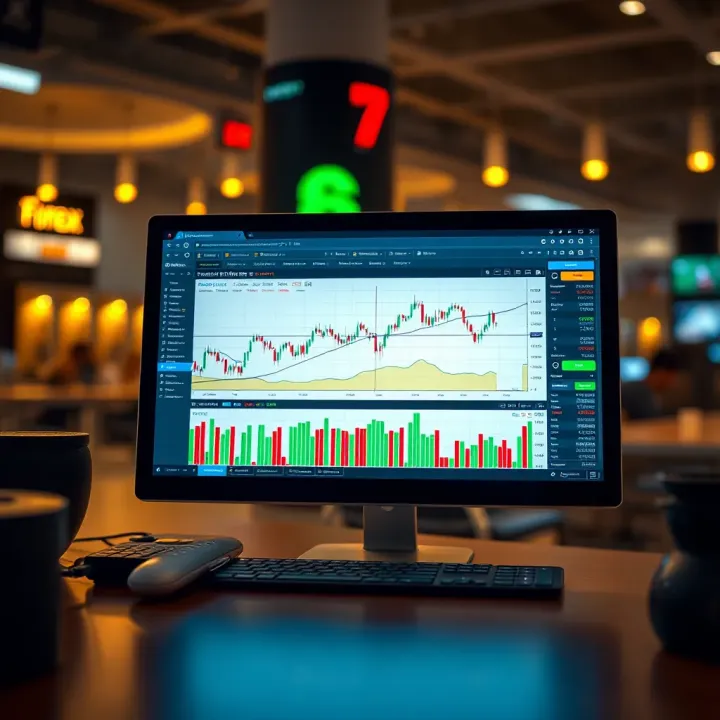
Discover how to choose and use forex trading software in South Africa 🇿🇦. Learn about key features, regulations, top platforms, and tips to boost your trading skills.
📈 Learn how to trade forex in South Africa safely and smartly. Understand currency moves, key influencers, and trading tips for local and global platforms.
Based on 8 reviews