
Forex Trading Markets: A Guide for South African Traders
📉 Learn forex trading basics, key rand pairs, market hours & strategies tailored for South African traders. Stay ahead with practical tips & smart risk control 🇿🇦
Edited By
Megan Hughes
Forex trading can appear overwhelming at first, especially if you’re new to financial markets. But with a clear guide and practical steps, you can get a good grasp and trade confidently, even from South Africa.
The forex market is where currencies are bought and sold. It's the largest financial market worldwide, trading trillions of rands every day. As a South African trader, you might be drawn by its accessibility — the market runs 24 hours during weekdays, and you can start with relatively small capital. Plus, trading forex online is straightforward with platforms offered by brokers regulated locally or internationally.
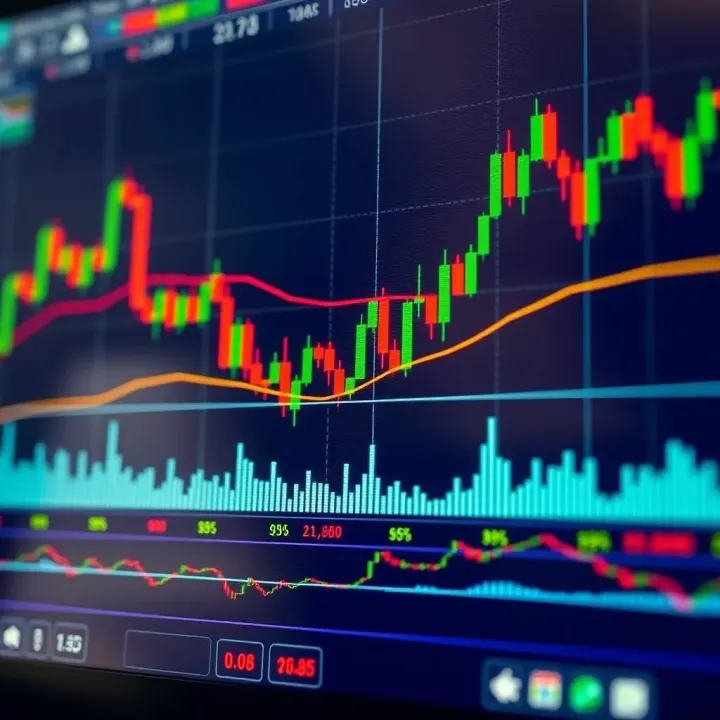
Understanding the basics is key. Forex pairs are quoted with a 'base' currency and a 'quote' currency, for example, ZAR/USD or EUR/USD. The value tells you how much of the quote currency you need to buy one unit of the base currency. Movements in these rates reflect economic events, political shifts, and market sentiment around the globe.
Getting started safely means choosing the right broker. Look for one registered with the Financial Sector Conduct Authority (FSCA) in South Africa or a well-known international regulator. Watch out for hidden fees, and always start with a demo account before risking real money. Many brokers provide free PDF tutorials; these can walk you through platform navigation, order types, and technical analysis basics.
Remember: never risk more than you can afford to lose.
Analysing the market effectively requires learning technical indicators like moving averages and RSI, alongside understanding fundamentals such as interest rates and GDP figures. Practising on charts and reviewing your trades builds your skill set gradually.
In this article, you’ll get access to a practical PDF tutorial tailored specifically for South African traders. It breaks down complicated jargon, offers step-by-step instructions to open accounts, execute trades, and manage risks. Plus, it includes tips on recognising market patterns and best times to trade considering South Africa's timezone.
Take your first step with clear knowledge and avoid the common pitfalls many beginners face. With patience and practice, forex trading can become a useful addition to your portfolio or even a source of income.
Grasping the basics of the forex market sets the foundation for successful trading. Without a clear understanding of how the market operates and the terms involved, you risk making costly mistakes. This section breaks down the essential elements of forex trading, focusing on practical insights relevant to South African traders.
The forex market is a global network where currencies are bought and sold. Major players include banks, central banks, hedge funds, corporations, and retail traders like you. For example, the South African Reserve Bank (SARB) influences the market through its monetary policies, affecting the rand's value.
Understanding who moves the market helps you interpret price action better. A large bank executing a big order can shift prices quickly, while retail traders generally follow these trends rather than create them. Recognising this difference can shape your trading strategy and risk approach.
Forex trading always involves pairs, such as ZAR/USD or EUR/GBP, where you buy one currency and sell another at the same time. The price quoted shows how much of the cross currency you need to buy one unit of the base currency. For instance, if the ZAR/USD pair is trading at 0.065, it means one South African rand buys 6.5 US cents.
Knowing how pairs work guides your decision-making. Some pairs, like ZAR/USD or ZAR/EUR, are more volatile due to emerging market factors and can offer greater profit potential but also higher risk.
The forex market never truly sleeps, operating 24 hours across different global financial centres. The main sessions include Sydney, Tokyo, London, and New York. For South African traders, the overlap between London and New York sessions often provides the best trading conditions due to higher liquidity and tighter spreads.
Trading when major markets are active means you can access better price stability and more opportunities. It also helps you time your trades effectively, for example, avoiding periods of low liquidity that cause erratic price moves.
A pip is the smallest price move in a currency pair, usually the fourth decimal place (0.0001). For example, if EUR/ZAR moves from 19.5000 to 19.5005, that's half a pip.
A lot refers to the trade size. The standard lot is 100,000 units of the base currency, but many brokers offer mini or micro lots allowing smaller, manageable trades.
The spread is the difference between the bid and ask price—the cost you pay to enter the trade. If ZAR/USD has a bid of 0.0648 and ask of 0.0650, the spread is 2 pips. Tight spreads lower your trading costs.
Leverage lets you control a larger position than your initial deposit. For example, a 1:100 leverage means R1,000 can control R100,000 worth of currency. While it boosts profits, it increases risk, too.
Margin is the collateral you need to maintain to keep the position open. Trading responsibly requires managing leverage to avoid sudden losses, especially during volatile South African rand movements caused by local economic events or Eskom loadshedding disruptions.
The bid price is what buyers are willing to pay, while the ask price is what sellers want. The difference between the two forms the spread.
Understanding these prices helps you time your entries and exits more effectively. For instance, if you’re selling ZAR/USD, you’ll get the bid price, but to buy, you’ll pay the ask. This small gap affects your breakeven point immediately.
Knowing these forex basics lets you approach trading with both confidence and caution, keeping you prepared for real-market swings and helping you make informed decisions every step of the way.
Stepping into forex trading in South Africa requires a clear understanding of the starting blocks. This phase is key because it sets the foundation for how you’ll navigate the market, manage your risks, and ultimately succeed or fail. South African traders face unique challenges and opportunities, from navigating local FSA regulations to dealing with responses to loadshedding or fluctuating rand exchange rates. Getting started right means picking the proper broker, having reliable tools, and educating yourself thoroughly — all of which reduce guesswork.
The Financial Sector Conduct Authority (FSCA) is the official regulator overseeing financial markets in South Africa, including forex brokers. Choosing a broker regulated by the FSCA adds a strong layer of protection. Such brokers must adhere to strict standards on client fund segregation, transparent pricing, and fair dealing. For example, a broker licensed by the FSCA provides South African traders confidence that their capital won’t be wilfully misused or vanished overnight.
Local regulation also ensures brokers follow anti-money laundering rules (through FICA - Financial Intelligence Centre Act compliance) and consumer protection laws. This is particularly practical since unregulated offshore brokers often have lax standards, putting traders at higher risk of fraud or disrupted withdrawals.
MetaTrader 4 (MT4) and MetaTrader 5 (MT5) remain the most popular trading platforms worldwide, and South African traders benefit from their user-friendly design alongside reliable execution. These platforms offer real-time charts, automated trading, and comprehensive technical indicator sets. Brokers often support MT4/MT5 alongside web-based platforms, which are useful for traders who want quick access without heavy software.
Other platforms like cTrader or proprietary solutions offer alternative features, but MT4/5’s broad community means easier access to strategies and tutorials. For example, many South African traders download free PDF guides or join forums focused on these platforms to sharpen their skills.
Brokerages typically offer multiple account types tailored to different experience levels and capital sizes. In South Africa, these often range from micro accounts with low minimum deposits (around R500 to R1,000) to standard accounts and VIP tiers. Each account type varies in spreads, commission charges, and leverage limits.
Funding options are usually varied to suit local preferences. Major brokers support deposits via EFT (electronic fund transfer), debit/credit cards, and popular e-wallets like Skrill or Neteller. Some also accept payments via South African-specific methods, including instant EFT with services like Ozow. Withdrawal should be just as straightforward — a factor you should test before committing large sums.
Once you’ve chosen a broker, setting up the correct platform is the next step. MetaTrader 4 or 5 can be downloaded for free, offering installation on desktop and mobile environments. This flexibility means you can trade on the go with your smartphone or from your home office with a desktop version.
Getting comfortable with the platform’s features is crucial. For instance, placing pending orders, setting stop-loss/take-profit levels and using chart indicators all require some practice. South African traders might find it helpful to start with basic functions before moving to complex automation like Expert Advisors (EAs).
Most brokers provide free demo accounts that let you trade virtual money in a simulated market. This practice environment is invaluable to test your strategies without risking real rand. Take, for example, a newbie who opens an MT4 demo and practices opening and closing trades during the trading week to understand spreads and execution speeds.
Demo accounts also help you explore how changing leverage or adjusting your risk works in real-time battling market swings, a must before trading with real funds.
Complementing hands-on practice with structured learning improves your understanding drastically. PDF tutorials dedicated to forex trading offer step-by-step guides, explanations of core concepts, and practical tips specific to platforms or South African market conditions.
They’re handy for offline study too. This means you can download a PDF tutorial from your broker or a trusted South African trading education website, study at your own pace, and refer back whenever needed without relying on internet connectivity.
Starting forex trading with the right broker and tools, combined with solid self-education, dramatically increases your chances of long-term success in South Africa’s forex market.
Understanding effective trading strategies and analysis is key for any forex trader. It's not enough to simply make guesses or follow tips from forums—you need a clear method to interpret market movements and decide when to enter or exit trades. This dual approach of fundamental and technical analysis helps you read the market's pulse, making your trading decisions more informed and less like throwing a dart blindfolded.
Economic indicators tell us about the health of a country’s economy and, in turn, influence its currency's value. Indicators like GDP growth rates, employment figures, and inflation rates give traders clues about the direction a currency might take. For example, if South Africa’s GDP growth disappoints compared to expectations, the rand might weaken against other currencies.
Interest rates and monetary policies set by central banks have a heavy impact on currency prices. When the South African Reserve Bank (SARB) adjusts interest rates, it affects how attractive the rand is to investors. A hike typically strengthens the currency as it offers better returns, while a cut might weaken it. Similarly, announcements from the US Federal Reserve can shift global flows, affecting emerging markets like South Africa.
Political events are another crucial driver. Elections, policy changes, or unexpected incidents like strikes can trigger sudden moves in currency values. Consider the rand’s volatile reaction to past political uncertainties around government changes or fiscal policy announcements. Staying up to date means you can anticipate potential market reactions rather than being caught off guard.
Reading charts is about spotting patterns and trends that give insight into future price movements. You look for higher highs and lows to identify an uptrend or the reverse for a downtrend. For example, if the EUR/ZAR pair consistently forms higher lows on the daily chart, that suggests upward momentum.
Indicators like the Relative Strength Index (RSI) and Moving Averages help quantify these trends. RSI shows if a pair is overbought or oversold, giving signals for potential reversals. Meanwhile, Moving Averages smooth out price action and can highlight trend directions or entry points, such as when a short-term average crosses above a long-term one.
Support and resistance levels mark price points where a currency pair has historically struggled to move beyond or dropped to before bouncing back. Recognising these zones helps plan your trades, for instance, setting stop-loss orders just below a support level to limit losses. Price patterns such as triangles or head and shoulders can also hint at continuation or reversals, making them vital tools in your trading playbook.
Combining solid fundamental insight with technical tools will put your forex trading on a firmer footing. Neither method alone tells the full story, but together they offer valuable perspectives that help you trade smarter rather than harder.
Managing risk and staying disciplined are the backbone of any successful forex trading journey. Without concrete risk controls, a single bad trade can wipe out gains from several wins. Likewise, emotional decision-making can lead traders astray, causing inconsistent results. For South African traders navigating volatile markets and sometimes unpredictable events like load-shedding or political shifts, solid risk management and firm discipline help maintain steady progress.
Setting stop-loss and take-profit levels helps you control how much you’re prepared to lose or gain on a trade before entering the market. A stop-loss automatically closes a position if the price moves against you beyond a set point, limiting potential damage. For instance, if you enter a EUR/USD trade at 16.7000, placing a stop-loss at 16.6800 means you limit your loss to 200 pips. Similarly, a take-profit locks in profits by closing the position once a target price is reached. This automated approach avoids second-guessing during market swings.
Using position sizing and leverage safely is key to preventing runaway losses. Instead of risking large portions of your capital on a single trade, decide on a fixed percentage—say 1% or 2% of your trading account per trade. If your account balance is R20,000, risking 1% means you lose no more than R200 on that trade. Leverage magnifies both gains and losses; South African brokers often offer 1:100 or higher, which can be tempting but dangerous. Wise traders keep leverage low or use it cautiously, as it's easy to lose more than you expect if the market turns sharply.
Avoiding emotional trading mistakes means sticking to your predefined plan, even when the market feels tempting or intimidating. Fear and greed are the biggest culprits behind rash decisions like chasing losses or overtrading. For example, doubling your position after a loss “to recover quickly” often backfires. Staying calm, taking breaks during volatile periods, and trusting your strategy keeps emotions in check and trading consistent.
Keeping a trading journal is a practical way to track what works and what does not. Logging your trades with details like entry and exit points, reasons for the trade, and results helps spot patterns in your behaviour and strategy effectiveness. Over time, you can refine your approach based on real data instead of relying on memory or gut feel.
Continuous learning through PDFs and other resources keeps you updated on new techniques, market changes, and regulatory shifts. Many South African traders make use of downloadable PDF tutorials, webinars from local brokers, and trading forums to expand their knowledge. Staying informed reduces costly mistakes and opens chances to adapt to evolving conditions.
Adapting strategies to changing market conditions means recognising that the forex market rarely behaves the same way day after day. What worked during a trending market may fail in sideways or choppy markets. For example, a moving average crossover strategy can falter during low volatility phases common in certain South African public holidays. Good traders watch the market environment, backtest strategy tweaks, and stay flexible instead of rigid.
Staying disciplined in risk management and skill development isn’t just about avoiding losses; it’s about protecting your capital so you can trade another day and keep improving.
Consistent application of these practices not only protects your funds but also builds the confidence and habits needed for long-term success in forex trading.
📉 Learn forex trading basics, key rand pairs, market hours & strategies tailored for South African traders. Stay ahead with practical tips & smart risk control 🇿🇦

📘 Learn forex trading basics with this practical guide for South African traders. Understand markets, strategies, local rules, and smart risk management.

Learn how to trade gold in forex with practical tips for South African traders 📈 Understand price factors, manage risks, and navigate regulations effectively.

Discover the best forex trading software in South Africa! Learn about features, usability, security, costs, automation, and strategies to trade smarter. 📈💻
Based on 14 reviews