

Understanding Free Binary Signals in Trading
📊 Discover how free binary signals work, their pros and cons in binary options trading, and tips to spot reliable sources for smarter trading decisions in South Africa.
Edited By
Liam Fletcher
Binary signals have become a vital tool for many traders navigating the ups and downs of binary options markets. These signals offer guidance by flagging potential market moves, helping you decide when to enter or exit trades. But not all signals are created equal — the challenge lies in recognising trustworthy sources and understanding how to use them wisely.
Binary signals are typically generated through technical indicators, algorithms, or expert analysis, aiming to predict asset price movements within a specific timeframe. You might see a signal suggesting an asset like gold, the Rand, or a stock index is likely to rise or fall, giving you a clue on whether to ‘call’ or ‘put’. This can save you precious time sifting through data but comes with risks if misunderstood or blindly followed.

Reliable signals don’t promise guaranteed profits; rather, they provide informed predictions based on market patterns and historical data.
When assessing binary signals, there are several features to consider:
Accuracy and past performance: Check how often the provider’s signals have hit the mark. Don’t expect perfection, but consistent success rates above 60% can be a good sign.
Transparency: Trustworthy services reveal their methodologies or at least share their performance stats openly.
Timeliness: Signals must be delivered promptly to act on them effectively, especially in markets prone to rapid swings.
Asset Coverage: The best signals cover a broad range of assets relevant to your trading style, whether forex pairs, commodities, or indices.
Free services can be tempting, but they often come with delays, less accuracy, or hidden catches. Paid subscriptions usually offer faster, more reliable data and access to additional analysis tools. Popular providers include those linked to major brokers or independent platforms with strong track records.
Use binary signals as part of a broader strategy — combining your own research, money management rules, and awareness of market news. For instance, signals might alert you to a possible rise in the JSE Top 40 index, but factoring in economic data releases or Eskom loadshedding alerts can steer smart decision-making.
Being selective and critical helps prevent losses from poor signals. Whichever service you choose, test it alongside a demo account first or commit small amounts until you’re confident.
By understanding what makes a signal reliable and how to interpret it, you place yourself a step closer to smarter trading moves tailored to South African and global markets alike.
Binary signals act as trading alerts that suggest the potential direction of an asset’s price movement — up or down — within a specific timeframe. They essentially provide guidance for binary options traders on when to enter or exit trades, aiming to improve decision-making in a fast-moving market.
At its core, a binary signal is a recommendation based on technical analysis, market trends, or algorithmic calculations. For instance, a signal might indicate that the price of gold will rise in the next 15 minutes. Traders then decide to place a "call" option (betting on price increase) or "put" option (price decrease) based on these clues.
These signals can come from various sources — human experts observing market patterns, automated bots crunching data, or platforms combining both. The key is that they aim to condense complex market information into a simple, actionable trading tip.
Using binary signals helps traders respond quickly without needing to constantly analyse charts or news. For example, during volatile times such as the hours around major South African Reserve Bank (SARB) announcements, traders can rely on signals to guide timely trades. This can reduce emotional bias and improve consistency.
That said, binary signals are not foolproof. Their success depends on the accuracy, timing, and relevance of the data behind them. A signal about the JSE Top 40 index’s short-term movement needs to factor in local market behaviour and external factors like currency swings or global market jitters.
Effective traders combine signals with personal analysis, adjusting their strategies according to market context rather than blindly following alerts.
In practice, relying on binary signals can save time and help newcomers avoid costly mistakes. However, savvy traders see them as one piece of the puzzle — a tool to complement, not replace, careful market study and risk management.
Understanding what binary signals are and how they operate lays the foundation for selecting reliable providers and integrating these signals smartly into trading routines. This knowledge helps you distinguish useful signals from noise and tailor your approach to South African market dynamics.
Choosing a trustworthy binary signal provider can make a major difference in your trading results. Not all signals are created equal, so knowing the key traits to look for helps you pick a service that truly offers valuable insight rather than guesswork.
Accuracy is without doubt the most important factor when assessing a binary signal. A signal that predicts market moves correctly will boost your chances, while an untimely or wrong signal can drain your funds fast. For example, a signal suggesting a rise in a JSE-listed stock’s price right before a significant earnings release might be off-mark if it ignores the market mood or key news. It's essential that providers deliver signals promptly so traders can act before the opportunity vanishes. In practice, some services deliver real-time alerts via apps or desktop platforms, giving you seconds to decide. Delays of even a minute can turn a profitable trade into a losing one, especially in fast-moving markets.
A reliable provider doesn't hide behind vague claims. Look for those who openly share their historical performance and how their signals are generated. For instance, a service listing monthly success rates alongside samples of past signals shows a commitment to clarity. Conversely, be sceptical of providers boasting near-perfect accuracy without evidence—that’s usually a red flag. Transparency extends to explaining the methodology, whether it’s based on technical charts, fundamental analysis, or algorithms. Some providers also allow users to back-test signals against past market data, adding confidence. Always remember: a solid track record built over months or years is a better indicator than short-term hype.
Even the best signals lose value if they’re hard to understand or access. Good providers design interfaces that make signal alerts straightforward and actionable. For example, clear instructions like “Call option on USD/ZAR for 15 minutes” avoid confusion. Accessibility matters too—signals delivered via multiple channels such as mobile notifications, emails, or even WhatsApp suit different trader preferences and working styles. Plus, some platforms offer signals in formats compatible with popular trading apps, so you can place trades swiftly. This reduces the chance of missing out due to technical glitches or slow reaction times. Trading in South African markets also means providers must be mindful of local trading hours and market conditions, making customised timing a plus.
When picking a binary signal service, look beyond flashy ads and check these core characteristics carefully. Good signals aren’t a crystal ball, but they should be accurate, transparent, timely, and user-friendly to give you a practical edge.
Overall, focusing on accuracy, transparency, and usability guides you to a provider that supports better decisions rather than just noise. This foundation helps you build a trading strategy that stands up in the tough South African market environment.
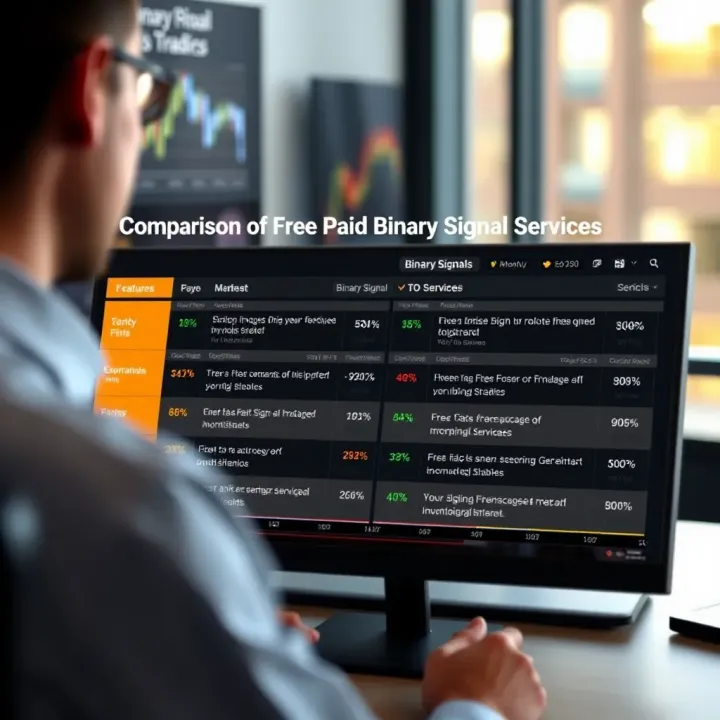
Choosing between free and paid binary signal services can make a significant difference in trading outcomes. The decision depends largely on your trading goals, available resources, and tolerance for risk. Free signals are tempting, especially for beginners testing the waters without financial commitment. Paid services, on the other hand, often promise higher accuracy and advanced features, which can be a game changer for serious traders.
Free binary signals offer an accessible way to dip your toes into the trading waters without paying upfront. Many reputable brokers and platforms provide complimentary signals as part of their package to attract new users. This can be a practical choice to get a feel for how signals work in real-time markets. However, free services often come with constraints. Signal accuracy may not be consistent, and updates might lag behind market movements, reducing their practical use. Some free signals also lack detailed explanations or supporting charts, leaving traders guessing about the rationale behind each tip.
For example, a free signal from a popular social trading app might suggest a quick win, but without context or strategy, following it blindly could lead to losses. Furthermore, some free providers may push for paid upgrades, pressuring users with constant reminders.
Paid binary signal services typically offer more reliable and timely information, supported by in-depth market analysis. They tend to use sophisticated algorithms and human expertise to generate signals that consider multiple market factors. For instance, a subscription service might combine technical indicators such as moving averages, RSI, and trading volume to propose higher probability trades.
Subscribers often gain access to additional perks, such as 24/7 customer support, trading tutorials, and tailored alerts, making it easier to integrate signals into a broader strategy. A South African trader using a paid service could balance signals alongside local economic events—like SARB interest rate announcements or Eskom load shedding schedules—to refine timing.
Paid services encourage discipline and consistency by providing a structured approach that free signals often lack. That said, it's essential to verify the provider’s performance record and avoid services overpromising a guaranteed win rate.
While free signals cost nothing upfront, their hidden costs come in the form of missed opportunities and potential losses due to lower accuracy. Paid services require careful cost-benefit analysis—deciding whether the subscription fee justifies the quality and quantity of signals provided.
Consider a trader paying R500 monthly for signals that increase successful trades by 20% compared to free alternatives. If this improves overall profitability, the fee is justifiable. However, some expensive services charge premium prices without delivering substantial added value, so due diligence is crucial.
Remember, no signal service guarantees success. The smartest traders combine signals with their own market knowledge and risk management.
Before committing to a paid service, trial periods and user reviews can offer insight. For many South African traders, a blend of free signals supplemented with selective paid options strikes a practical balance.
Understanding the strong and weak points of both free and paid binary signals helps traders choose wisely, optimising their chances for success while managing cost and risk effectively.
When it comes to trading binary options, selecting a well-known and trustworthy signal provider can make a world of difference. Popular providers usually have proven systems, established user bases, and clearer track records, which help traders make more informed decisions without blindly relying on guesswork.
Several binary signal services have gained attention globally and locally. For example, Binary.com Signals is popular for its user-friendly interface and clear signal delivery. Then there’s OptionRobot, which combines automated trading with signal provision, appealing to those who prefer some level of automation but still want oversight. Signals365 is another widely used platform known for offering real-time alerts covering multiple assets, including currencies and commodities.
Many of these services cater to a range of experience levels—from beginners needing straightforward signals to advanced traders seeking detailed charts and market analysis. It’s worth noting that some providers focus on speed and frequency of signals, while others emphasise accuracy and quality over quantity.
Top binary signal providers usually stand apart because they maintain a fine balance between accuracy, transparency, and customer support. For instance, reliable providers openly display their past results and win rates, while also acknowledging the inherent risks involved. They also tend to use complex algorithms backed by technical indicators and sometimes even integrate human expert input.
Another factor is the ease of use. Services that integrate seamlessly with popular trading platforms like MetaTrader 4 or 5 offer added convenience, reducing the time spent manually inputting trades. Accessibility via mobile apps also counts heavily—traders want to get signals on the go, especially given how volatile markets can be.
Furthermore, the best providers keep upgrading their features based on user feedback and market changes. Regular updates, educational resources, and customer support helplines are qualities you’ll often find setting top providers apart.
Listening to user reviews reveals practical insights beyond glossy websites. Traders often mention how consistent the signal accuracy is and whether the service's alerts come early enough to respond effectively. Some reviews highlight frustrations with delays or vague signal instructions that leave them guessing on how best to act.
On the flip side, positive user feedback usually praises providers that offer clear, actionable signals with realistic profit expectations. For example, a trader might share how following a particular provider’s signals helped avoid losses during volatile periods, reflecting the service’s ability to adapt.
Do keep in mind that no provider guarantees a 100% success rate—binary trading always carries risk. So, looking at broad user feedback trends and testing services yourself with demo accounts helps you gauge if a service suits your trading style.
In short, popular binary signal providers are often popular for good reason, but verifying accuracy, understanding their approach, and learning from fellow traders can shield you from investing in unreliable services. Ultimately, balance your trust with due diligence and practical experience.
Using binary signals well can make a real difference in your trading results. These signals point to likely market moves, but how you interpret, combine, and manage them matters just as much as choosing the right provider.
Understanding what a binary signal actually suggests is the first step. Not every signal guarantees success. Look closely at the signal’s details: the asset involved, the direction (up or down), expiry time, and the confidence level. For example, a signal indicating that the price of gold will rise within the next hour needs to fit your current strategy and market conditions. Signals without clear expiry times or asset specifics could lead you astray.
Pay attention to the source’s history in accuracy. A signal that worked 90% of the time last month could lose edge if market volatility spikes, especially during events like Eskom load-shedding or political announcements shaping rand movements. So, signals need regular re-evaluation.
Treat signals as part of a bigger picture, not a standalone solution. Combine them with your own market analysis and risk parameters. For instance, if a signal advises a bullish trade on a share listed on the JSE, back it up by checking recent volume trends or news releases about that company.
Many traders find success by using signals to time entries or exits within their pre-planned strategies. One practical approach might be limiting trades to signals on assets you frequently follow, reducing guesswork. Also, diversify based on asset classes to avoid putting all your eggs in one basket.
Binary options trading is inherently risky, and signals don’t remove that. Always set limits on your trades—decide in advance how much you’re willing to lose on a single signal-based trade. Using stop-loss orders or fixed investment amounts helps keep losses manageable.
Beware of overreliance. Some newcomers chase every signal hoping to make quick profit, but this often leads to chasing losses. Instead, pick signals thoughtfully and stick to a disciplined plan. Record your trades and analyze which signals tend to work best — your track record is a valuable tool.
Signals are tools, not crystal balls. Use them wisely within a solid strategy and always keep your risk in check.
In short, making the most of binary signals requires clear understanding, smart integration, and strict risk control. When done right, they can complement your trading and help you make better decisions in a fast-moving market.
📊 Discover how free binary signals work, their pros and cons in binary options trading, and tips to spot reliable sources for smarter trading decisions in South Africa.
📈 Understand forex trading signals, how they guide currency buy/sell decisions, their types, reliability, and practical tips to enhance your trading success.
📈 Learn binary options trading basics tailored for South Africans. Understand how it works, risks involved, steps to start, and avoid common pitfalls confidently.
📈 Learn how binary option trading platforms work, spot key features, understand local risks, and make informed choices with insights tailored for South African traders.
Based on 15 reviews