

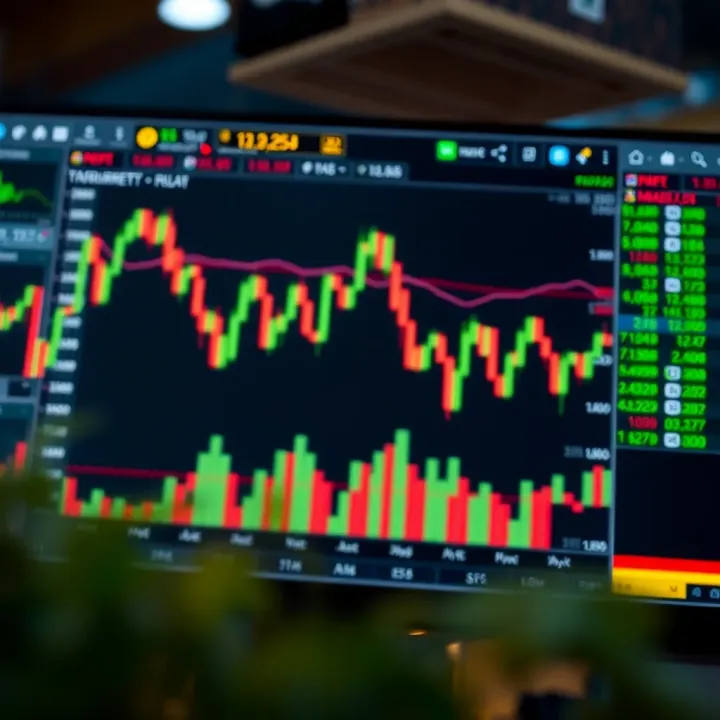
Graphic Trends Analysis in Binary Options Trading
📈 Discover how to use graphic trends analysis in binary options trading, with key chart patterns, tools, and tips for managing risk effectively. 💡
Edited By
Charlotte Price
Binary options trading offers a chance to earn quick returns by predicting whether the price of an asset will move up or down within a set time. This appeal is strong for South African traders seeking fast results, but the risks can be steep if you jump in without a solid plan.
Understanding the basics is just the first step. Successful trading requires recognising market signals, managing your risk adequately, and choosing the right assets to trade. Without these elements, it's easy to burn through your capital faster than a bakkie on a long highway trip.

Trading binary options isn't a guaranteed shortcut to wealth—it demands discipline, sharp analysis, and realistic expectations.
South African traders face unique challenges, such as limited access to some international platforms and the impact of Rand volatility on foreign assets. Plus, reliable internet connectivity can fluctuate, especially outside urban centres, affecting how quickly you react to market changes.
Here are some key areas to focus on as you develop your trading strategy:
Spotting Market Signals: Learn to read candlestick patterns and volume changes that often hint at price moves. For instance, sudden volume spikes on a stock listed on the JSE might precede sharp price shifts.
Risk Management: Never commit more than a small percentage of your trading capital on a single option. A common rule is to risk no more than 2-3% per trade to stay in the game longer.
Asset Selection: Be selective about what you trade. Choose assets you understand well, such as local shares or commodities like gold, which South African traders usually follow closely.
By laying down a strong foundation with these practical steps, you’ll improve your chances of navigating the binary options market with some level of confidence and control. The rest of this article will explore each area in more detail to help you trade smarter, not harder.
Grasping the basics of binary options is the foundation for any trader aiming to succeed in this fast-paced market. Binary options are financial contracts where you predict whether the price of an asset—like a stock, commodity, or currency pair—will be above or below a certain point at a specific time. Unlike traditional trading, your potential loss or gain is fixed from the start, making it clearer how much you stand to win or lose.
Binary options boil down to a simple yes or no proposition: will the asset price finish higher or lower than your chosen strike price when the option expires? For example, if you buy a call option (betting on a price rise) for the gold price at R900,000 per kilogram with a 30-minute expiry, and at expiry, the price is R903,000, you get a fixed payout. If it’s lower, you lose your stake. This fixed risk/reward setup encourages disciplined trading but requires precision in timing and market reading.
Understanding key terms can quickly lift the fog. The strike price is your chosen price point; the expiry time defines when the option closes; a call option predicts an increase, while a put option bets on a decline. A trader’s payout ratio reflects their potential return—for instance, a 70% payout means a R100 stake yields R170 if successful. Knowing these mechanics lets you evaluate trades critically rather than gambling blindly.
Remember, binary options offer fixed payouts and risks, making it even more important to understand the mechanics thoroughly before entering trades.
Not every market suits binary options. Generally, markets with clear trends and predictable volatility are preferable. In South Africa, currency pairs like USD/ZAR and commodities such as gold or platinum often offer decent liquidity and price movement patterns. Stocks of large, well-known companies listed on the JSE (Johannesburg Stock Exchange) also feature frequently. For instance, Barclays Africa (Absa) or Sasol shares often show daily trends that traders can monitor for entry points. Avoid markets with sudden, unpredictable spikes or erratic trading volumes—these only inflate the risk.
In summary, understanding binary options and their market basics gives you control over your trades and highlights where opportunities lie. By learning how binary options work, remembering essential terms, and picking suitable markets consciously, you set yourself up for a smarter trading approach, reducing guesswork and sharpening your edge in this challenging field.

Binary options trading relies heavily on using clear strategies to make smarter predictions and improve your success rate. With market prices often shifting quickly, having a solid approach helps cut through the noise and focus on what really signals a good trade. These strategies aren’t just theory—they offer practical steps you can apply immediately to enhance your binary options results.
One of the simplest yet effective tactics is following the market trend. This means identifying whether an asset’s price is generally moving upwards, downwards, or sideways, and placing trades that align with that direction. For example, if the JSE Top 40 Index shows steady upward movement over several sessions, buying a "call option" (betting the price will rise) can be a sensible move. Trend-following helps traders avoid betting against strong momentum, reducing the chance of losing trades. The key is to confirm the trend with indicators like moving averages, which smooth out price data to show direction clearly.
Support and resistance levels are price points where an asset repeatedly reverses direction. Support acts like a floor preventing prices from dropping further, whereas resistance acts like a ceiling capping gains. Spotting these levels can help you decide when to enter or exit a trade. Suppose a currency pair like USD/ZAR repeatedly bounces off R16.50 as support; predicting a rise near that level could offer a favourable trade. Similarly, a resistance level at R17 might signal a good moment to place a "put option" (anticipating a fall). Using charts to mark these levels enhances decision timing and can prevent entering trades at poor moments.
Momentum trading focuses on the speed and strength of price movements rather than just direction. Rapid price increases or decreases often continue briefly, presenting opportunities to capitalise on short bursts. For instance, if MTN’s share price surges sharply amid strong news like results exceeding forecasts, placing a call option quickly may net profits. Momentum indicators like the Relative Strength Index (RSI) or Moving Average Convergence Divergence (MACD) help spot these scenarios. However, momentum can fade fast, so trades based on it require swift action and close monitoring.
Effective binary options trading demands both patience and awareness. Combining these strategies can help you read the market’s rhythm better and place trades with greater confidence, ultimately improving your trading outcomes.
Using trend-following, support and resistance, and momentum trading isn’t about predicting the future perfectly—it’s about stacking the odds in your favour using tools that professionals rely on worldwide. With practice, these approaches equip South African traders with a clearer picture in a fast-moving marketplace.
Managing risk and money properly can mean the difference between a tidy profit and wiping out your trading account. In binary options trading, where you’re essentially betting on price moves within tight time frames, controlling how much you expose on each trade is absolutely crucial. Ready to lose your shirt? No one is, so let's look at how to keep things in check.
First off, never put too much cash on a single trade. A common rule is to limit each trade to about 1–2% of your total capital. For example, if you’re working with R10,000, you should place trades worth no more than R100 to R200. By sticking to small stakes, you shield your wallet from a few bad calls. Overstretching your bets expecting a big hit can push you to a spot where a couple of losses in a row wipe you out. It’s about longevity, not quick wins.
Though traditional stop-loss orders aren't directly available on most binary options platforms, the principle still applies. Set mental or pre-planned limits for when to cut losses or lock in profits. For instance, if you’re up 20% of your daily target, it might be smart to stop trading for the day rather than get greedy. Similarly, decide beforehand how much loss you can tolerate before walking away. This discipline prevents chasing losses — a fast track to disaster.
Emotions often cloud judgement, especially frustration or overconfidence after a winning streak. Sticking to your strategy and risk limits keeps emotions out of the equation. Let’s say you lose a trade: the temptation is to double down right away, hoping for a quick comeback. Resist that urge. Take a breather, review your plan, and come back when you’re calm. Emotional trading leads to impulsive bets, blowing your budget without thinking.
Keeping a calm mind and clear limits helps you stick to a consistent game plan, which is the backbone of successful binary options trading.
By combining strict investment limits, diligent use of stop-loss and take-profit thinking, and keeping emotions in check, you lay a solid foundation. This approach lets you manage risk tightly and trade smarter, not harder—especially important in the fast-paced world of binary options.
Selecting the right broker and trading platform is a foundational step in successful binary options trading. A reliable broker ensures fair play, timely payouts, and smooth trade execution, while the platform’s usability can significantly impact your ability to execute strategies swiftly and accurately. Given the risks involved in binary trading, choosing well reduces the chance of hassle down the line.
A trustworthy broker should offer transparency in fees, clear terms, and quick withdrawal processes. Many South African traders prefer brokers offering access to Rand-based accounts and local payment methods like EFT or SnapScan for easier transactions. Real examples include brokers that provide clear contract details upfront and maintain 24/7 customer support for issue resolution. The presence of educational resources and demo accounts also helps traders familiarise themselves without risking capital.
South Africa’s financial sector is regulated by the Financial Sector Conduct Authority (FSCA), ensuring brokers comply with strict standards to protect investors. It's wise to pick a broker authorised or registered with the FSCA, which reduces exposure to scams—unfortunately still common in binary options markets. One should steer well clear of offshore brokers without solid regulation or those refusing to provide clear credentials. Local regulations also impact tax obligations and dispute resolutions, so proper compliance is more than just a legal checkbox.
The trading platform should offer real-time charting tools, alerts, and risk management settings like configurable stop-losses. Practical features such as one-click trading speed up execution, crucial during volatile market moments. Platforms that integrate news feeds and economic calendar modules keep traders informed within the same interface. For instance, platforms like IQ Option and ExpertOption supply user-friendly interface designs, keeping resources like trend indicators or support/resistance overlays close at hand.
Picking the right broker and platform isn’t just about comfort or flashy interfaces. It seriously affects your trading confidence, risk exposure, and ultimately your bottom line.
In summary, check for reliable local payment options, FSCA registration, and robust platform features. This practical approach helps South African traders minimise pitfalls linked to poor broker choices and enhance execution efficiency in binary options trading.
Recognising common pitfalls in binary options trading is vital for safeguarding your investment and boosting your chances of consistent success. While the appeal of quick returns can be strong, many traders stumble due to predictable errors. Understanding and avoiding these traps helps you keep a clear head and stick to a practical plan.
Overtrading happens when you place too many trades in a short period or allocate too much capital per trade. This often stems from impatience or chasing losses. A clear sign is frequently opening positions without solid analysis or trading outside your strategy. For instance, if you find yourself placing bets just to "get the money back" after a loss, that’s a red flag. Overtrading not only drains your funds but clouds judgement, leading to rash decisions. To avoid this, set strict daily trade limits and stick to them. Taking breaks and reviewing your strategy regularly can also help curb impulsive behaviour.
The binary options market unfortunately attracts scams, especially from unregulated platforms. Promises of guaranteed high returns or pressure tactics to deposit large sums are typical warning signs. For South African traders, dealing only with brokers registered with the Financial Sector Conduct Authority (FSCA) offers a degree of safety. Also, verify broker reviews from trusted local sources to spot dishonest operations. Never share sensitive info like bank details or RICA documentation beyond verified, secure platforms. Remember, if something sounds too good to be true, it usually is.
Many new traders expect to double or triple their money quickly, but reality paints a different picture. Binary options trading involves risks and does not guarantee profits. Realistic expectations mean acknowledging that consistent small gains combined with disciplined risk management are more sustainable than chasing huge wins. For example, aiming for a steady 5-10% return monthly is sensible rather than seeking 50% in a week. Maintaining realistic goals helps avoid frustration that sparks emotional trades or gambling behaviour.
Staying alert to these pitfalls and addressing them early helps maintain control and builds experience over time. Practical habits like controlling trade frequency, verifying brokers, and realistic goal-setting will keep your trading path steady and less stressful.
By recognising these common errors and knowing how to dodge them, you equip yourself with a better chance for steady improvement in binary options trading results, especially within South Africa’s specific regulatory landscape and market realities.
📈 Discover how to use graphic trends analysis in binary options trading, with key chart patterns, tools, and tips for managing risk effectively. 💡

📘 Discover top free binary options trading books for South African traders. Learn basics, evaluate resources, and boost your skills without spending a cent!

Discover how South African traders can access free funds to trade binary options 💰. Learn about legit broker bonuses, risk tips, and safer trading strategies.
Learn essential forex trading strategies and risk management tips to improve your currency market moves 📈. Perfect for beginners and seasoned traders alike!
Based on 9 reviews