

Forex Trading for Beginners: Start Smart Today
🔍 Curious about forex trading? Learn the essentials, spotting reliable brokers, managing risk, and mastering platforms to kickstart your trading journey with confidence in South Africa.
Edited By
Oliver Mason
In forex trading, visuals like charts and indicators aren't just decoration — they carry the story of price movements and market sentiment. Mastering these images helps traders make sense of the market’s daily ups and downs and decide when to enter or exit trades.
Understanding the basic chart types, recognising common patterns, and interpreting key indicators can improve your trading edge. This guide dives straight into the common visual elements you’ll see, so you aren’t left guessing what the screen is telling you.
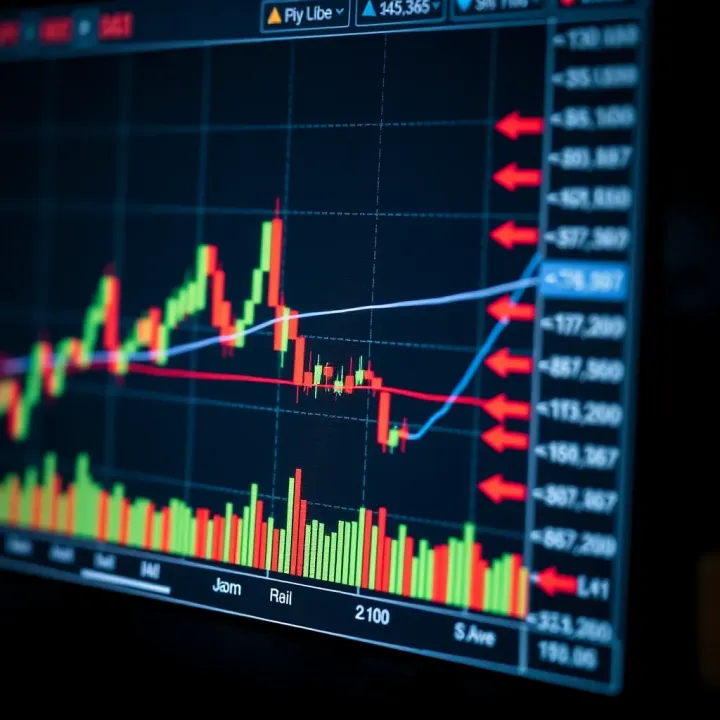
Visual cues in forex trading often speak louder than numbers alone. Knowing what these images represent allows sharper analysis and better timing.
The three main forex charts you’ll encounter are:
Line charts: These plot closing prices over set periods, giving a simple, clear price trend. They’re good for quick overviews but lack detail.
Bar charts: Each bar shows opening, high, low and closing prices for the chosen time frame, offering a fuller picture of price swings.
Candlestick charts: Popular in South Africa and globally, candle charts show the same data as bars but in a visual format that makes spotting patterns easier.
Candlestick colours typically indicate bullish (up) or bearish (down) moves, helping traders scan charts quickly.
Some patterns repeat through history and hint at price direction:
Head and Shoulders: Often signals a trend reversal.
Double Tops and Bottoms: Indicate potential price support or resistance levels.
Triangles: Show periods of indecision and potential breakouts.
Spotting these allows traders to anticipate moves rather than react too late.
Indicators are mathematical calculations based on price and volume. Common indicators include:
Moving Averages: Show average price over time, smoothing out noise.
Relative Strength Index (RSI): Measures momentum to spot overbought or oversold conditions.
Bollinger Bands: Indicate volatility by placing bands above and below a moving average.
These indicators complement chart patterns to give a fuller view of market conditions.
Understanding these elements will equip you to interpret forex markets with confidence and avoid false signals that lead to losses. As you become familiar with the imagery, you’ll spot opportunities with much greater ease.
Charts form the backbone of forex trading, offering a visual snapshot of currency price movements over time. Traders rely on charts to spot trends, identify entry and exit points, and gauge market sentiment. Understanding different chart types helps you pick the right tool for your trading style and strategy.
Line charts strip away complexity and show price movements using a single line connecting closing prices. They’re ideal for beginners or quick overviews because they simplify data and make trends clear. For example, if the line steadily rises, it suggests a bullish trend; if it falls, a bearish one. However, line charts don’t show details like intraday highs, lows or opening prices, so they have limited use when you want to time precise trades or spot volatility.
Bar charts provide more insight by illustrating opening, high, low, and closing prices (OHLC) for each time period. Each vertical bar represents price range, with small horizontal ticks showing opening and closing levels. This extra detail helps traders understand price strength and market direction within the period better than line charts. For instance, a long upper shadow might signal selling pressure, while a bar where open and close are nearly equal suggests indecision.
In practice, bar charts allow more nuanced reading of price action and are favoured by traders using technical analysis strategies that depend on price momentum and volatility.

Candlestick charts, borrowed from Japanese rice traders centuries ago, combine OHLC data with colour coding to show price direction vividly. A filled (usually red or black) candle means the close was lower than the open—a bearish sign. An unfilled (green or white) candle shows a price gain. The candle bodies and wicks (also called shadows) reflect buying and selling pressure clearly.
Because candlestick patterns, such as doji, hammer, or engulfing formations, often repeat around key support or resistance levels, they help traders anticipate potential reversals or continuations. This visual clarity speeds up decision-making and works well with other indicators.
Understanding the specific strengths of each chart type allows traders to customise their analysis and react to market shifts more reliably.
Each chart style has its place depending on your trading goals and timeframes. Line charts offer simplicity, bar charts give more depth, while candlestick charts provide visual cues that can improve timing. Mastering these will put you ahead in interpreting forex market movements effectively.
Forex indicators are essential for traders aiming to make informed decisions. They offer visual signals on charts that help clarify price trends, momentum, and potential reversals. Unlike just studying raw price movements, indicators add a layer of analysis that reveals insights not immediately obvious. For example, they can show when a currency pair is overbought or oversold, or how fast a trend is gaining or losing steam. In practical terms, indicators guide entry and exit points, helping traders manage risk and optimise profits.
Moving averages smooth out price data to highlight the direction of a trend. Two common types are the Simple Moving Average (SMA) and the Exponential Moving Average (EMA). The SMA calculates the average price over a set number of periods, weighting each equally. In contrast, the EMA gives more weight to recent prices, making it more responsive to the latest market moves. For instance, if the 50-day EMA crosses above the 200-day SMA on a chart, traders often see this as a bullish signal, suggesting upward momentum. Moving averages also act as dynamic support or resistance levels. Many South African traders combine them to detect shifts in momentum before prices break out or pull back.
The Relative Strength Index (RSI) measures the speed and change of price movements to indicate momentum strength. It ranges from 0 to 100, with levels above 70 typically signalling that an asset is overbought, while readings below 30 suggest oversold conditions. For example, if the RSI on a ZAR/USD forex pair climbs above 70 during an uptrend, a trader might prepare for a potential correction or pause. RSI is valuable because it highlights extremes in market sentiment, allowing traders to anticipate reversals or confirm trend continuation. The indicator is often paired with chart patterns to reduce false signals.
The MACD is a momentum indicator showing the relationship between two moving averages — commonly the 12-period and 26-period EMAs. It consists of the MACD line, the signal line, and the histogram that visualises the difference between the two. When the MACD line crosses above the signal line, it generates a bullish signal; a cross below indicates a bearish signal. Take a trader monitoring GBP/ZAR: a MACD crossover aligned with a bullish candlestick pattern might trigger an entry. Besides momentum shifts, the MACD histogram can reveal weakening trends early, helping traders avoid getting caught in false breakouts.
Understanding how popular forex indicators appear on charts improves your ability to read market conditions quickly and act decisively. They should be combined with other analysis techniques rather than used in isolation for best results.
By recognising the distinct images and signals these indicators provide, you can better navigate volatile forex markets and refine your trading strategy with practical, visually clear tools.
Being able to spot trading patterns in forex charts is vital for making informed decisions quickly. These patterns provide a visual summary of market sentiment and price action, hinting at potential future moves. Recognising them allows traders, investors, and analysts to anticipate trends, manage risk, and plan entries or exits more effectively.
Bullish patterns suggest an upcoming rise in currency prices, while bearish patterns indicate potential declines. For example, the "double bottom" is a bullish pattern showing two near-equal lows with a slight peak between them, signalling that selling pressure may be waning. Conversely, a "double top" shows two similar highs separated by a dip, implying that buying momentum could be fading.
Other classic patterns include the "head and shoulders"—a bearish reversal sign marked by a peak (shoulder), a higher peak (head), and a lower peak (shoulder) thereafter. Recognising these shapes helps traders anticipate when the market might switch direction, so they can adjust their positions accordingly.
Support and resistance lines are horizontal zones on a chart where prices tend to stop and reverse. Support acts like a price floor, where buying interest tends to outweigh selling, often seen after a currency has fallen to a certain level multiple times. Resistance works the opposite way, serving as a ceiling where sellers step in as the price rises.
Identifying these levels visually makes it easier to set stop-losses or take-profit points, as prices frequently bounce between these zones before breaking through. For instance, if the EUR/USD pair repeatedly bounces off the 1.10 level, traders see that as strong support and might consider buying near it.
Patterns like triangles, flags, and pennants show periods where the market is consolidating—price moves narrow—and could signal impending sharp moves.
Triangles form when price highs and lows converge towards each other. An ascending triangle, with a flat top and rising lows, usually signals bullish continuation.
Flags appear as small rectangular shapes slanting against the prior trend, resembling a flag on a pole. They often form after a strong price move and suggest continuation.
Pennants are small symmetrical triangles that follow a big price movement. Despite their size, pennants often precede significant breakouts.
Spotting these shapes on a forex chart helps predict whether the price will break out up or down, enabling traders to position themselves ahead of the move.
Recognising these patterns is like reading the market’s own handwriting. They tell a story that numbers alone can’t convey, giving you a clearer sense of direction and timing.
Mastering the ability to identify bullish and bearish patterns, support and resistance, as well as complex formations like triangles, flags, and pennants, strengthens your trading strategy. It’s a skill sharpened by practice but pays off in better-informed trades and improved risk management.
Managing risk is essential in forex trading, where currency prices can swing sharply and unpredictably. Visual tools offer traders a straightforward way to limit losses and protect profits by clearly marking critical price levels on charts. Without these markers, it’s easy to get caught out by sudden market moves, especially with volatile pairs like USD/ZAR.
Stop loss and take profit orders act as safety nets, automatically closing trades once prices hit predefined points. Visualising these on your chart helps you place them logically rather than randomly. For example, setting a stop loss just below a recent support level can limit potential losses if the market dips, while a take profit slightly below a strong resistance ensures you lock gains before a possible pullback.
Using candlestick charts makes it easier to spot these levels. If a trader enters long on EUR/USD after a bullish engulfing candle near a support line, placing a stop loss a few pips below that line and take profit near the next resistance is a practical move. This kind of visual placement helps avoid emotional decisions and sticks to a disciplined risk-reward ratio, like 1:2, where potential reward doubles the risk.
Annotations are handy for marking observations directly on your trading charts. You can highlight entry points, potential reversal zones, or areas where news events may impact price action. Using text notes, arrows, or coloured boxes on your chart gives you a quick visual reminder of your trading plan or market conditions without scanning through other records.
Many platforms allow setting alerts tied to price action or indicator signals. For instance, if the RSI drops below 30 (indicating oversold conditions), an alert can notify you immediately. This way, you don’t have to stare at the screen all day and can respond faster when trades reach your defined zones.
Visual tools like stop loss placement, chart annotations, and alerts turn abstract risk management plans into visible gameplay on your charts. They transform gut feelings into clear, actionable signals, helping you stick to your strategy.
In summary, incorporating visual risk management tools not only safeguards your capital but also builds the discipline vital for long-term success in forex trading. These techniques help you keep emotion and guesswork out of the decision-making process, a must-have approach for serious traders in South Africa’s active forex market.
Reading forex trading visuals accurately can make a big difference in how you spot opportunities and manage risks. It’s not just about recognising a pattern or an indicator; knowing what to trust and what to question saves time and money. Being practical here means understanding the context behind the charts and indicators, not just the pictures themselves.
A frequent trap for traders is mistaking short-lived price spikes or noise for meaningful trends. For example, a sudden spike visible on a candlestick chart may look like a breakout, but without volume confirmation or supporting indicators, it can be a false signal. Shocks like these often happen during low liquidity periods or around economic announcements. Another pitfall is assuming all chart patterns work in the same way regardless of the pair or timeframe. A head-and-shoulders pattern may play out well on a four-hour chart but turn out unreliable on a 15-minute chart.
To avoid these errors, combine patterns with volume or momentum indicators like the RSI (Relative Strength Index). Also, don’t forget broader market factors, such as geopolitical events or central bank statements, which can skew technical pictures. For instance, during Eskom load shedding, market activity might dip unusually, which can distort standard patterns.
Visual tools offer a snapshot, but you need technical analysis to interpret the broader story. For example, seeing a triangle pattern on a chart suggests consolidation, but using moving averages and RSI alongside helps decide if the breakout is likely or if the market’s just indecisive. Traders often overlay Fibonacci retracement levels to check if a price bounce lines up with historical support or resistance points.
In practice, imagine you spot a bullish engulfing candlestick at a key support level combined with an RSI below 30 (indicating oversold conditions). This layering of visual cues with technical signals strengthens your case for entering a long position. Conversely, if the price touches resistance but volume is thinning and MACD shows bearish divergence, it might be better to hold back.
Visuals should never be the sole basis of your trading decisions. Technical analysis tools help confirm and refine what your eyes first tell you.
Always check chart patterns against indicators and volume
Respect the timeframe; what works on one may fail on another
Pay attention to external factors that affect price action
Use a mix of visuals and technical tools to improve decision-making accuracy
By applying these tips, you sharpen your ability to read forex trading images effectively, reducing costly mistakes and spotting meaningful opportunities more confidently.
🔍 Curious about forex trading? Learn the essentials, spotting reliable brokers, managing risk, and mastering platforms to kickstart your trading journey with confidence in South Africa.

📅 Discover how the forex trading calendar affects currency movements, key sessions & economic events, plus tips for South African traders to plan and trade smarter.

🌍 Discover essential tips for trading forex in the UK—broker selection, regulations, tax guidance and how Brexit reshapes the market landscape. Trade smarter today!
🌍 Learn forex trading basics, market operation, strategies, and risk management. Perfect for beginners in South Africa and worldwide ready to trade confidently!
Based on 7 reviews