
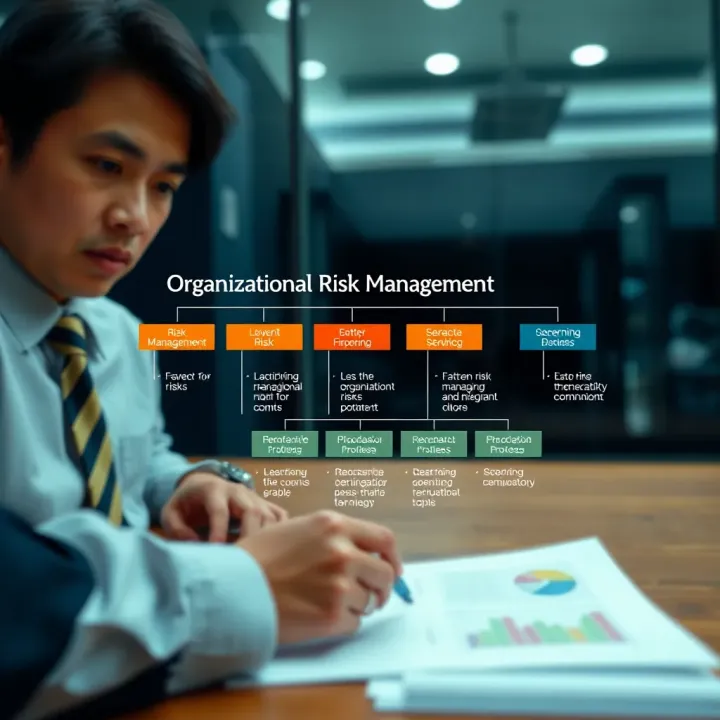
Understanding the Risk Management Process
Learn to manage risks effectively by identifying, assessing, planning, and monitoring them. Stay in control and reduce potential pitfalls with clear strategies ✅📊
Edited By
Thomas Reed
Risk management is more than just ticking boxes on a checklist. It’s about spotting potential pitfalls before they trip you up, whether you're an investor navigating JSE volatility, an entrepreneur managing supply chain risks in Gauteng, or a broker assessing market shifts.
At its core, the risk management process involves a series of deliberate steps to identify, evaluate, and control risks that could impact your objectives. Handling these uncertainties doesn’t require fancy jargon or overly complex frameworks — practical, straightforward approaches often do the trick.

Effective risk management can save businesses and individuals from costly surprises, helping steer decisions with confidence in an unpredictable world.
This guide breaks the process down into seven clear steps:
Identifying Risks – Spotting the issues that might throw a spanner in the works.
Assessing Impact – Understanding how serious each risk could be.
Planning Responses – Deciding what to do about each risk.
Implementing Plans – Putting your strategies into action.
Monitoring Progress – Keeping an eye on things to catch new risks or shifts.
Reviewing Outcomes – Learning what worked and what didn't.
Adjusting Accordingly – Tweaking your approach based on experience.
By using practical examples relevant to South African contexts, like dealing with loadshedding disruptions or fluctuating rand exchange rates, we aim to make risk management tangible and accessible. Understanding these steps equips you to make smarter decisions, protect your investments, and adapt as the landscape changes.
In the following sections, we'll unpack each phase with real-world scenarios, offering clear, actionable insights tailored to the unique challenges faced by traders, brokers, investors, and entrepreneurs in South Africa.
Recognising potential risks is the first step in any solid risk management process. It sets the foundation for understanding what might disrupt your business or personal goals. Identifying risks early on helps avoid costly surprises and offers time to prepare suitable responses. Whether you run a small business in Johannesburg or manage investments in Cape Town, spotting these risks promptly can make all the difference.
A risk is any uncertain event or condition that could negatively affect objectives. In business, this could be anything from market fluctuations hitting your profits to supply chain delays mucking up deadlines. On a personal level, a risk might be losing your job or unexpected medical expenses. Both spheres share the trait that risks threaten stability but recognising them varies with context and scale.
South Africa’s unique environment means some risks come up more often. Take loadshedding: frequent power cuts pose a risk to manufacturing or retail businesses. Crime is another significant risk, impacting security costs and employee safety. Weather events also play a part, with flooding potentially disrupting logistics across provinces. Understanding these risks helps you plan realistically and avoid pitfalls common to our setting.
Bringing a team together to brainstorm can reveal risks that one person might miss. Involving people from different departments or with diverse experiences adds depth. For example, a finance officer might spot cash flow risks, while a logistics manager points out transport delays. Talking to clients and suppliers can uncover external risks too, like changing regulations or supplier reliability. This method encourages open communication and can highlight emerging threats.
Past data offers a wealth of insight into potential future risks. Studying previous project reports or sales trends can flag where problems occurred before — say, delays in customs clearance or fluctuations in material costs. Analysing this data allows entrepreneurs and investors to spot patterns and prepare accordingly. Be wary though; changing environments mean history isn’t always a perfect guide but it certainly cuts down the unknowns.
Checklists help ensure no common risk is overlooked. These could be industry-specific — like compliance checks for financial services — or customised for a particular project's needs. Risk registers go a step further, documenting identified risks, their impact, likelihood, and your planned responses. Keeping this updated lets you track risks over time and coordinate efforts efficiently. It’s handy for brokers or analysts managing multiple portfolios or projects, offering a clear overview at a glance.
Spotting risks early on isn't just about avoiding trouble; it’s about staying steps ahead and being ready to adapt.
Recognising risks involves a mix of keen observation, teamwork, and learning from what has happened before. By applying these methods thoughtfully, South African businesses and individuals can better guard their interests in the often unpredictable environment we navigate daily.

Evaluating risks is a vital step in the risk management process because it turns a list of potential threats into a clear picture of what really matters. Traders, investors, and entrepreneurs can’t handle every risk equally; it's essential to understand both the chance a risk might actually happen and its potential fallout. For example, a small retail business in Cape Town might face supply interruptions due to load-shedding. Assessing this risk means estimating how often load-shedding could disrupt deliveries and what the impact would be on stock availability and sales.
The likelihood, or probability, of a risk occurring relates to how often an event may realistically happen. This helps to avoid overreacting to unlikely scenarios or ignoring common issues. For instance, a trader dealing on the JSE might assess political uncertainty as a moderate risk with chances increasing before elections. Recognising this helps prepare strategies without panic.
Measuring the consequences involves estimating the impact that a risk would have on key objectives. This requires thinking about financial losses, reputation damage, or operational delays. Consider a logistics firm in Durban facing the risk of port closures due to strikes. Even if the strike’s probability is low, the impact on delivery schedules and client relationships could be severe. Accurate measure of such consequences provides the groundwork for meaningful preparation.
Once likelihood and consequences are understood, risks must be ranked to decide where to focus effort and resources. This doesn’t mean ignoring lower-level risks completely but recognising that not all threats deserve equal attention. A small start-up may prioritise risks like cash flow shortages over market fluctuations because the former threatens immediate survival.
Tools such as risk matrices make this ranking process easier. A risk matrix plots likelihood against impact on a grid, allowing clear visualisation of priority risks. Scoring methods assign numeric values to risks based on agreed criteria, helping in comparisons across different types of risks. These tools are practical, especially when managing complex portfolios or businesses with multiple risk exposures.
Prioritisation helps cut through the noise, allowing decision-makers to focus on risks that could truly derail their business or investment goals.
By thoroughly evaluating risks found through these steps, South African entrepreneurs and investors can spend their energy on planning responses that make sense for their unique situations rather than spreading themselves too thin.
Planning how to deal with risks is a key step in risk management, especially for traders, entrepreneurs, and investors who must protect their ventures against unexpected setbacks. This phase involves deciding how to respond to each identified risk, making sure the chosen strategies fit the business context and available resources. Good planning reduces guesswork and prepares teams for swift, effective action.
Risk response strategies fall into four main categories: avoidance, reduction, sharing, and acceptance. Avoidance means steering clear of activities likely to trigger a risk. For example, a small export business might avoid trading in politically unstable regions to reduce currency risk. Reduction involves taking steps to lower the chance or impact of a risk, such as installing backup power systems to counterloadshedding interruptions.
Sharing shifts the risk to a third party through insurance or partnerships. If a retailer in Gauteng faces theft risks, they might insure stock or partner with security firms for monitoring. Acceptance is when a risk is considered minor or unavoidable, so the business chooses to accept it and prepare to handle its consequences. For example, minor software glitches might be accepted during non-critical hours but monitored to ensure they do not escalate.
Choosing the best approach depends on the nature and severity of each risk. High-impact risks with severe consequences usually call for avoidance or reduction, while lower-level risks might be better handled through sharing or acceptance. This selective approach helps businesses allocate resources wisely instead of trying to tackle every risk with the same intensity.
Setting responsibilities and timelines keeps risk management on track. Each risk response requires clear ownership: who will act, by when, and what the expected outcome is. For an online retailer dealing with the risk of payment fraud, the IT manager might be responsible for implementing new security protocols within the next quarter, with regular progress reported to senior management.
Resource allocation and budgeting are vital to support these plans. Planning must detail what funds, people, and tools are needed. If a small manufacturer plans to upgrade its machinery to reduce equipment failure risk, the budget should cover purchase costs, installation, and staff training. Overlooking these details can cause delays or half-baked solutions, wasting effort and money.
A clear plan ensures risks are not just understood but actively managed, improving resilience and decision-making under pressure.
By carefully choosing risk responses and developing detailed action plans, South African businesses and investors can tackle uncertainties with confidence, turning potential obstacles into manageable challenges.
Moving from planning to execution is where most risk management efforts show their true mettle. This stage is about following through on strategies designed to handle identified risks. Putting plans into action ensures risks don’t just sit on paper but are actively managed to reduce impact. Tracking progress simultaneously helps spot any deviations early and allows swift corrections.
Coordinating teams and communication is key when rolling out risk responses. Risks often cross departments or stakeholders, so clear roles and effective communication channels are essential. For example, in a small business dealing with supply chain disruptions, the procurement team, warehouse staff, and finance must stay aligned to adjust orders, payments, and stock management efficiently. If communication breaks down, the response becomes sluggish, escalating the risk.
Regular briefings and using simple project management tools like Trello or Microsoft Planner can keep everyone on the same page. It’s worth remembering that in South African contexts, where teams may work remotely or face inconsistent connectivity, picking communication methods that suit your team’s realities is vital.
Challenges faced during execution often involve resistance to change and unforeseen complications. Staff might be hesitant to alter their routines or adopt new controls, especially if the risk never materialised before. For instance, implementing additional cybersecurity measures in a company might face pushback from employees who see it as slowing down their work. Additionally, external factors like loadshedding can disrupt IT systems and hinder risk mitigation activities.
Flexibility and ongoing support help overcome these hurdles. Leadership should explain the long-term benefits clearly and provide training. Contingency plans, such as backup power solutions, help maintain continuity during such disruptions.
Regular checks and adapting to changes are not just best practice but necessary amid ever-shifting circumstances. Periodic review meetings allow teams to assess if risk measures are effective and whether new risks have appeared. For example, a retail business in Gauteng might review stock theft controls quarterly, but after a sudden rise in break-ins, increase the frequency and adjust strategies.
Being ready to adapt plans ensures the risk management stays relevant. This flexibility might involve updating policies or reallocating resources to areas showing increased risk.
Using feedback to improve plans gives risk management a continuous improvement cycle. Feedback from frontline staff often reveals gaps or unintended consequences of risk controls. Suppose delivery drivers report that new vehicle inspection checklists are too time-consuming and lead to skipped steps; this insight helps refine the checklist for practicality.
Incorporating such feedback strengthens buy-in and makes the process more effective. Documenting lessons learned also builds organisational knowledge, making the next round of risk planning smarter and faster.
Putting plans into action and tracking progress isn’t a one-off — it’s an ongoing process that keeps your risk strategies alive and responsive to reality.
This pragmatic approach to risk management helps traders, investors, and entrepreneurs handle uncertainties in a way that’s hands-on and results-driven, which is exactly what thriving in the South African business environment requires.
Learning from experience is a vital stage in the risk management cycle, especially for traders, investors, brokers, analysts, and entrepreneurs operating in South Africa. Reflecting on previous risk scenarios sharpens future responses, helping businesses and individuals fine-tune their strategies based on real outcomes. This approach not only prevents repeating mistakes but also reinforces practices that proved effective, creating a more resilient risk culture.
After implementing risk management actions, it’s key to evaluate the outcomes objectively. This means identifying which strategies successfully mitigated risks and where efforts fell short. For example, a Johannesburg-based investment firm might analyse how effectively their hedging strategies protected portfolios during fluctuating rand-dollar exchange rates. Understanding both successes and shortfalls provides practical insight, showing what kinds of risks require more attention or alternative tactics.
Once the evaluation is complete, documenting these lessons ensures the knowledge is preserved and accessible. A well-maintained record forms a reference point that future teams or decision-makers can consult before facing similar challenges. South African companies often include these lessons in their operational manuals or digital platforms. For example, a logistics company might note that the early identification of supply chain disruptions during loadshedding helped limit losses and ensure delivery schedules.
The insights gained from reviewing outcomes should inform updates to company policies and procedures. This might involve revising risk thresholds, improving communication protocols, or tightening compliance checks. For instance, after a bout of currency volatility, a business might change their foreign exchange exposure limits or adopt a more conservative budgeting approach to safeguard cash flow. Making these updates relevant and practical ensures the organisation's risk management framework evolves in step with the operating environment.
Effective risk management depends on well-informed teams who understand their roles and the latest best practices. Regular training sessions based on lessons learned keep everyone aligned and ready to respond swiftly. South African firms often combine formal workshops with informal sessions, such as toolbox talks or online briefings, especially when changes impact daily activities. This ongoing education fosters a proactive culture, reducing the chance of oversights and promoting a shared responsibility for managing risks.
Reflecting on risk management outcomes is not just paperwork. It’s about building strength through knowledge, so future uncertainties meet a prepared and organised response.
In short, learning from experience closes the loop in risk management. It transforms past events into a toolkit for future decisions, ensuring traders, entrepreneurs, and businesses in South Africa stay a step ahead in managing what lies around the corner.
Learn to manage risks effectively by identifying, assessing, planning, and monitoring them. Stay in control and reduce potential pitfalls with clear strategies ✅📊
🔍 Explore how risk management protects South African businesses by identifying, assessing & handling risks to guide smart decisions & compliance.

Explore how risk management helps identify, assess, control, and monitor risks for smarter decisions and smoother business operations in South Africa 🇿🇦📊
🔍 Explore diverse risk management frameworks to identify, assess, and reduce business risks effectively. Learn how to align with governance for strong protection.
Based on 8 reviews