

Understanding Binary Code: Basics and Uses
Understand how binary code underpins all digital tech, from computers to mobile devices, with clear South African examples. 🔢💻📱
Edited By
Isabella Greene
The binary system is the backbone of all modern computing and digital technology. At its core, it’s a simple way of representing information using just two digits: 0 and 1. This base-2 numbering contrasts with the decimal system most of us use daily, which has ten digits from 0 to 9.
Why does binary matter? Because every device you use, from your smartphone to your laptop and even your smart fridge, relies on binary to process and store data. The zeros and ones are like an electrical switch—off or on, no middle ground—which hardware understands perfectly.
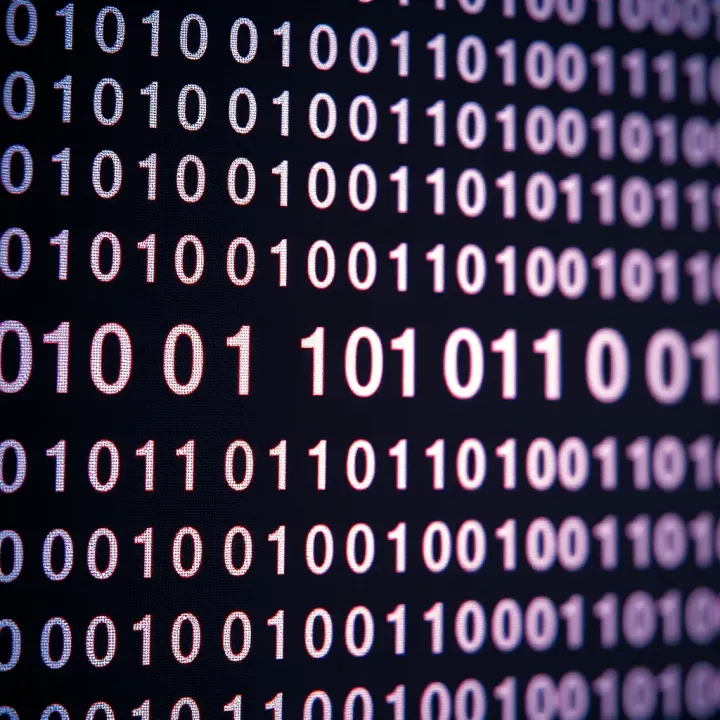
The binary system transforms complex operations into simple signals, enabling the digital world around us.
In the binary system, each position in a number represents a power of two, starting with 2^0 on the right. For example, the binary number 1011 translates to:
1×2³ (8)
0×2² (0)
1×2¹ (2)
1×2⁰ (1)
Adding those up gives 8 + 0 + 2 + 1 = 11 in decimal.
Unlike decimal, where we carry over after 9, binary carries over after 1. This makes it straightforward for computers that work on electrical signals.
Understanding binary is valuable beyond tech—especially in trading and investing where digital tools rule. Here’s how:
Algorithmic trading: Algorithms operate on binary-coded data; faster computing means quicker trade execution.
Cryptography: Binary underpins encryption methods securing sensitive financial transactions.
Data storage and analysis: Huge datasets are processed in binary, affecting how information flows in markets.
Recognising how binary influences these fields helps you appreciate the speed and security behind your financial decisions.
The binary concept traces back centuries, with roots in ancient counting methods and formalised by mathematicians like Gottfried Wilhelm Leibniz in the 17th century. His work laid the foundation for digital computing in the 20th century, leading to today’s electronic computers built on binary logic.
Simply put, the binary system speaks the language of computers. Understanding it gives you insight into the digital processes that shape modern markets and technology-driven business.
Next, we’ll explore how binary operates within computing devices and its real-world examples, helping you connect the dots from bits to business.
The binary system forms the backbone of modern computing and digital technology. Understanding its meanings and principles is essential not just for tech experts but also for anyone looking to grasp how everyday devices like your smartphone, ATM, or even smart meters function. At its core, the binary system simplifies complex operations into ones and zeros, making it a practical tool for electronic processing.
The binary or base-2 numeral system uses only two digits – 0 and 1 – to represent numbers. Unlike the decimal system, which employs ten digits (0 to 9), binary relies on on/off states to communicate information. This simplicity is crucial for devices that interpret electrical signals, as the presence or absence of voltage corresponds perfectly to 1 or 0.
Practically speaking, this means computers don't 'understand' our usual numbers but instead deal with sequences of bits (binary digits). For instance, the letter 'A' in digital text might be represented by the binary sequence 01000001. So, everything from text to images and sound in digital form relies internally on this binary language.
The difference between binary and decimal is more than just the number of symbols used; it influences how computations and data storage happen at the hardware level. Decimal suits human use due to our ten fingers, but electronics favour binary since it's easier to distinguish just two states reliably under varying conditions, reducing errors and simplifying circuit design.
Binary concepts aren’t modern inventions. Early civilisations, such as the ancient Egyptians and Chinese, used simple binary-like methods for decision making and representing dual states. For example, the Chinese Book of Changes (I Ching) from thousands of years ago employs broken and unbroken lines symbolising yin and yang, a classic binary motif.
The real leap for the binary system came in the 17th century with Gottfried Leibniz, who formalised its use in mathematics, recognising it as a powerful tool for calculation. However, it wasn’t until the 20th century that binary found its true home in computing technology.
The development of binary computing began with pioneers like Claude Shannon in the 1930s and 1940s, who demonstrated how logical operations could be performed using electrical circuits based on binary switches. This foundation allowed practical, reliable computers to emerge, leading us to the digital age we live in today.

Understanding these basics showcases why the binary system isn’t just an abstract concept but a real workhorse behind countless devices and digital services.
In short, grasping what the binary system means provides a clearer picture of how technology functions beneath the surface—and why it remains central to innovations in data processing, communication, and beyond.
Understanding how the binary system works is essential for grasping its practical applications in computing and digital technology. Unlike the decimal system most of us are familiar with, binary uses only two symbols: 0 and 1. This simplicity makes it ideal for electronic devices, where these two states can easily represent off and on signals respectively. It’s this fundamental difference that allows complex data processing to happen inside everything from smartphones to trading algorithms.
At the heart of the binary system are bits, the smallest units of data. Each bit represents a single binary digit, either 0 or 1. In practice, bits are the building blocks of all digital information; the more bits you have, the greater the range of values or instructions you can convey. For example, an 8-bit binary number can represent 256 different values, ranging from 0 to 255. This is why computer memory and data bandwidth are often described in bits or bytes (where 1 byte equals 8 bits).
Place value in binary works much like in decimal, but each position counts powers of 2 instead of 10. Starting from the rightmost digit—the least significant bit—each position increases by a factor of 2. So, the second position from the right is worth 2, the third position 4, then 8, and so on. Understanding this positional value is crucial because it determines how binary numbers convert into familiar decimal numbers. For instance, the binary number 1101 represents (1×8) + (1×4) + (0×2) + (1×1), which equals 13 in decimal.
Converting between binary and decimal is a practical skill, especially if you deal with computing systems or want to make sense of low-level data representations. To convert binary to decimal, you multiply each bit by its place value (power of 2) and sum the results. This process is straightforward once you grasp how each binary digit maps to powers of 2. Conversely, converting decimal to binary involves dividing the decimal number by 2 repeatedly and recording the remainders until the quotient reaches zero. The binary number then is the series of remainders read bottom-up.
Let’s look at some examples for clarity. To convert binary 1011 to decimal, calculate (1×8) + (0×4) + (1×2) + (1×1) = 11. The opposite direction: to write decimal 19 in binary, divide 19 by 2 repeatedly:
19 ÷ 2 = 9 remainder 1
9 ÷ 2 = 4 remainder 1
4 ÷ 2 = 2 remainder 0
2 ÷ 2 = 1 remainder 0
1 ÷ 2 = 0 remainder 1
Reading the remainders from bottom to top gives 10011 (binary for 19).
Mastering these conversion methods helps investors and analysts who wish to better understand the data processing behind financial software, ensuring they make more informed decisions based on technology-driven insights.
The binary system is at the heart of virtually all modern computing. Its use isn't arbitrary but based on practical benefits that perfectly suit electronic devices which fundamentally operate with two distinct states: on and off. Understanding these advantages helps clarify why binary remains the backbone of digital technology.
Electronic components like transistors and switches work best with just two states, high or low voltage, corresponding to the binary digits 1 and 0. This simplicity means circuits can be designed with fewer parts and less complexity. Imagine trying to build a device that had to recognise ten voltage levels as in the decimal system; it would be more prone to error and harder to maintain. In South Africa, as with elsewhere, the reliability of such simple designs translates into affordable, robust electronics used in everything from mobile phones to automated bank tellers.
Binary systems reduce errors because it’s much easier to distinguish between two states than multiple states. For instance, during data transmission over a Vodacom mobile network, receiving a '1' or '0' correctly is less messy compared to deciphering multiple voltage levels that might fade due to noise or poor signal. This error tolerance helps avoid data corruption, making our everyday devices like ATMs and online banking portals run smoothly even under less-than-perfect conditions.
Computers store and process data using binary because memory cells and processors function as tiny switches, either closed or open, representing 1 or 0 respectively. For example, South African banks like FNB use vast data centres utilising binary-based storage for customer accounts. This approach enables fast, reliable access and manipulation of large amounts of data without constant hardware failures.
Logic gates are the building blocks of digital circuits and operate on binary inputs to perform basic operations like AND, OR, and NOT. These gates translate directly into electronic circuitry that controls everything from login authentication on your laptop to signal processing on a drone flying over the Karoo. The binary system aligns perfectly with how these gates function, making it possible to build complex applications by combining simple on/off switches.
The binary system’s straightforward design not only simplifies technology but ensures systems remain dependable, efficient, and scalable — traits vital for South Africa's growing digital economy.
In short, binary is used in computing because it matches the physical realities and demands of electronics, enabling everything from smartphones in Johannesburg to servers in Cape Town to operate reliably every day.
Everyday examples and practical applications show how the binary system underpins much of the technology we engage with daily. From storing your favourite music and movies on a smartphone to sending messages over the internet, binary code is the silent workhorse behind the scenes. Understanding these examples helps paint a clearer picture of why binary matters beyond theory—it's the foundation for real-world digital functions.
Every file you save on your computer—be it a Word document, MP3 song, or high-resolution photo—is ultimately represented in binary. This means the data is encoded as long strings of 0s and 1s that a computer’s hardware can interpret and store. For example, an image is broken down into pixels, each assigned a binary code to signify colour and brightness. This binary encoding ensures files can be compressed, stored efficiently, and retrieved without corruption.
This process is essential for investments in technology or businesses reliant on data integrity. Whether you’re analysing market reports or backing up sensitive corporate files, the underlying binary storage ensures the digital assets remain intact and accessible.
Binary also governs how devices communicate with one another. Protocols like TCP/IP, which power the internet, transfer data as packets encoded in binary. Whether you’re sending an email, conducting a transaction on a trading platform, or streaming a news broadcast, the information passes through networks as binary sequences.
Understanding this is vital for entrepreneurs and ICT professionals who rely on secure and efficient data exchanges. Proper knowledge of communication protocols reduces risks of data loss and helps diagnose connectivity issues that can affect uptime or transaction speed.
Across South African education institutions, binary is often introduced within Information Technology (IT) or Computer Science curricula. Students learn to convert between binary and decimal systems and explore how computers use binary logic. Practical exercises might include programming basics or building simple circuits with logic gates.
This approach builds foundational digital literacy, preparing learners for a future where technology steadily becomes more integral to all sectors. For younger students, interactive apps and games make these concepts more accessible and engaging.
For aspiring traders, analysts, and entrepreneurs, a grasp of binary and underlying digital principles is more than academic interest. It supports better understanding of software systems, cybersecurity, and data analytics tools prevalent in business.
Careers in fintech, data science, and software development demand comfort with binary logic because it influences programming languages and machine operations. Knowing this helps professionals make informed decisions about the tools they choose or the strategies they employ, strengthening their market edge.
The binary system isn’t just abstract maths; it’s the backbone of everyday tech that drives business and communication across South Africa and beyond.
The binary system, while foundational to computing, is not without its challenges. Understanding these limitations helps shed light on why alternative approaches sometimes come into play and what future directions might look like. For traders, investors, and tech-savvy entrepreneurs, this knowledge can influence decisions on technology adoption and innovation.
One key limitation of the binary system arises when dealing with large numbers. Binary representation expands exponentially as values increase. For instance, representing the number one million requires about 20 bits in binary, compared to just seven digits in the decimal system. This complexity forces computers to use multiple bytes and complicates processing and storage. In fields like financial modelling that demand high precision and fast computations, this can affect system efficiency and performance.
Besides size, binary’s simplicity comes at the cost of readability and ease of manual calculations. Humans are far more comfortable working with decimal or even hex (base-16) numbers. For example, programmers often use hexadecimal as a shorthand for binary because it condenses long strings of bits into readable chunks, easing debugging and development in tech environments.
In specialised fields, alternative numeral systems find practical use. The hexadecimal system, widely embraced in computing, offers a more compact representation of binary data, making it easier to grasp and communicate. Similarly, octal (base-8) was historically popular in early systems for similar reasons. Beyond convenience, some niche applications use redundant number systems like balanced ternary, which can simplify certain mathematical operations. However, these remain specialised tools rather than replacements for binary in mainstream computing.
Quantum computing introduces a different way to process information, moving beyond strict binary states. Where the binary system uses bits as either 0 or 1, quantum bits or qubits can exist simultaneously in multiple states thanks to quantum superposition. This means tasks that would take classical computers years could theoretically be solved in seconds with quantum systems. Although still emerging, this technology could revolutionise areas like cryptography, logistics, and complex modelling.
As quantum computing matures, it may prompt shifts away from binary-dominant designs, opening doors for new numeral frameworks. These could handle information more efficiently and process data in ways that digital ones and zeros cannot. That said, binary will stay relevant for general computing for quite a while, given its simplicity and existing infrastructure worldwide. Still, keeping an eye on these future trends is wise for anyone involved in tech investments or innovation.
While the binary system faces challenges with large data and complexity, it remains the backbone of current computing technology. Emerging quantum computing hints at new directions, but binary’s role will persist as the foundation for years to come.
In sum, recognising where binary works well and where it falls short helps make sense of current tech and anticipate future shifts. This insight is especially valuable for those navigating South Africa’s evolving tech landscape and global digital markets.
Understand how binary code underpins all digital tech, from computers to mobile devices, with clear South African examples. 🔢💻📱

Explore binary phase diagrams with clear answers on phase regions, invariant reactions, the phase rule, and practical uses in materials science 🔍⚛️ Perfect for engineering studies.
Convert ASCII characters to binary code with ease 🔢. Learn how the ASCII to binary table works, its uses in coding and data tasks relevant to South African tech users 🇿🇦.
🔢 Explore how the number three is shown in binary code, learn step-by-step conversion, and see how this simple system powers our tech every day. 💻📱
Based on 13 reviews