
Hex to Binary Converter Explained
Convert hexadecimal to binary with ease 🔢. Learn the step-by-step process, practical tools, common mistakes, and real-life uses in tech and coding.
Edited By
Edward Shaw
At the heart of digital communication lies a straightforward but vital system: the ASCII to binary table. This table acts as a translator, converting the familiar characters we use every day into the 1s and 0s that computers understand. Whether you're coding a software application, sending data across networks, or simply curious about the nuts and bolts of computing, understanding this conversion process is essential.
ASCII (American Standard Code for Information Interchange) assigns a unique numerical value to each character—letters, digits, symbols, and control characters. For example, the capital letter 'A' corresponds to the decimal number 65 in ASCII. The next step is converting that decimal number into binary, the language digital devices speak. In binary, 65 becomes 01000001.
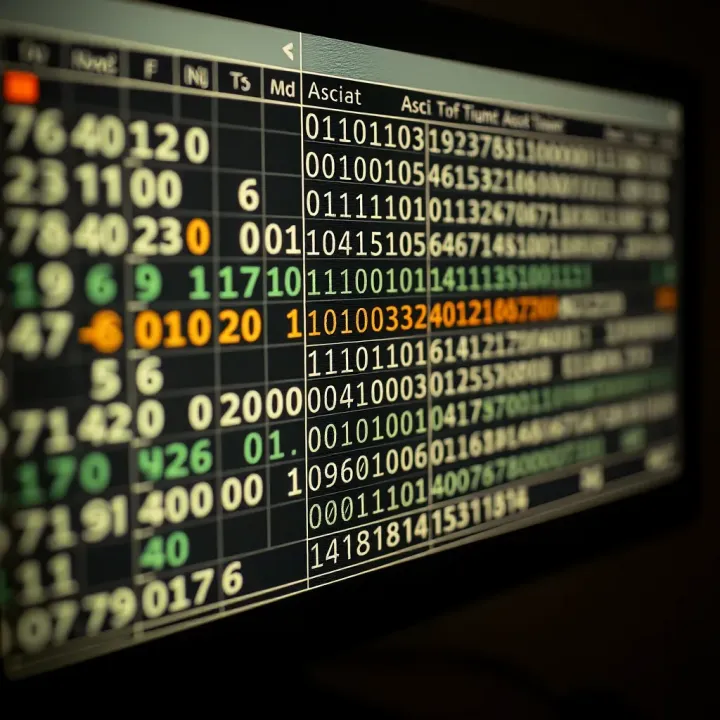
The ASCII to binary table compiles these mappings systematically, showing which binary sequence matches each character. For South African developers or entrepreneurs working with digital systems, this quick reference helps in debugging, encryption, or even creating simple encryption tools without relying on complex software.
Understanding the ASCII to binary table not only helps with coding but also demystifies how everyday devices process text, making it a handy skill in today’s tech-driven world.
Programming and Debugging: Developers often inspect binary data to troubleshoot or optimise code. Knowing exact binary values eases this process.
Data Communication: When data travels over networks, it’s sent as binary. Encoding text using ASCII ensures uniform understanding across devices, even amid varying hardware.
Digital Security: Encryption methods sometimes involve manipulating binary values. Understanding ASCII binaries aids in creating or cracking simple ciphers.
In South Africa's growing IT sector, many startups and analysts deal with diverse coding environments. Whether it’s designing mobile apps for Vodacom or MTN, or handling data inputs in e-commerce platforms like Takealot, knowing the basics of ASCII and binary conversions improves accuracy and efficiency.
By mastering the ASCII to binary table, you equip yourself with foundational knowledge applicable across numerous technology fields. This guide will walk you through how characters translate into bits, empowering you in your trading, investing, or software ventures.
Every time you type a message, bit of code, or walk through digital menus on your devices, characters are at work behind the scenes. The American Standard Code for Information Interchange (ASCII) assigns numerical codes to letters, digits, and symbols, making text readable to computers. Understanding ASCII is key for traders, analysts, and entrepreneurs who often deal with data streams or automate reports, ensuring smooth digital communication.
ASCII is essentially a translator between human language and machine language. It maps characters like 'A', 'z', '5', or '#' to specific numbers ranging from 0 to 127 in standard ASCII. For example, the capital letter 'A' corresponds to the number 65. This numerical representation allows text to be stored, transmitted, and processed efficiently. While ASCII is limited mainly to English characters and some special signs, its simplicity sparked the foundation of text encoding standards still in use today.
Computers don’t understand letters or numbers as we do—they rely on binary, a system of 0s and 1s known as bits. Binary encodes all information by switching circuits on (1) or off (0). For instance, the number 65 (ASCII for 'A') converts to the 7-bit binary sequence 1000001. This digital language underpins every app, website and system you interact with, making it essential to grasp its role, especially when handling data at a low level in programming or analysing electronic communications.
Converting ASCII text into binary has practical benefits. It allows communication across different software and hardware that only “speak” binary. For fintech analysts managing encrypted transactions or brokers automating data feeds, binary representations ensure accurate data transfer without corruption. It also helps in error-checking, compression, and storage optimisation. By understanding ASCII-to-binary conversions, you can debug data streams or even design efficient algorithms handling text-based information. Think broadly: when a system sends the word "bond" electronically, it’s really sending the binary code for the letters ‘b’, ‘o’, ‘n’, and ‘d’, allowing accurate reconstruction on the receiving end.
Being fluent in this digital dialogue helps professionals avoid surprises in data handling and opens pathways for smarter, more reliable software interactions.

Knowing the basics of ASCII and binary encoding sets the stage for exploring the deeper workings of the ASCII to binary table and its applications, especially in South Africa’s growing digital economy and tech sectors.
Understanding the structure of the ASCII to binary table is key to making sense of how computers handle text. At its core, the table links each ASCII character with a specific binary code, serving as a reference for converting readable text into machine language and back. This structure helps programmers, traders, and analysts who may deal with data formats or digital communications every day.
Each ASCII character is assigned a unique numerical value called an ASCII code. This code, a number between 0 and 127 for standard ASCII, translates directly into a binary string—a sequence of 0s and 1s representing that character in computer systems. For example, the capital letter 'A' holds the ASCII code 65, which is 1000001 in 7-bit binary.
This mapping is straightforward yet essential. It means you can always identify a character’s binary equivalent by referring to its ASCII code. Traders handling financial software or analysts managing large datasets can rely on this consistency to convert or verify information accurately.
Visualising ASCII characters in binary form might initially seem abstract, but it is indispensable for debugging and understanding data flow in software. Imagine you’re inspecting a transaction log in raw binary. Knowing that the '@' symbol maps to 01000000 allows you to read and interpret messages or data packets correctly.
Most ASCII to binary tables line up characters alongside their decimal and binary equivalents in neat columns. This layout offers a quick snapshot to convert text, confirm correctness of encoding, or even identify anomalies when data corruption arises. For South African developers dealing with network protocols or localised software, such clarity reduces errors and speeds up problem-solving.
The original ASCII standard uses 7 bits to represent characters, which covers 128 symbols—enough for basic English letters, digits, and control commands. However, as computing expanded globally, the Extended ASCII set added an 8th bit, doubling the potential characters to 256. This extension includes accented characters and symbols useful in various languages.
In South Africa’s multilingual environment, extended ASCII becomes particularly handy. For instance, characters like 'é' (used in Afrikaans and other languages) sit comfortably within the extended set. Software supporting local languages often requires this 8-bit version to display text correctly.
When working with ASCII to binary conversion, knowing whether you’re dealing with 7-bit or 8-bit encoding is crucial because it determines the length and interpretation of each binary sequence.
In summary, the ASCII to binary table’s structure underpins reliable text representation in digital communication and software. Clear knowledge of mapping, visualisation, and encoding standards helps avoid confusion and supports practical applications across South Africa’s diverse digital landscape.
Understanding how to use an ASCII to binary table is key when dealing with digital text conversion, especially in computing or programming contexts. This table connects every character you type—letters, numbers, symbols—to a unique binary code, which computers can process. For traders, developers, or entrepreneurs working closely with data, being able to read and apply this table speeds up debugging, communication protocol testing, and data encryption tasks.
Reading an ASCII to binary table is straightforward once you know what to look for. The table lists every ASCII character alongside its decimal and binary equivalents. For example, the capital letter ‘A’ carries the ASCII decimal value 65, which in 7-bit binary becomes 1000001. When you need to translate a string into binary, scan each character, locate its decimal or character representation in the table, and write down its binary code.
It’s also useful to note the distinction between standard 7-bit ASCII and extended 8-bit versions. While most English text fits within 7 bits, extended ASCII covers accented characters or symbols used in other languages often found in South African contexts, such as Afrikaans diacritics. Accurately interpreting these ensures your digital text matches what users expect.
In programming, ASCII to binary conversion is not just academic—it’s practical. When you write code that handles text input, you might need to convert characters to binary to perform bitwise operations, build communication protocols, or process data for encoding schemes. For instance, network communication protocols often rely on binary representations of ASCII to encapsulate commands or messages.
One concrete example is command-line tools or scripts managing text data across servers; a South African fintech startup might convert user input into binary for secure transmission or to integrate with systems that require binary flags. Understanding and applying the ASCII to binary table can save time and reduce errors, particularly when working with APIs or hardware interfaces that handle raw binary data.
Take the word "Sale", a common term in retail and stock trading. Here’s how it converts:
S: ASCII decimal 83 → binary 1010011
a: ASCII decimal 97 → binary 1100001
l: ASCII decimal 108 → binary 1101100
e: ASCII decimal 101 → binary 1100101
Putting it together, "Sale" in binary reads as: 1010011 1100001 1101100 1100101.
Using this approach, you can convert any data string—like stock tickers, client names, or transaction codes—into binary. This helps when dealing with low-level data processes or when performing data validation and transmission checks on digital platforms.
Clear understanding and use of the ASCII to binary table can bridge the gap between human-readable text and machine-readable data, making it a vital tool for anyone working with digital information.
In sum, applying an ASCII to binary table in practice means being equipped to convert, decode, and troubleshoot digital text in various professional settings. Whether it’s coding a new app, debugging a messaging system, or simply improving your digital literacy, this skill adds value and confidence to your work.
Understanding the ASCII to binary conversion is not just a theoretical exercise; it plays a palpable role in South Africa’s digital and technological landscape. From the smallest local start-ups to large corporations, knowing how text translates into machine-readable binary is foundational. This knowledge supports better troubleshooting, effective data handling, and improved communication protocols within South African networks.
South Africa’s local networks rely heavily on ASCII and binary encoding standards to transmit information seamlessly. When you send a text message or an email, the characters you type are converted into binary before being sent across mobile networks or fibre-optic cables. This conversion affects everything from simple SMS services offered by Vodacom and MTN to more complex systems like banking platforms operated by FNB or Capitec.
A practical example is during periods of loadshedding when network reliability can waver. Understanding how data encodes in binary enables network engineers to optimise the flow of packets and manage error correction more effectively, ensuring messages and transactions get through despite power hiccups. Plus, many IoT devices used in South African farms or factories also operate based on ASCII-coded commands, requiring clear binary communication protocols.
As South Africa continues to expand internet access and digital education, incorporating ASCII and binary teaching into curricula sharpens learners’ understanding of how computers interpret data. In school computer labs, students can better grasp how letters and symbols translate into binary values, laying a groundwork for coding skills essential in today’s job market.
Educators often find the ASCII to binary table a handy tool for demystifying computer language. When learners see that each character has a unique binary code, it simplifies concepts around programming languages, data transmission, and storage. This foundation is especially useful in Technical and Vocational Education and Training (TVET) colleges, where students train for roles in IT support and software development.
Mastering ASCII to binary conversion isn't just learning tech jargon; it's gaining a practical edge to navigate and improve South Africa's evolving digital economy.
In short, knowing how ASCII characters convert to binary supports better data management in local networks and is an essential building block in the country's growing push towards digital literacy and technology-driven progress.
Convert hexadecimal to binary with ease 🔢. Learn the step-by-step process, practical tools, common mistakes, and real-life uses in tech and coding.
💻 Learn how binary numbers — made up of zeroes and ones — form the backbone of computing and everyday devices, including how to convert decimals and do basic binary maths.

Explore the history and impact of the gender binary, cultural influences, and how diverse identities are reshaping society's view on gender 🌍👥🏳️🌈
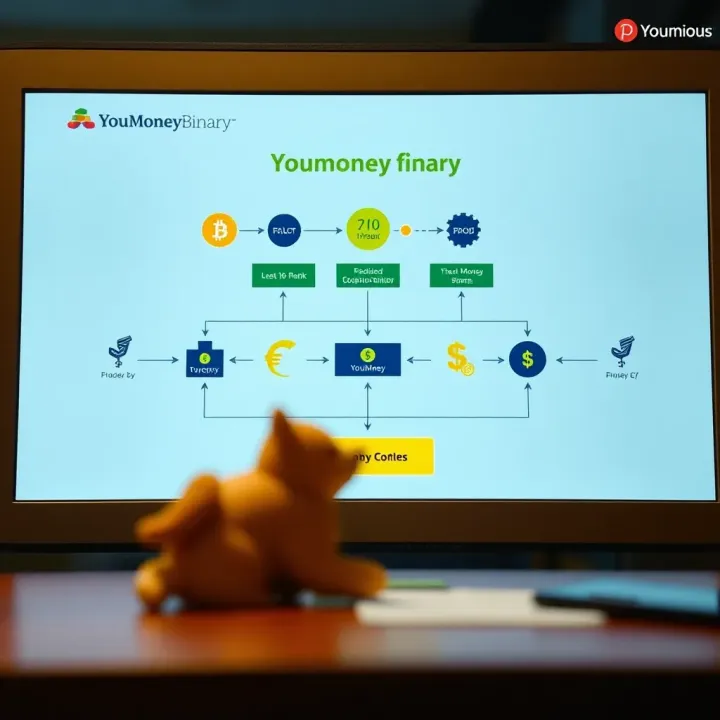
Explore how YouMoney Binary works, its benefits & risks 💰🔍 A clear guide to help South Africans understand this financial model better and make smart choices.
Based on 13 reviews