

Binary Phase Diagram Questions and Answers
Explore binary phase diagrams with clear answers on phase regions, invariant reactions, the phase rule, and practical uses in materials science 🔍⚛️ Perfect for engineering studies.
Edited By
Edward Shaw
Binary decoders are fundamental components in digital electronics, turning coded binary signals into usable outputs. Simply put, they open the door from a compact digital input into a clear, human-readable or machine-readable form. Traders, investors, and analysts might not see these devices daily, yet understanding how they function can clarify many systems behind the technology we rely on.
At its core, a binary decoder takes n binary inputs and activates one of its 2^n outputs based on that input combination. For example, a 3-to-8 decoder receives three binary digits and switches on exactly one of its eight outputs. This behaviour is crucial in computer memory addressing and digital display systems, among others.
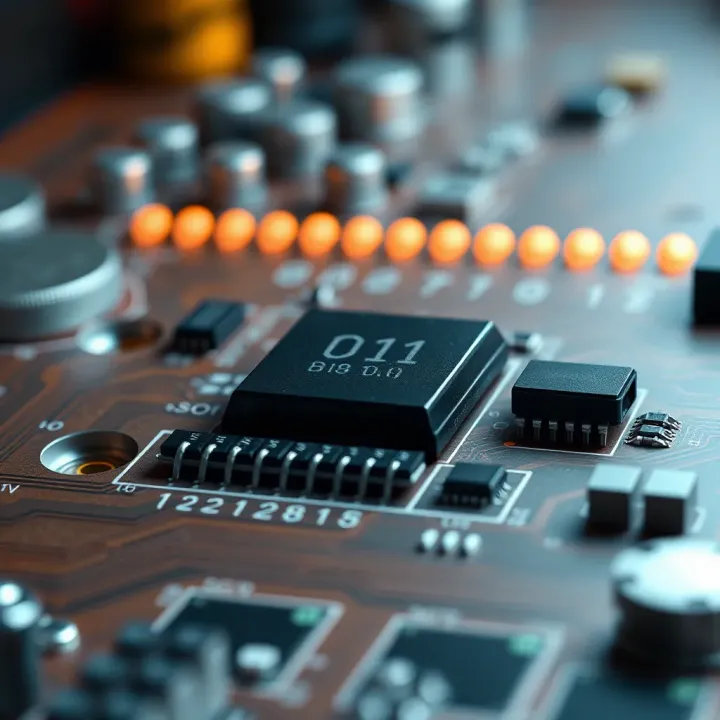
Binary decoders bridge the gap between compact binary data and concrete control signals, making them essential for automated systems in finance, logistics, and telecommunications.
Design considerations in decoders include the speed of output response, power consumption, and the complexity of the logic gates used. In fast-paced trading platforms, where information flows non-stop, hardware relying on decoders must operate quickly and reliably.
1-to-2 Decoder: Splits a single binary input into two outputs, useful in simple switching circuits.
2-to-4 and 3-to-8 Decoders: Often found in microprocessor circuitry for address decoding.
BCD to 7-Segment Decoder: Translates binary-coded decimal inputs to signals that light up digits on a 7-segment display—helpful for digital clocks and meters.
In South Africa, digital payment devices, like SnapScan or Zapper, depend on underlying decoder logic to process signals rapidly and accurately. Similarly, network routers and mobile communication equipment, vital for online trading, use decoders to correctly route data packets.
Understanding these practical uses helps demystify why decoders matter beyond textbooks—they lay the groundwork for many devices that support our daily business and personal transactions.
In the following sections, we will explore how these decoders are built, the logic behind their circuits, and how their applications extend into new technology areas critical to South African enterprises and innovators.
Binary decoders play a fundamental role in digital electronics by translating binary input signals into specific output patterns. Their primary job is to identify each unique combination of input bits and activate a corresponding output line. This process turns abstract binary data into a clear, actionable signal, enabling systems ranging from memory storage to display controls to function properly.
Definition of binary inputs: Binary inputs refer to signals represented using two states, typically 0 and 1. These signals are the foundation of digital systems, encoding information such as numbers, instructions, or status flags. For example, a three-bit binary input like 101 corresponds to a unique digital state among eight possible combinations (2³). In practical electronics, these binary inputs might come from sensors, switches, or microprocessor outputs.
Purpose of decoding in digital electronics: Decoding transforms these binary inputs into meaningful signals that control specific parts of a circuit or system. Without decoding, the binary data would remain abstract and unused. For instance, in a memory chip, decoding tells the circuit exactly which location to read or write to by activating the appropriate address line. Similarly, decoding helps drive display digits by selecting which segments to illuminate, making the data visually accessible.
How input combinations map to outputs: Every unique combination of binary inputs corresponds to one active output, while the rest remain inactive. This one-to-one mapping ensures clarity and prevents confusion in signal interpretation. If you consider a two-bit input, there are four possible states (00, 01, 10, 11), and a decoder will have four corresponding output lines. When the input reads '10', only the third output activates, letting the circuit pinpoint that exact condition.
Examples using simple binary patterns: Take a simple two-to-four line decoder. This decoder takes two binary inputs and converts them to four outputs. Suppose the inputs are ‘00’ — the first output lights up. If the inputs change to ‘11’, the decoder activates the fourth output exclusively. This clear distinction means that circuits connected to each output respond only when their assigned binary pattern appears, cutting down on errors and simplifying design. Such decoders are common in digital circuits like keypad encoding and small-scale addressing within devices.
Binary decoders act like traffic controllers in digital systems, directing specific input signals down precise output paths to ensure reliable, predictable operations.
This clear mapping between binary inputs and outputs makes decoders crucial for many industries, including industrial automation, telecommunications, and consumer electronics.
Binary decoders come in various types, each suited for specific tasks and input sizes. Choosing the right decoder affects how effectively a system interprets binary signals and directs outputs. Understanding these differences helps in selecting a decoder fit for purpose, especially in fields like digital electronics and computing where accuracy and speed matter.
Two-to-four line decoders are among the most straightforward types. They take two binary inputs and convert them into four unique output lines, where only one output activates at a time based on the input combination. These decoders find practical use in small control circuits or simple address decoding where just a few options need distinguishing. For example, a basic keypad scanner might use such a decoder to interpret button presses.
Moving up the scale, three-to-eight line decoders accept three inputs and produce eight outputs. The increase in output lines allows handling more complex signal sets without much complication. This type is common in memory circuits where decoding eight possible addresses or commands is necessary. Picture a microcontroller selecting from eight different devices or functions — a three-to-eight decoder makes that efficient by activating just the correct line.
When working with memory devices, decoders for memory addressing play a crucial role. These decoders translate binary addresses into specific signals to select memory cells or blocks. For instance, in RAM modules, a binary address input triggers just one memory chip or bank, ensuring only the intended data location is accessed. This precise selection is vital to prevent errors and maintain system integrity, especially in computers and data storage solutions.
Beyond straightforward decoding, binary decoders often support multiplexing and demultiplexing tasks. Here, decoders help route signals by selecting one input from many (multiplexing) or directing one input to many outputs (demultiplexing). In telecommunications or digital audio systems, such decoders manage channel selection and distribution. This reduces wiring complexity and allows a single processor or component to handle multiple data lines efficiently.
Decoders are the unsung heroes in digital systems, quietly directing traffic and ensuring that every signal reaches its right destination with precision.
In summary, from simple two-to-four decoders to complex address and multiplexing variants, understanding the type and function of a binary decoder is key for designing reliable, efficient systems that handle data and control signals accurately.
Designing binary decoders is fundamental to their function of translating binary inputs into specific outputs. Whether in hardware or software, the design process directly affects performance, reliability, and practical use in real-world electronics and computing. Understanding the role of logic gates and the creation of truth tables helps illustrate how decoders work at a fundamental level.
Binary decoders rely mainly on basic logic gates such as AND, OR, and NOT to perform their translation task. Each output line is activated by a unique combination of input signals, which can be expressed via a logic function. For example, in a two-to-four line decoder, inputs A and B control four outputs, where each output corresponds to one combination: output 0 activates when both inputs are low, output 1 when A is low and B is high, and so on. AND gates combine the inputs in these specific ways, while NOT gates invert signals where necessary to represent zero inputs accurately.
Using these gates provides a clear and tangible way to build decoders in physical circuits. This approach is especially helpful for hardware designers who want precise control over signal behaviour without adding excess complexity. The choice and wiring of logic gates determine the decoder's speed, power consumption, and how easily it integrates with other electronic components.
Designing truth tables is where these logical relationships start to take form. A truth table lists every possible combination of inputs alongside the expected output state. It acts as a blueprint for constructing the decoder’s logic. For instance, a three-to-eight line decoder's truth table includes eight rows for each output line, each matched to a three-bit input combination. This clarity lets engineers systematically translate binary input to output without guesswork.
Truth tables also serve a practical role in troubleshooting and verifying decoder functions. Before building or programming, designers can cross-check expected behaviours, ensuring any errors are caught early. In teaching environments, working through truth tables helps learners grasp how digital circuits decide output states from input signals.
Physical decoder circuits implement these logic gate designs directly using semiconductor technology such as CMOS or TTL chips. Such hardware is fast, reliable, and well-suited to tasks requiring real-time decoding, like memory addressing in computers or controlling display segments. Hardware decoders benefit from predictable timing and minimal delay, which is critical in fast digital systems where lag can cause errors.
On the flip side, software decoding interprets binary inputs within a program running on a microcontroller or processor. This method is more flexible and easier to update or modify since changes need only software updates rather than circuit rewiring. For example, a microcontroller in a consumer device might decode input signals from sensors and decide on outputs using embedded code. Software decoders are useful in prototyping or applications where hardware complexity or cost must be minimised.
However, software decoding can introduce some latency, depending on processor speed and task load. It also demands programming skills and careful design to ensure robustness. In contrast, hardware decoding suits environments requiring steady, high-speed operation with minimal maintenance.
Whether you’re working with physical logic gates or software routines, designing binary decoders starts with understanding how inputs map to outputs clearly and efficiently. The right choice depends on project needs, speed requirements, and flexibility desired.
In South African tech contexts, such as local manufacturing or software development hubs, grasping these principles supports building reliable electronics and smart devices adapted for our specific markets, which often combine both approaches for optimal results.
Binary decoders play a significant role across various technology sectors, especially in memory devices and display systems. They serve as the link between digital signals and the physical hardware that requires precise control. Understanding how these decoders function in specific applications helps grasp their practical benefits and underlying importance.
Selecting memory locations involves pinpointing the exact spot in a memory module to read from or write to. Binary decoders translate address inputs—a set of binary signals—into unique output lines corresponding to memory sections. This selective activation is crucial in devices like computers and smartphones where efficient and accurate memory access impacts overall performance.
Take for example a simple two-to-four line decoder in a Random Access Memory (RAM) system: it converts a two-bit binary input into four unique output lines, each linked to a memory block. This means only the chosen block is activated, preventing accidental data retrieval or overwriting from other sections.
Address decoding in RAM and Read-Only Memory (ROM) works on a similar principle but on a larger scale. These decoders distinguish between thousands or even millions of memory locations by mapping binary addresses to specific hardware paths. Without effective decoding, the system might fetch incorrect data or waste power by activating unnecessary sections.
In ROM chips used in embedded systems, decoders ensure that stored instructions or constants are accessed correctly during operation. In RAM, the decoder facilitates temporary data storage and retrieval by selecting the right memory cells based on processor requests. Thus, solid address decoding is a backbone for reliable computing and data management.
Driving seven-segment displays is a classic application of binary decoders. These displays rely on seven individual LEDs arranged to form digits from zero to nine. A binary decoder takes a four-bit binary input and activates the appropriate combination of segments to show the correct number.
For instance, in digital clocks or fuel pump displays found throughout South Africa, these decoders translate the internal binary signals into visible digits instantly. This avoids manual wiring complexity and enhances visual clarity.
Binary decoders also take centre stage in control signalling in devices. Think of industrial machines or consumer electronics where control signals determine actions like turning a motor on/off, selecting gears, or switching audio channels. Decoders interpret binary commands and convert them into specific output signals that control hardware components.
This method streamlines circuit design by reducing the number of wiring pathways needed, simplifying maintenance and troubleshooting. Plus, it ensures that commands reach only their intended parts, boosting device reliability in environments from factories to homes.
Understanding these practical applications reveals why binary decoders are fundamental to seamless digital operation in both consumer gadgets and industrial systems. Their role in memory management and device control lays the groundwork for efficient, responsive technology that we depend on daily.
Binary decoders, while fundamental to digital electronics, come with a set of challenges that can affect their performance and reliability. Traders, investors, and entrepreneurs in tech sectors need to understand these issues, as they influence device efficiency and the integrity of data processing. Handling signal integrity and noise is vital to prevent errors, while managing the growth in complexity is essential when scaling for larger binary inputs.
Mitigating false decoding is a key concern in binary decoder use. In practical terms, electrical signals can get distorted by noise or interference, causing a decoder to misinterpret inputs and produce incorrect outputs. For example, in a memory chip address decoder, a false decoding event might select the wrong memory location, leading to data corruption or system crashes. To reduce this, designers often incorporate noise filters, shielding techniques, and debounce circuits that stabilise signals before decoding.
Designing for reliable operation means ensuring that decoders function correctly under various environmental and operational conditions. This involves using components with appropriate tolerance levels and implementing error-checking mechanisms. For instance, in control systems that manage industrial machinery, a reliable decoder prevents wrong commands from executing, which could otherwise cause equipment damage or safety hazards. Practical steps include power supply stabilisation and timing adjustments to synchronise signals properly.
Decoder complexity growth becomes noticeable as the number of input bits increases. A simple 2-to-4 line decoder might be straightforward, but a 10-to-1024 line decoder grows exponentially in complexity, requiring many more logic gates and increasing circuit size. This escalation not only raises production costs but may also slow down processing times due to longer signal paths and increased capacitance. It’s a serious consideration when designing systems such as large memory addressing or communication protocols.
Using hierarchical decoder designs helps manage this complexity effectively. Instead of building one massive decoder, the design splits inputs into smaller blocks—each handled by simpler decoders—whose outputs feed into higher-level decoders. Take memory chips as an example: a 10-bit address is often broken into 4-bit and 6-bit segments, decoded separately before combining results. This method keeps circuit sizes manageable, improves speed, and simplifies troubleshooting, which is critical in scaling complex digital systems.
Understanding these challenges aids in building robust binary decoding solutions that meet the demands of modern electronics and data processing.
In summary, managing signal noise and complexity growth are practical challenges in binary decoder use. Addressing these effectively enhances device reliability and scalability—key factors for any business or individual investing in or developing digital technology.
Explore binary phase diagrams with clear answers on phase regions, invariant reactions, the phase rule, and practical uses in materials science 🔍⚛️ Perfect for engineering studies.
Convert ASCII characters to binary code with ease 🔢. Learn how the ASCII to binary table works, its uses in coding and data tasks relevant to South African tech users 🇿🇦.

💻 Learn how binary numbers — made up of zeroes and ones — form the backbone of computing and everyday devices, including how to convert decimals and do basic binary maths.

Convert hexadecimal to binary with ease 🔢. Learn the step-by-step process, practical tools, common mistakes, and real-life uses in tech and coding.
Based on 7 reviews