

Understanding Binary Options Demo Accounts
🔍 Learn how binary options demo accounts work in South Africa. Get practical tips on setup, features, and risks to trade confidently without using real money.
Edited By
Sophie Reynolds
Binary options demo accounts offer a practical way for traders to familiarise themselves with the trading environment without risking real money. These accounts simulate actual market conditions and platform features, making them a valuable tool especially in the early stages of trading.
For South African traders, demo accounts play a pivotal role in getting to grips with binary options, which involve predicting the price movement of assets within a fixed timeframe. Since the stakes can be high when real money is involved, practising risk-free on a demo account helps build the skills and confidence needed before trading live.

Demo accounts typically provide virtual funds—often ranging from R10,000 to R100,000—that’s used to place trades. Whether you’re testing a new strategy or simply exploring how different assets react, having this cushion lets you learn without pressure. For instance, you might try trading currency pairs like USD/ZAR or commodities relevant to local markets such as gold or platinum.
A demo account is much like a flight simulator for pilots — it trains you for real-world scenarios without any danger.
These accounts also allow traders to understand a broker’s platform functionality: interface usability, trade execution speed, available asset classes, and risk management tools. Since South African traders often deal with fluctuating data prices or intermittent connectivity, testing these features on a demo can reveal if a broker suits your trading needs.
However, it’s worth acknowledging that demo environments can’t capture emotional aspects like fear or greed that influence live trading decisions. Plus, the absence of real financial stakes means some traders may rush or take unnecessary risks, which won’t translate well under actual market pressure.
In summary, binary options demo accounts offer a safe playground to practise trading skills, explore strategies, and vet brokers—helping South African traders prepare better for the realities of live markets. Getting comfortable with the platform and market mechanics in a controlled setting often translates to better decision-making once real money is on the line.
Understanding how binary options demo accounts operate is key for anyone wanting to get a solid grasp on trading without immediately risking real money. These accounts offer a simulated trading environment that mimics the live market, allowing you to practice entering and exiting trades, experiment with different strategies, and learn the ins and outs of the trading platform—all without financial consequences.
A binary options demo account is essentially a practise account offered by brokers where you receive virtual funds to trade binary options. These accounts reflect real market conditions—such as price movements and expiry times—so you get a genuine feel for trading. For example, if you’re testing a strategy on the weather of the JSE or currency pairs like USD/ZAR, the demo account lets you assess how these options play out in realistic settings.
The virtual money means you don’t lose anything when a trade doesn’t go your way, so you can take risks and learn without stress. The best brokers in South Africa provide demo accounts that closely simulate their live trading experiences.
Demo accounts aim to replicate live accounts closely, but certain differences exist. Both typically offer access to the same binary options instruments, expiry times, and asset types, but demo accounts use fake funds and thus lack real money risk. Execution speeds are often similar, though some brokers might prioritise live trades slightly for latency reasons.
One notable gap is the emotional factor; trading with virtual money rarely triggers the same nerves or pressure as trading your own cash. Also, while the market data is usually live, there might be slight delays or differences in liquidity execution.
That said, the demo environment gives you access to essential features like charting tools, trade history, and account management. For example, a South African trader can use a demo account to familiarise themselves with the MT4 or proprietary broker platforms like those from IG Markets or ExpertOption.
Getting started with a binary options demo in South Africa is straightforward. Most brokers allow easy registration either via a quick sign-up with a mobile number or email. Some brokers ask for basic ID verification upfront to comply with Financial Intelligence Centre Act (FICA) regulations.
Once signed up, you receive immediate access to your demo wallet loaded with virtual funds—often around R5,000 to R50,000 in value. You can then practise binary options trading through your browser or a mobile app. This process helps South African traders factor in local conditions like data costs and connectivity.
Importantly, many brokers also offer local payment methods like SnapScan or EFT when you later decide to move to a live account, but none of that is necessary in demo mode.
Demo accounts provide a valuable stepping stone, offering you practice in the same platform environment with identical tools, minus the financial risk. For South African traders, this means no extra headaches when transitioning to live trading.
This makes demo accounts an ideal starting point to build trading discipline, understand market timing, and avoid common pitfalls before risking actual Rand.
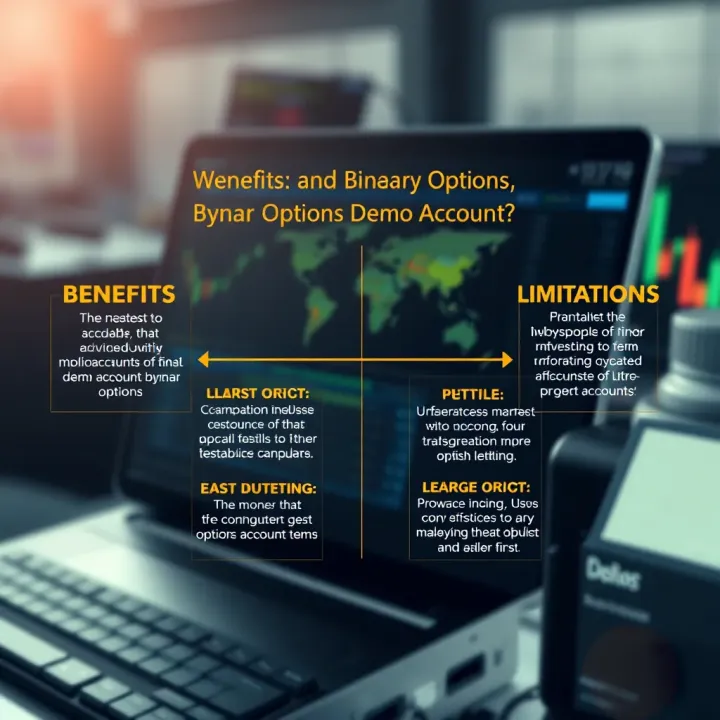
Binary options demo accounts provide practical advantages for both new and seasoned traders. Whether you're just starting out or refining your approach, these accounts act like a safe playground where you can sharpen your skills without risking a cent. This section explores three key benefits that make demo accounts a valuable part of the trading process.
For beginners especially, demo accounts offer the chance to learn the ropes without financial pressure. Imagine attending a driving school where you can make every mistake possible without the fear of a crash. Similarly, demo trading lets you experience binary options markets in real time using virtual money. This risk-free environment helps beginners understand how options settle, how expiry times work, and how factors like market movement influence outcomes. For instance, a new trader in Johannesburg can test the impact of short-term commodities fluctuations, like gold prices, without any real loss.
Experienced traders aren’t left out. Demo accounts provide a practical space to test new trading strategies or to explore platform features before deploying real capital. For example, a trader might want to try out different expiry durations or asset classes like currency pairs such as ZAR/USD. Demo accounts allow this exploration without denting your balance. Plus, the ability to navigate complex trade execution processes smoothly in a demo reduces costly slip-ups later during live trading. South African platforms often incorporate local assets and payment methods, which a demo allows you to get used to before committing.
Confidence isn’t just about knowing how things work; it’s about feeling comfortable managing them under realistic conditions. Demo trading builds this confidence gradually. In experience, traders who jump straight into live trading without demo exposure often fall prey to emotional reactions like panic or overtrading. With demo accounts, you practise making decisions, managing losses, and identifying achievable profit goals. For example, a Durban-based trader might find that practising on a demo affects how decisively they act when the rand suddenly weakens due to local news. This psychological preparedness is crucial in the real world, where every rand lost or won carries real consequence.
Using a demo account is like rehearsing for a stage play — the better your practice runs, the more polished your performance when the curtains go up.
In short, demo accounts offer a practical, risk-free, and confidence-building approach that benefits traders across experience levels. For South African traders facing unique local market conditions and currency fluctuations, these tools can play a pivotal role in smoothing the transition into live binary options trading.
Demo accounts in binary options trading offer a safe playground to learn and practise, but they don't perfectly mirror the live market experience. Understanding where demo trading falls short is crucial for traders, especially when moving from simulated scenarios to real-money decisions.
The biggest difference between demo and live trading is the emotional factor. Playing with virtual money removes the fear and stress of losing actual cash. This absence of pressure can lead to overconfidence or impulsive trades that wouldn't happen in real life. For instance, a trader in Gauteng might comfortably enter multiple rapid trades on a demo account, only to freeze or second-guess themselves when betting real rand on the JSE index during volatile times.
Trading with real money triggers a physiological reaction—sweat, faster heartbeat, hesitation—that can affect decision-making. Demo accounts can't replicate this, meaning your strategy's success on paper might not translate smoothly when it matters most.
Demo accounts don't always reflect live market conditions accurately. Price feeds in demo platforms may lag or smooth out sudden market swings caused by breaking news or economic data releases, which can be quite common during South Africa's budget announcements or SARB interest rate decisions.
Execution speed and slippage—the difference between expected and actual trade prices—are often better on demos. In reality, network delays or broker liquidity issues can result in trades being filled at less favourable prices. For example, during high volatility, an experienced trader might notice their live trade exits at a worse price than anticipated, unlike in their demo experience.
Relying too much on demo account results sets a false expectation. Some traders get lulled into thinking their winning streaks will carry over to real trading, but the shift in mindset and market conditions is a reality check. South African traders must also consider local factors like loadshedding affecting internet connectivity or financial regulations impacting trade execution.
Tip: Use demo results as a guide, not a guaranteed preview. Combine it with disciplined practice and risk management before stepping into live markets.
Remember, demo accounts should be a stepping stone, not a final destination. Recognising these limitations helps you prepare mentally and technically, avoiding shocks that could drain your confidence and capital once you go live.
When it comes to binary options trading in South Africa, picking the right broker is more than just a formality — it’s a foundation for your trading success. A trustworthy broker not only offers reliability and security but also ensures that demo accounts serve their intended purpose: practising in a safe, realistic environment. Without this trust, you risk wasted effort and potential financial loss once you move to live trading.
Regulation is a key pillar that keeps brokers accountable. For South African traders, it’s wise to look for brokers regulated by recognised authorities such as the Financial Sector Conduct Authority (FSCA). These brokers need to comply with rules that protect your money and personal information. For instance, an FSCA-regulated broker must keep client funds in separate accounts, safeguarding them from misuse. Without regulation, brokers might operate without transparency, raising the risk of fraud or shady practices.
Security measures go hand in hand with regulation. Whether it’s encrypted login processes or secure payment gateways, these protocols defend your account from unauthorised access. Imagine trusting a broker with a flimsy password system; your funds and data could be exposed at a moment’s notice. So, always check for security badges, SSL certificates on the website, and clear privacy policies before signing up.
Not all demo accounts are made equal. Some offer limited virtual funds or restrict access to certain features, which can undermine your ability to test strategies realistically. A good demo account mirrors the live platform closely, including real-time pricing, various binary options types, and expiry times.
For example, a South African trader using a demo account that doesn’t update prices real-time will miss the opportunity to practise fast decision-making, which is critical in volatile markets. Also, look for platforms that provide analytical tools and charts — these help deepen your understanding beyond just clicking 'call' or 'put'. Brokers like IQ Option and Binomo generally offer rich demo environments that come close to live conditions.
Smooth and affordable deposit and withdrawal methods make for a hassle-free experience. South African traders prefer brokers that accept payment via familiar options like EFT (Electronic Funds Transfer), SnapScan, or even PayFast. Since international payment options can sometimes incur hefty fees or delays, local methods keep things efficient.
Support is another vital aspect to consider. A responsive customer service team available during local business hours can make a big difference if you run into issues or have questions about your demo or live account. Channels like live chat, email, and phone support with knowledgeable agents create confidence that help is just a call or message away.
Choosing a well-regulated, feature-rich broker with local payment facilities and solid support isn't just a bonus — it's essential for safe and effective trading from the demo stage through to live markets.
Taking the time to vet brokers thoroughly will save you plenty of headaches and let you focus on honing your trading skills with peace of mind.
Using a binary options demo account effectively is about more than just clicking trades; it demands clear goals, practical experimentation, and a cautious approach to live trading. Maximising these risk-free tools helps traders sharpen their skills without the worry of losing real money, especially needed in South Africa where market volatility and broker choices vary widely.
Before diving in, set specific learning goals. For instance, you might aim to understand how expiry times affect your payout or to get familiar with market indicators in the platform. Keep a trading journal — jot down every practice trade, the reasoning behind it, the outcome and lessons learnt. This habit helps you spot patterns in your trading behaviour and identify mistakes early. For example, if you notice consistently poor results trading high volatility options, you can adjust your strategy accordingly.
Demo accounts give you the ideal playground to test different trading tactics without risk. Try out a variety of strategies — like trend following, hedging, or scalping — and see which suits your trading style. Also, simulate trading under different market conditions, such as volatile sessions during South African economic data releases or Eskom-related market jitters. That way, you’ll understand how your chosen approach performs in fast-moving scenarios versus calmer markets. Remember, mixing strategies in a demo is useful, but avoid switching too rapidly; building confidence requires giving each method a good run.
Switching to real money trading is a major step that should be taken slowly. The emotional pressure when your own cash is on the line can differ wildly from demo trading. Start with small stakes and avoid chasing losses. It’s wise to set a strict budget for your first live trades, as impulsive decisions often lead to quick blowouts. For instance, begin with R200 or less per trade to manage risks carefully. Also, be prepared for slight differences in trade execution and market conditions — demo platforms can differ from live ones in spreads and slippage.
Making the most of your demo experience means treating it seriously—set targets, test broadly, and ease into live trading. This approach builds practical skills that translate smoothly when real stakes are involved.
By following these steps, traders not only reduce costly beginner errors but also increase their chances of long-term success in binary options trading.
🔍 Learn how binary options demo accounts work in South Africa. Get practical tips on setup, features, and risks to trade confidently without using real money.
💡 Master binary options trading with demo accounts! Learn their perks, limits & broker features — essential practice before jumping into South Africa’s live market.
📈 Learn binary options trading basics tailored for South Africans. Understand how it works, risks involved, steps to start, and avoid common pitfalls confidently.

🚀 Learn how forex trading demos let you practise without risk, pick the right broker, avoid common mistakes, and prepare confidently for live trading in South Africa 🇿🇦
Based on 15 reviews