

High Profit Candlestick Patterns Explained
📈 Learn high profit candlestick patterns to boost your trading skills! Practical tips, common mistakes, & PDF resources for South African traders.
Edited By
Liam Fletcher
Candlestick patterns are a staple tool for traders and investors looking to read price charts with more confidence. Originally developed centuries ago by Japanese rice traders, these patterns still hold value today, helping you spot potential market turns or trend continuations. For South African traders especially, understanding these signals can make a solid difference in navigating our stock exchanges or even commodities like gold and platinum.
Each candlestick shows four key prices: the opening, closing, high, and low within a specific period—whether that’s a minute, an hour, or a day. By studying how these candles form in sequence, you can identify patterns that hint at the market's next moves. For instance, a bullish engulfing pattern may signal buyers gaining control, while a shooting star could warn of a possible reversal downwards.

Besides recognising individual patterns, context matters hugely. A pattern appearing after a strong downtrend carries much more weight than one popping up in sideways action. This situational awareness is why traders combine candlestick analysis with support and resistance levels, moving averages, or volume data.
Practical learning is easier with the right resources. Our downloadable PDFs break down top candlestick patterns with clear diagrams, examples, and brief explanations tailored to South African market conditions. They serve as handy cheat sheets for quick reference during live trades or when reviewing past charts.
Quick tip: Practice drawing these patterns on local shares like Sasol, Shoprite, or Naspers. You’ll notice how global factors and local news interplay with candlestick signals.
Whether you’re an experienced analyst or just getting started, grasping these patterns sharpens your market moves. Keep in mind, no single pattern guarantees a trade win; they’re meant to improve the odds when combined with smart risk management.
In the following sections, we’ll cover popular candlestick patterns, their meanings, and how to apply them in your trading strategy, alongside practical PDF tools to aid your learning journey.
Grasping the basics of candlestick patterns is fundamental for anyone serious about trading or investing. These patterns offer a visual snapshot of market sentiment and price action over a specific time, helping traders make more informed decisions rather than relying on gut feeling alone. For instance, recognising a hammer candlestick after a downtrend often signals potential reversal, giving you an edge in timing entries.
Candlestick charts first appeared in 18th-century Japan, used by rice traders to track price movements. Unlike simple line or bar charts that only plot price extremes or closing prices, candlesticks capture four important data points: open, close, high, and low prices within a time frame. This method became popular worldwide because it gives quick insight into market emotions, whether buyers or sellers were in control during that period.
Each candlestick functions like a mini story of price action. The body shows the difference between opening and closing prices, revealing whether buyers pushed prices up or sellers dragged them down. Shadows or wicks illustrate the price extremes, showing market volatility during that period. For example, a long upper wick often indicates rejection of higher prices, warning traders to be cautious.
Candlestick charts differ from line charts, which connect only closing prices and miss intraday highs and lows. Bar charts display price ranges but don’t visually distinguish between bullish and bearish sessions as clearly as candlesticks do. This visual clarity helps traders quickly spot potential reversals or continuation signals without complex analysis.
These four prices give a full picture of trading activity within each period. The open price marks where the session began; the close shows where it ended. High and low prices capture the extremes reached, which might suggest support or resistance levels. For example, if a candlestick closes near its high, it indicates strong buying pressure towards the end.
The body is the visible thick part between open and close. A large body points to decisive buying or selling; a small body hints at indecision. Shadows extending above or below the body reflect price rejections or attempts to push prices beyond support or resistance. These shadows help identify key levels where traders might expect a bounce or reversal.
A bullish candlestick shows that prices closed higher than they opened, indicating buying strength. Conversely, a bearish candlestick closes lower, signalling sellers dominating. Colours or fill styles differentiate the two — typically green or white for bullish and red or black for bearish. Understanding this distinction is vital because patterns in bullish or bearish contexts can have very different meanings.
Recognising these basics puts you in a better position to interpret more complex candlestick patterns accurately, especially when combined with other technical analysis tools.
Having this foundational knowledge helps you read charts confidently, avoid common pitfalls, and make smarter entries and exits in the market. It's especially useful when trading South African listed shares on the JSE or forex pairs affected by local economic factors.
Recognising key candlestick patterns gives traders and investors an edge by revealing shifts in market sentiment at a glance. These patterns, whether formed by a single candle or a combination, serve as clues to potential price movements and trend changes. Understanding these signals helps you make better-informed decisions, manage risks, and identify entry or exit points.
The Doji candlestick shows that the opening and closing prices are virtually the same, resulting in a very thin or non-existent body. This happens when buyers and sellers reach a standstill, creating indecision in the market. For example, after a strong upward move on the JSE, a Doji might signal hesitation before the next move—either a continuation or reversal.
Traders consider a Doji significant when it appears near support or resistance levels. However, a single Doji doesn't guarantee a trend change; context matters. It’s often prudent to wait for confirmation with subsequent candles before acting.
Both the Hammer and Hanging Man share a similar shape: a small body at the top with a long lower wick. The Hammer appears after a downtrend and suggests potential bullish reversal. Think of a stock dipping sharply during the day but closing near its opening price—this buying pressure indicates that sellers might be losing grip.
The Hanging Man, however, surfaces at the top of an uptrend and signals a possible bearish reversal. It shows that although prices closed near opening, sellers pushed prices down during the session. For instance, if a resource company’s share price forms a Hanging Man on the hourly chart, it could hint at weakening momentum ahead.
Characterised by small bodies and longer upper and lower shadows, Spinning Tops indicate market uncertainty. Neither buyers nor sellers dominate, resulting in indecision. Suppose you spot a Spinning Top after a sharp move—this could mean the trend is losing steam.
Using this pattern alongside other indicators strengthens its reliability. A Spinning Top appearing near a key JSE index resistance level might suggest a pause before the next move.
An Engulfing pattern consists of two candles where the second candle completely 'engulfs' the body of the first. A bullish engulfing happens after a downtrend and signals buying strength. For instance, if a MidCap share shows a small red candle followed by a larger green one covering it fully, traders might read this as a shift to buyers.
Conversely, a bearish engulfing pattern after an uptrend warns of selling pressure. These patterns carry more weight when volume confirms the move.
The Morning Star and Evening Star are three-candle patterns signalling strong reversals. The Morning Star forms at a downtrend's bottom with a long bearish candle, followed by a small indecisive candle, and then a tall bullish candle showing buyers taking control.
For instance, a Morning Star in an agricultural stock after a period of decline might suggest the start of a recovery phase. On the flip side, the Evening Star appears at an uptrend's peak and can mark the beginning of selling.
These patterns involve three consecutive candles showing sustained buying or selling pressure. Three White Soldiers are three long bullish candles continuing a rise, signalling strong momentum.
In contrast, Three Black Crows are three bearish candles in a row, often pointing to a persistent downtrend. Watching these patterns in action on a commodity share, especially with increasing volume, can help confirm a new trend direction.
Remember, while recognising candlestick patterns adds valuable insight, relying solely on them is risky. Always combine patterns with other analysis tools and context to make sound trading decisions.
Understanding how to read candlestick patterns is just the start — applying them correctly in trading strategies makes all the difference. Candlestick signals don't work in isolation; they provide clues that need proper context to spot real opportunities or warning signs. Without this, you risk chasing false hopes, rushing in too early or holding on too long. South African traders keen on technical analysis often combine these patterns with trend analysis and price levels to refine their trades.
Confirming trends with candlestick signals is a practical step to validate whether a price move will sustain or reverse. For example, spotting a bullish engulfing pattern during an uptrend suggests the trend might continue, offering a safer entry point compared to jumping in without confirmation. Conversely, the same pattern appearing after a long downtrend might hint at a reversal, indicating a possible shift in momentum.
However, relying solely on candlestick shapes can mislead. The timing and location within an overall trend count. A hammer forming at the bottom of a downtrend often signals a potential turnaround, yet if it emerges in a sideways market, the signal weakens. Traders in markets like the JSE or local forex pairings must weigh these nuances carefully.
Combining candlesticks with support and resistance levels sharpens entry and exit choices. These horizontal price points act like invisible walls where price historically stalls or reverses. Seeing a doji or shooting star right at a strong resistance level signals sellers might reclaim control. Likewise, a hammer at support implies buyers are stepping back in.
By blending candlestick signals with these levels, you get practical filters that reduce noise and false alarms. For instance, if a morning star pattern forms near a support zone, your confidence in entering a long position strengthens. This two-pronged approach also helps determine risk zones — an essential piece when setting stop-losses.
Setting stop-loss and take-profit points around candlestick patterns and key price levels protects your capital and locks in profits. Imagine entering a trade after a bullish engulfing candle confirms a trend bounce near support. Placing your stop-loss just below the support limits potential losses if the trend reverses unexpectedly. For take-profit, you might target a previous resistance level or a measured move derived from the candlestick pattern's size.
Such calculated exits prevent emotional decisions when the market moves fast. Especially in volatile South African shares or commodities, the swings can be sharp, so disciplined stops can shield you from large blowouts.
Avoiding false signals is critical since not all candlestick patterns lead to profitable moves. Patterns that appear in isolation or against the broader trend often fail. For example, a bearish engulfing candle in the middle of a strong uptrend might just be a temporary pullback rather than a genuine sell signal.
One way to sidestep these traps is to look for volume spikes or other confirmations like RSI or moving averages aligning with the candlestick message. Also, avoid trading on single patterns without corroborating evidence from other technical tools or market news. Especially in South African markets where external news or regulations can cause sudden price moves, relying on a single pattern could be risky.
Successful traders know that the real skill lies in reading the story candlesticks tell within their full surroundings—trend direction, key price levels, and broader market context. Patterns offer a map, but how you interpret and act on them defines your edge.
In summary, interpreting candlestick patterns effectively demands combining them with trend analysis, support and resistance, and sensible risk management. This deeper context transforms shapes and colours into meaningful signals ready to guide your trading decisions confidently.
Candlestick pattern PDFs play a handy role for traders wanting to sharpen their chart-reading skills. These resources offer a quick, reliable reference to various patterns without the distractions of online browsing. Especially for those who prefer studying offline or during moments without internet access, PDFs keep crucial information within easy reach.
Having a PDF on your device means you can learn and review candlestick patterns anytime, whether in a dimly lit room during loadshedding or on a bakkie ride to work. Without internet dependency, traders avoid interruptions, which helps maintain focus and improves retention. For example, a weekend trader can preview patterns on a tablet while away from their usual workstation.
Most PDFs organise candlestick patterns logically – starting with single-candle basics and moving to complex multiple-candle formations. This structure lets learners build understanding step-by-step, rather than scrambling through scattered online notes. Many PDFs also include annotated diagrams and brief descriptions, perfect for quick pattern recognition during live trading.
Websites dedicated to financial training, like Investopedia or local platforms such as the Johannesburg Stock Exchange's educational section, often share up-to-date, accurate candlestick guides. These reliable sources ensure learners get authentic material that aligns with mainstream market practices. Downloading PDFs from these sites reduces the risk of using misleading or oversimplified content.
Platforms like MyBroadband forums or local brokerages occasionally distribute tailored PDFs reflecting South African market nuances—like addressing effects of Eskom loadshedding on market behaviour. Engaging with these communities can provide access to PDFs that consider local trading conditions, improving practical application.
Due to rapidly changing markets, some PDFs floating on the internet may be obsolete or contain errors. Traders should check publication dates and verify if materials come from credible authors or organisations. Avoid PDFs that don’t cite sources or provide unclear explanations, as outdated guidance can lead to costly mistakes.
Keep a PDF open on your tablet or print a copy beside your screen while analysing live charts on platforms like ThinkMarkets or IG. This simultaneous usage helps quickly match real-time price movements with known candlestick patterns, making it easier to spot trading signals. Many find this hands-on approach speeds up learning and decision-making.
Treat PDFs not just as static manuals but as active learning tools. Highlight patterns you find tricky, or jot down notes beside examples to record your experiences. For instance, after seeing a hammer pattern lead to a bounce in the JSE Top 40, mark it for easy recall. Over time, these personal annotations turn the PDF into a customised guide that reflects your trading journey.
Practical PDF resources act as a bridge between theory and real trading, offering consistent access, clarity, and room for personal growth.
Finding quality candlestick pattern PDFs and integrating them wisely into your study routine makes chart analysis less intimidating and more effective—whether you trade shares on the JSE or dabble in forex from Cape Town.
Mastering candlestick analysis takes more than just memorising patterns. It requires practising with real data, reflecting on your own trades, and using additional tools to make smarter decisions. This kind of hands-on approach means you’ll get a good feel for how patterns behave in different market conditions, especially within the nuances of the South African markets.
Backtesting involves reviewing past price data to see how certain candlestick patterns played out. This helps you understand if a pattern really signals a trend reversal or continuation, or if it often leads traders astray. For instance in the JSE, you might look at the price of Sasol shares over a six-month period and spot hammer patterns that preceded upward moves. By doing this consistently, you get a clearer idea of which patterns are worth trusting and when.
Using local South African market examples makes your practice more relevant. The JSE behaves differently from, say, the US or European markets due to local economic developments, currency fluctuations, and sectors like mining or retail. Comparing how patterns worked in local blue-chip stocks such as Naspers, Pick n Pay, or MTN helps you adapt candlestick analysis to the specific rhythm and quirks of Mzansi’s trading environment.
Recording pattern occurrences and their outcomes is a simple but powerful habit. Every time you spot a pattern and act on it, jot down the date, the asset, the pattern type, your trade decision, and the result. Over time, this diary becomes your personalised data bank on what works and what falls flat.
Learning from your successes and mistakes is the real payoff here. Maybe you notice that morning star patterns often lead to gains when confirmed by volume spikes on local stocks, but evening stars don’t always signal a decline in resource shares. This insight lets you fine-tune your strategy instead of blindly following textbook rules.
Volume indicators show the number of shares or contracts traded during a period and can confirm candlestick signals. A bullish engulfing candle accompanied by rising volume suggests strong buying interest, which adds weight to the signal. If volume is thin, the pattern might not be trustworthy.
Moving averages smooth out price data to indicate trends, while oscillators like the Relative Strength Index (RSI) highlight overbought or oversold conditions. Using candlesticks alongside these tools helps you side-step false alarms. For example, spotting a doji near the 50-day moving average with RSI divergence could alert you to a possible turnaround, making your entry or exit decisions more reliable.
Keeping these practical tips in mind will boost your confidence in reading candlesticks and improve your chances of profitable trades in South Africa’s dynamic market.
📈 Learn high profit candlestick patterns to boost your trading skills! Practical tips, common mistakes, & PDF resources for South African traders.

📉 Learn how to spot bearish candlestick patterns showing potential drops in SA markets. Master common formations and sharpen your trading strategy for R gains.

📉 Learn to spot hammer candlestick patterns, their role in market reversals, and practical trading tips for South African markets. Avoid common pitfalls! 🔍
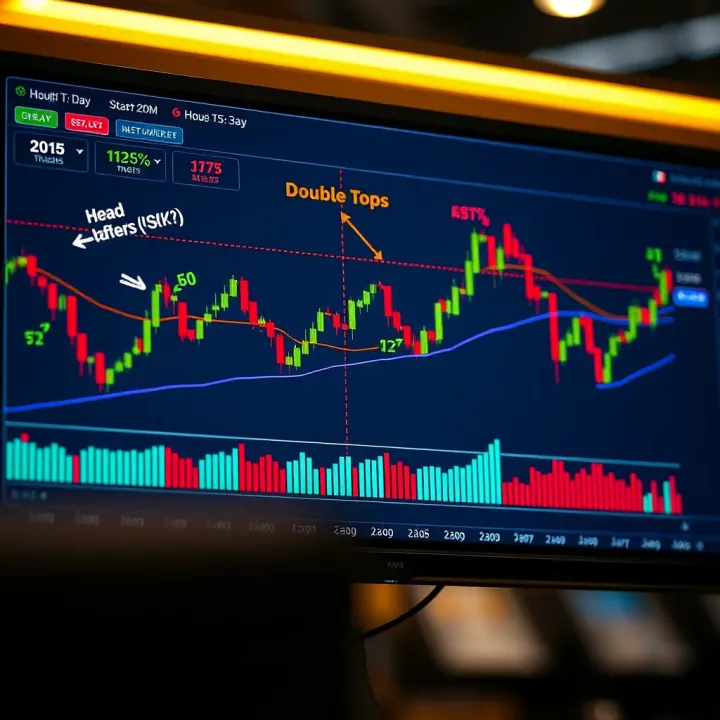
📈 Learn key chart patterns for smart trading decisions in SA. This practical PDF guide offers clear tips on spotting trends and interpreting local market moves.
Based on 11 reviews