

How to Convert Words into Binary Code
Learn how to convert words into binary step-by-step 🧑💻, explore encoding standards, practical tools, and programming tips for clear binary conversion.
Edited By
Emily Carter
Binary log systems play a vital role in modern computing, especially where data integrity and system reliability matter. These logs are essentially binary files that record every change made to a database or system. Unlike plain text logs, binary logs store data in a compact, machine-readable format, making them faster to write and more efficient to process.
Think of binary logs as a detailed ledger for your system’s transactions. For instance, in South African trading platforms or financial services, databases use binary logs to track every insertion, update, or deletion securely. If a system crash occurs, these logs help engineers quickly restore the data to its last consistent state, reducing downtime and manual rework.

Binary logs are not only about recovery; they form a backbone for replication setups, ensuring that multiple nodes stay in sync without lag.
In trading environments, accuracy and speed are non-negotiable. Binary logs ensure real-time replication of data between servers, which is crucial when market data updates every second. This prevents inconsistencies or delays that could cost big. Brokers and analysts benefit by working off a single source of truth, which improves decision-making.
Efficient Storage: Binary format reduces the volume of logged data compared to text logs.
Speedy Processing: Easier for software to parse and replay transactions quickly.
Robust Recovery: Enables precise restoration after failures or crashes.
Replication Support: Powers data syncing across distributed environments.
Consider a Johannesburg-based fintech company handling thousands of transactions every minute. Their database uses a binary log to mirror all transactions to secondary servers. If the primary server hits a snag, the secondary can take over with near-zero data loss thanks to these logs.
Understanding how binary logs function can help you appreciate their impact on system availability and trustworthiness — critical for any high-stakes business relying on data.
In the next section, we will explore the mechanics behind binary logs and how to configure them optimally for different business needs.
Binary logs play a key role in many computing systems, especially where data integrity and replication matter. They act as a specialised journal, recording changes made to a database or system in a format machines can easily process. This makes them invaluable for recovering lost data, auditing actions, and synchronising databases across different locations.
A binary log captures every change to the data in a system—mostly insertions, updates and deletions—encoded in a compact, non-human-readable format. For example, if you imagine a stock trading platform, the binary log records every trade executed, price changes, or adjustments to accounts. This logging mechanism ensures that the history of all actions is preserved, allowing administrators to replay or audit events precisely.
The practical benefit is clear: if a server crashes or data gets corrupted, you can restore the last good backup and then apply the changes from the binary log to bring the database right up to date. This is often referred to as point-in-time recovery, and it's crucial for fintech and investment platforms where data accuracy is non-negotiable.
Unlike text logs, which store changes as plain text messages, binary logs use a compact and optimised format. Text logs can be human-readable but usually consume more storage and may not capture every detail necessary for exact replication. On the other hand, binary logs are designed for precision and efficiency.
For instance, a text log might say "User updated record 101," while the binary log stores the exact byte-level change needed to replicate that update on another server. This means binary logs enable faster, more reliable replication, which is vital when brokers or analysts rely on real-time data mirrored across multiple sites.
When a change is made in a system that supports binary logging—say, a trade execution on a market system—the system writes a corresponding entry into the binary log immediately after the change is committed. This write happens in near real-time, ensuring an accurate sequential record of events.
This approach has two practical outcomes. One, the log acts as a chronicle of operations helpful in audits or debugging. Two, it allows secondary systems (like replica databases) to consume these logs and apply changes, keeping their data in sync without the overhead of complex queries or duplicated transactions.
The binary log is structured as a sequence of events. Each event contains a header with metadata like timestamp, event type, and length, followed by the actual data describing the change. For example, an UPDATE event might specify table name, primary key values, and new data.
This structure supports efficient parsing, enabling systems to quickly scan and apply relevant changes without sifting through irrelevant entries. Moreover, binary logs include checkpoints and rotation mechanisms to prevent unmanageable file sizes, ensuring the log remains performant. It's a technical setup designed to balance speed, reliability, and system resource use — all critical factors for financial and trading systems that demand uptime and data fidelity.
Understanding these nuts-and-bolts helps traders and IT professionals grasp why binary logs form a backbone for robust, real-time, and recoverable data systems.
Binary logs have a vital role in making sure data stays accurate and recoverable, as well as helping databases work together smoothly. For traders, investors, and analysts who rely on up-to-date and reliable data, understanding these uses is non-negotiable because a tiny hiccup in data can have costly consequences.
Binary logs are essential for restoring databases to a specific moment, which is crucial when something goes wrong. Imagine your trading platform’s database crashed after some trades were mistakenly deleted. Without binary logs, you'd lose all transactions since the last full backup. But with these logs, you can replay only the necessary changes and recover the database exactly up to the last known good state — avoiding costly data loss or corruption.
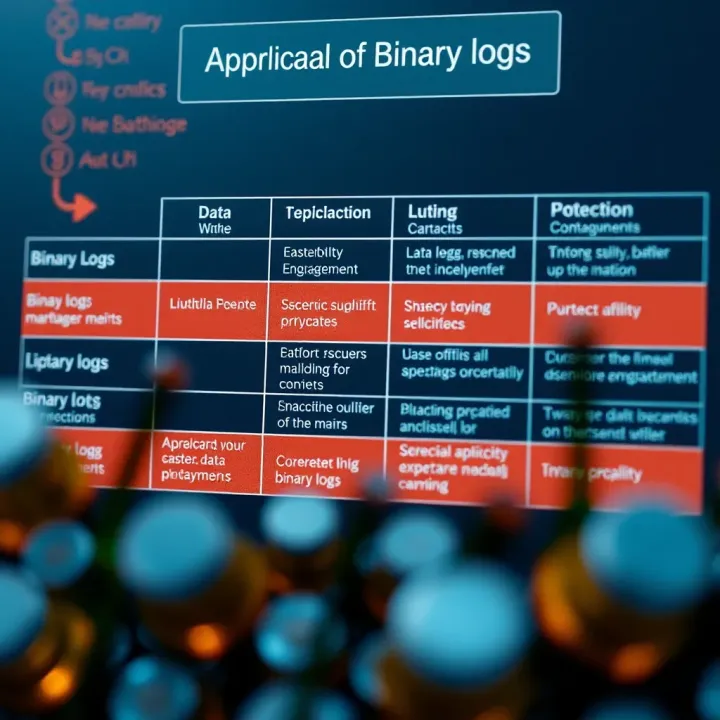
This kind of recovery is particularly useful in fast-moving markets, where timing is everything. By maintaining a trail of every change, a system can rewind or fast-forward its data state to any point, reducing downtime and preserving data integrity.
Beyond recovery, binary logs act like a detailed diary of database operations. They record every insert, update, or delete, making it easier to track who did what and when. For auditors or compliance officers in financial firms, this record is indispensable. It supports transparency and helps identify unauthorized or suspicious activity.
Consider a financial firm in Johannesburg needing to verify transaction histories during a SARS audit. Binary logs offer a clear paper trail that backs up reported figures without needing to comb through multiple backups or live data.
Binary logs underpin replication, which keeps copies of a database in sync across different servers. In a master-slave setup, the master server writes all changes to a binary log. Slaves then read this log to apply the same changes, ensuring consistent data everywhere. This means if one server fails, another can take over with minimal disruption — critical for brokers needing constant access to live market info.
For instance, an investment firm connecting clients nationwide can use replication to ensure their Cape Town and Durban offices both work with the same updated data, preventing mismatches that might otherwise affect trade decisions.
However, replication via binary logs isn’t foolproof. Timeliness is one challenge: if the slave server lags behind the master, clients might see outdated info. Network issues might also cause lost or delayed logs. Then there’s conflict management when multiple servers want to write data — causing sync headaches.
Additionally, managing very large binary logs can be tricky. They need effective pruning and monitoring lest they clog up storage or slow down performance. Firms must balance log retention length with system responsiveness to avoid troubleshooting under pressure.
Understanding the ins and outs of binary logs helps businesses build robust, reliable systems for data recovery and replication — essential for staying competitive and compliant in South Africa’s dynamic markets.
This understanding empowers tech and business teams alike to avoid costly data outages and keep operations running smoothly, especially when trading or analysing fast-moving financial data.
Setting up and managing binary log systems is a practical necessity in today's data-driven environments. These logs capture changes and events continually, so configuring them properly ensures you can recover lost data, track changes reliably, and enable replication. When managed well, binary logs become a safety net that supports data integrity and operational continuity.
In many popular database platforms like MySQL, enabling binary logging is straightforward but must be done deliberately. By activating binary logging in the server's configuration file (my.cnf or my.ini), you instruct the database to record all data modifications, such as INSERT, UPDATE, or DELETE commands. This recording helps with audit trails, point-in-time recovery, and synchronising replicas in a master-slave setup.
For example, a financial service relying on MySQL might enable binary logs to ensure any transaction can be precisely traced back or restored after unexpected outages. This feature also supports quick failover and minimal downtime.
Once binary logging is active, you need to set sensible retention policies to avoid excessive storage use. Logs that accumulate indefinitely can eat up disk space and slow down the server. Typically, logs are kept based on time or size thresholds—for instance, retaining logs for seven days or up to 10 GB before automatic purging.
A practical approach is to match log retention with your business needs and recovery objectives. For instance, if a company’s recovery process requires going back 24 hours, you could set logs to rotate daily and keep only a few days’ worth. This limits storage strain while providing enough coverage.
Effective monitoring is critical. Tools like mysqlbinlog for MySQL parse binary log files, presenting human-readable information from otherwise obscure binary data. These tools aid in troubleshooting failed transactions, examining audit trails, or debugging replication issues.
In practice, database administrators schedule regular reviews of binary logs or set up automated alerts for unusual activity, helping to catch errors or suspicious changes quickly.
Binary logs can grow quickly, especially on busy servers. To prevent storage bottlenecks and performance degradation, it’s essential to monitor disk usage and implement log rotation.
For instance, businesses might use automated scripts or built-in mechanisms to archive old logs offload to cheaper storage solutions, or permanently delete logs after the retention window. Careful monitoring means the database doesn’t suffer slowdowns due to clogged storage or I/O bottlenecks.
Managing binary logs is not a ‘set and forget’ task. Active maintenance ensures logs serve their purpose without causing operational headaches.
Overall, setting up and maintaining binary logs correctly offers clear benefits, from data safety to smoother replication. In South African environments where disruptions like loadshedding are common, robust logging adds an extra layer of protection to keep systems resilient.
Binary log systems underpin essential aspects of IT operations, but their management comes with real-world challenges that can't be ignored. Practical considerations around security, privacy, and error handling demand careful attention to avoid costly mishaps. Traders, investors, and entrepreneurs rely on accurate data logs for decisions and audits, so understanding these risks helps maintain robust systems.
Binary logs often record detailed changes, which can include confidential data like user credentials, financial transactions, or personally identifiable information. Without proper safeguards, these logs become attractive targets for hackers or internal misuse, leading to data breaches. For example, a financial services firm without masked or filtered logs risks leaking clients’ transaction details during replication or audits.
Maintaining log hygiene means actively filtering or anonymising sensitive content before it gets written. It also requires strict policies about where logs are stored, who can access them, and how long they remain. In South African environments especially, compliance with data protection laws like POPIA (Protection of Personal Information Act) makes safeguarding this data even more urgent.
Granting the right level of access to binary logs is crucial. Logs shouldn’t be casually accessible to everyone on a network, especially in multi-tenant systems or companies with various departments. Setting up role-based access control (RBAC) ensures only authorised personnel can view or modify logs, limiting insider threats.
On top of access control, encrypting binary logs both at rest and in transit adds an extra shield. Encryption protects logs during replication between servers or when backed up offsite. Given South Africa’s growing cybercrime concerns, encrypting sensitive logs isn’t just best practice — it’s a near necessity to prevent raids by cybercriminals or interception over insecure networks.
Corrupted binary logs can occur due to disk failures, abrupt shutdowns, or software bugs. Missing or damaged logs can cripple recovery efforts and replication processes. For instance, a broker relying on transaction logs for real-time synchronisation could face downtime if critical logs disappear, risking data inconsistencies across systems.
Detecting corruption early requires routine integrity checks with available tools, plus implementing alert systems that flag anomalies in log files. Equally, automated backups of logs help cushion against sudden loss. Practical experience shows that even simple actions like uneven disk load or insufficient storage leave logs vulnerable.
When logging hiccups happen, swift response is vital. The first step involves identifying the root cause—hardware, software, or configuration error. Rebuilding missing logs may mean restoring from backups or replaying transactions from other sources. For example, a data centre affected by Stage 4 loadshedding may lose power abruptly, corrupting logs; in such cases, having a UPS-backed server or rolling logs to secondary storage can make recovery smoother.
Regularly testing these recovery steps also pays off. Practically, system admins should practice simulated failures to refine their troubleshooting skills. Keeping detailed documentation of configurations, error patterns, and fixes reduces downtime and boosts confidence across IT teams.
Solid log management isn’t just about turning on logging. It’s about anticipating problems, protecting sensitive data, and preparing for swift recovery when things go sideways.
By tackling these practical concerns head-on, businesses safeguard data integrity, comply with regulations, and maintain operational continuity – factors traders and investors simply can’t afford to overlook.
Understanding where binary logging technology is heading helps traders, investors, and IT professionals anticipate changes in data management and security. This section looks at emerging trends and alternative approaches, highlighting how they might influence efficiency, reliability, and audit capabilities in various computing environments.
Digital forensics is becoming an increasingly important use case for advanced logging systems. Traditional binary logs capture data changes but often lack detailed context needed for forensic analysis, such as who triggered a change and from where. Newer logging technologies include enhanced audit logs that record metadata alongside changes, enabling a clearer reconstruction of events for compliance or investigation. For instance, financial firms under scrutiny by the FSCA (Financial Sector Conduct Authority) can benefit from enriched audit trails to prove transaction integrity or spot suspicious activities quickly.
Increasingly, these systems support fine-grained log access and tamper-proof storage methods, like cryptographically signed logs. This helps prevent log alterations and strengthens trust in audit data, a critical factor for South African enterprises managing sensitive client information.
Cloud platforms and hybrid infrastructures shift how organisations handle logging. Instead of traditional on-premise storage, many now push logs to scalable cloud monitoring tools that offer real-time analytics and alerting. For instance, businesses using AWS, Azure, or Google Cloud services might integrate binary logs with platforms like Datadog or Splunk, allowing faster detection of anomalies or outages.
This integration supports proactive decision-making — useful in sectors like online retail or financial trading where downtime translates directly to lost revenue. Moreover, cloud-based logging services streamline compliance with local data protection regulations (e.g., POPIA) by centralising log management and simplifying audit processes.
Event sourcing stores every change as a separate event rather than just logging the final state, offering a complete history that is easier to query and replay. Change Data Capture (CDC) techniques track changes at the data source and propagate them in near real-time to downstream systems. Both have found favour in modern application architectures seeking scalable and reliable change tracking beyond classic binary logs.
For example, a South African e-commerce platform could use event sourcing to avoid data loss during heavy sales periods by reconstructing user sessions or purchase workflows from events. CDC tools like Debezium or Striim can feed changes directly into analytics or reporting systems without impacting production databases.
Traditional binary logs excel in simplicity and direct integration with database engines but can grow large and complex to manage. Event sourcing and CDC offer richer data models but increase architectural complexity and require more processing resources.
Choosing the right system depends on the workload and business priorities. For instance, a stockbroker firm reliant on millisecond trades may prefer traditional binary logs for their minimal latency, while a logistics company handling diverse data streams might gain from CDC’s flexibility despite added complexity.
Staying informed about evolving logging technologies allows organisations to better safeguard data integrity, improve system resilience, and adapt to changing compliance demands.
The future of logging embraces a mix of improved audit detail, cloud integration, and alternative data capture approaches, all aimed at keeping pace with shifting IT landscapes and user expectations.
Learn how to convert words into binary step-by-step 🧑💻, explore encoding standards, practical tools, and programming tips for clear binary conversion.

Learn how to convert hexadecimal numbers to binary efficiently 🧮. Understand fundamentals, manual and programming methods, plus real-world uses in computing and electronics.

Learn how to convert decimal fractions to binary with clear steps, tips, and examples! Perfect for students and tech enthusiasts in South Africa 🧮💻

Explore the history and impact of the gender binary, cultural influences, and how diverse identities are reshaping society's view on gender 🌍👥🏳️🌈
Based on 14 reviews